The illustrated growing guide

Asparagus

Asparagus officinalis

Family Asparagaceae

Est. zones 3-8

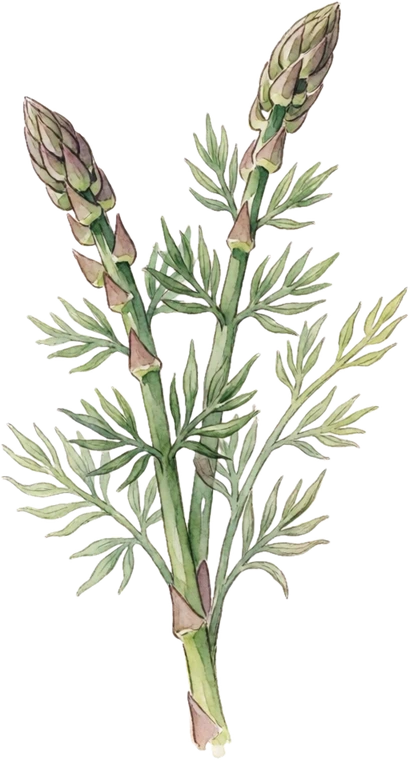
Botanical illustration of Asparagus
Perennial · Asparagus officinalis

A 20-year bed — site it like a tree. Plant crowns 8 inches deep. Harvest NOTHING year one, two weeks year two, 8 weeks after. Salt-tolerant (old-timers salted beds for weeds).

PerennialFull SunModerate waterSlow to establish growthExcellent edibleSalt-tolerantNeeds a pollination partner

☤ Juglone-sensitiveAsparagus is sensitive to juglone — the toxin exuded by black walnut, butternut, and their relatives. Keep it 50+ ft from any walnut or hickory, or its leaves will yellow, wilt, and die back for no obvious reason.

Where to buy the plant — 3 nurseries

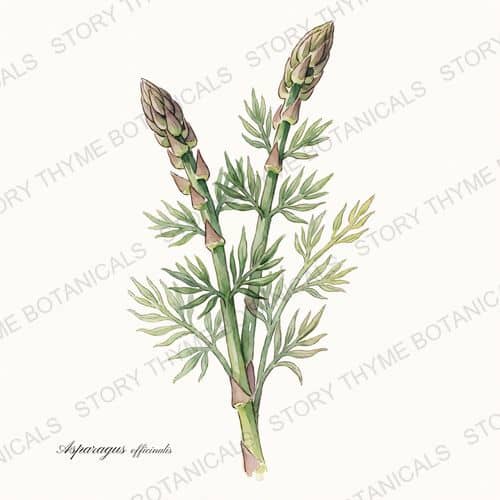
Asparagus — a print from the Vegetables Vol. 1 collection

From the print shop

Growing asparagus? Hang it.

Our Vegetables Vol. 1 collection carries asparagusAsparagus officinalis, print Nº 14, “Asparagus.”

16 designsfrom $21.99white or black groundmatte poster, unframed

Shop Vegetables Vol. 1 botanical prints →

I

Overview

Will asparagus suit your garden, and what goes wrong.

Will it fruit where you are?

Enter your ZIP — we look up your USDA hardiness zone (2023 map) and check it against what asparagus actually needs.

Hardy inZones 3-8
PollinationPartner needed

Asparagus at a glance

HardinessUSDA 3–8
Mature size5-6 ft ferns
PollinationDioecious — male hybrids yield more (no seed energy)
Chill requirementNot yet established
Bloom seasonSpring
Harvest seasonApril - June (8 weeks max, none year 1-2)
Growth rateSlow to establish (3 yr)

Common asparagus problems

  • Asparagus Beetle
  • Fusarium Crown Rot
  • Rust
  • Poor pollination → low fruit set (plant a partner)

II

Growing

Light, water, soil, propagation and the season’s jobs.

How to grow asparagus: light, water & soil

LightFull Sun
WaterModerate; deep soak in drought (roots go 6 ft)
SoilDeep, Sandy Loam, Well-drained · pH 6.5 - 7.5
FertilizerBalanced in early spring, again after harvest ends.
PruningLate Winter — Cut dead ferns to ground AFTER they brown (they feed the crown).
Spacing18 inches (crowns)

How to plant & propagate asparagus

PropagateDivision or seed

When to spray asparagus

Dormant season. Clean up all fern debris in winter (beetle overwintering).

Growing season. Hand-pick beetles at spear stage; neem if heavy. Let ferns grow all summer untouched.

The asparagus growing playbook

Field-tested instructions for every job asparagus asks of you, compiled from university extension guidance — in the order the season brings them.

Planting out

Plant crowns in spring, in a deep furrow you fill gradually

As soon as the soil is workable and no longer wet, dig a furrow 6 to 12 inches deep - shallower in clay (6 to 8 inches), deeper in very sandy soil (10 to 12 inches) - and lay one-year-old crowns head-to-toe, bud-up, so buds are 12 inches apart down the row. Space furrows at least 3 feet apart; 4 to 5 feet is typical where you have the room. Cover with only 2 to 3 inches of soil at first, then pull in more soil a few inches at a time as the ferns push up, until the furrow is level by the end of the season. A crown buried all at once in 10 inches of cold soil can exhaust its stored reserves before a shoot ever reaches light, but the same crown will climb out fine if you backfill in stages behind the growing ferns. The depth is what buys you a bed that keeps producing for fifteen years or more.

Watering

Water the fern, deeply and rarely

In the first two seasons after planting, give the bed 1 to 2 inches of water every other week. From the third year on, an established bed can go about 3 weeks between waterings, but water deeply enough to wet the soil 3 to 4 feet down. Keep it up all summer, long after harvest is over. A mature asparagus root system runs several feet deep, so light frequent sprinkling only wets the top few inches and trains roots shallow. The summer fern is the crop's factory, and a fern that wilts in August is a smaller harvest next April.

Mulching

Pull mulch back from asparagusMar – Apr

Move heavy winter mulch off the row as spears begin, leaving aisles mulched for weed control. Cool wet mulch over crowns can delay spear emergence; aisles still benefit from weed-smothering mulch.

Watch for frost if soil warms early.

Feeding

Feed the bed the moment you stop cutting

As soon as the last spear is cut and you let the row go to fern, apply a complete fertilizer such as 16-16-8 at about 1 pound per 100 square feet, and water it in. Do not feed heavily during the cutting window itself. Everything you harvest next spring is paid for by the sugars the ferns make this summer and send down to the crown. Fertilizing at the end of harvest lands the nitrogen exactly when the plant is building that fern canopy, not when it is only pushing stored spears.

Pruning

Cut the ferns down once frost has browned them completely

Wait until frost has killed the ferns and they are fully brown, then cut them to short stubs at the soil surface and carry the debris out of the bed - do not leave it lying between the rows. If snow buries the ferns before you get to them, remove them first thing in spring, before the spears emerge. Cutting green ferns steals the reserves still moving down into the crown and cuts next spring's yield. But once they are brown they are only shelter: asparagus beetles overwinter in that dead stalk litter, and purple spot and rust spores ride it into spring.

What to watch for

Scout for asparagus beetle as the spears come up

From the day the first spears break ground, walk the row on warm sunny afternoons - between noon and 6 p.m., when the beetles are actually out and moving - and look for slate-blue adults, gray grubs, and the dark oval eggs standing on end along the spears. In a garden, act when about 10 percent of plants carry adults, 50 to 75 percent carry larvae, or 20 percent of spears carry eggs. Hand-picking into soapy water handles small beds. The overwintered adults emerge with the first spears and start laying immediately, and the eggs glued to a spear do not wash off - they go to the kitchen with the crop. Scouting in the morning badly undercounts them, because the beetles drop and hide when it is cool.

Spraying

Asparagus beetle: carbaryl on spears only if scouting says so

If beetle counts pass threshold during cutting season and hand-picking is not keeping up, spray carbaryl on the spears at the low label rate, and do not reapply within 3 days. No more than 3 applications during the harvest season. Keep spraying to the spear stage - once cutting ends and the ferns go up, switch to cultural control and let the fern canopy alone. Adults feed on the spear tips and lay eggs on the stalks, and larvae hatching in about a week chew the fern later; knocking the first generation back during cutting is what keeps the summer population from building on the ferns.

Carbaryl carries a 1-day pre-harvest interval and a 12-hour re-entry interval on asparagus, a 3-day minimum retreatment interval, and a limit of 3 applications during harvest. Carbaryl is highly toxic to bees, and its label forbids applying it to crops or weeds in bloom - mow or avoid flowering weeds in the row first, and never spray asparagus ferns once they flower in summer, as the blooms are worked by bees. Follow the label on the product in hand; rates and intervals differ between carbaryl products.

Rust on the ferns: fungicide only after cutting ends

Once harvest is over and the ferns are up, watch for reddish-brown pustules that leave rust-colored dust on your fingers, worst after spells of warm days and cool dewy nights. If rust is established, myclobutanil can be sprayed on the ferns; wettable sulfur is another option. Cut and remove infected fern residue before spears emerge the following spring. Puccinia asparagi infects the fern, not the spear, and each summer pustule throws spores that reinfect the same canopy for months. A fern stripped by rust in August is a crown with nothing stored in it, and thin spears the next spring are the bill.

Myclobutanil carries a 180-day pre-harvest interval on asparagus, so it is a post-harvest fern spray only - it can never be applied during the cutting season. Sulfur has a 0-day interval.

Harvesting

Cut asparagus spearsApr – Jun

Harvest 6-8 inch spears during the harvest window, then stop and let ferns rebuild the crowns. Stopping harvest protects next year's yield by letting ferns recharge the root system.

Do not overharvest young beds.

III

The year

What asparagus asks for, month by month.

The asparagus year, month by month

MonthJanFebMarAprMayJunJulAugSepOctNovDec
Bloom
Prune
Harvest

What each band means

  • Bloomflowers open — pollinators working, frost on blossoms is the danger.
  • Pruneshape it now — cuts heal cleanly and structure is visible.
  • Harvestpicking time — check ripeness every few days.

The asparagus year as text

  • Jan quiet month
  • Feb pruning
  • Mar bloom, pruning
  • Apr bloom, harvest
  • May bloom, harvest
  • Jun harvest
  • Jul quiet month
  • Aug quiet month
  • Sep quiet month
  • Oct quiet month
  • Nov quiet month
  • Dec quiet month

These are the species' typical months — expect them a few weeks earlier in warm zones and later in cold ones. Watch the plant, not just the calendar.

IV

Ecology & uses

What it does for the garden, and what it is grown for.

Asparagus in the garden system

  • Herbaceous layer perennial
MoistureFacultative / average
SaltSalt-tolerant — fine near roads and coasts
DeerBrowsed — protect young plants
OriginIntroduced

What asparagus is grown for

! Some parts toxic — see notesRed berries toxic

UseFresh
UseRoasting
UseFreezing
Edible value4/5

Harvesting & storing asparagus

April - June (8 weeks max, none year 1-2).

Edibility, identification, and traditional-use notes here are general reference — not medical or veterinary advice, and not a claim that any plant treats or prevents anything. Medicinal ratings record how strongly a plant features in herbal tradition, nothing more. Never eat or dose a plant you have not positively identified. More on how to use this library.

V

Cultivars

Named varieties of asparagus, ruled as a catalogue.

Best asparagus varieties & cultivars

8 on file

Named varieties of asparagus differ in winter-chill needs, ripening time, hardiness, and whether they set fruit on their own — pick one that fits your climate.

Millennium · Guelph Millennium

RipensLate spring, late-emergingZones3-8DiseaseIntermediate resistance to rustSizeLarge, uniform spears

Tender with tight tips — Bred at the University of Guelph and now the standard replacement for the Jersey series, which Walker Brothers stopped propagating. In 2013 Minnesota trials it yielded 2,094 lbs/acre against 1,287 for Jersey Giant and 1,233 for Jersey Knight, and Michigan work found it slower to come into bearing but superior over a 15-year stand. It goes dormant earlier in fall and emerges later in spring, which dodges frost and lets you cut the ferns sooner to deny beetles a place to overwinter.

Where to buy ‘Millennium

Story Thyme Farms may earn a small commission from these links, at no cost to you — it never changes what we recommend.

Jersey Knight

RipensLate season within the spring cutting windowZones3-8DiseaseGood disease resistanceSizeLarge, dark green spears

Standard green asparagus — An all-male hybrid, so it puts energy into spears instead of seed. Utah State Extension rates its yield excellent, and University of Missouri notes it does very well on heavy soils and yields well in southern Missouri. Note that the Jersey series is being phased out of commercial propagation - Walker Brothers has stopped propagating the Jersey crowns - so crowns are getting scarce.

Where to buy ‘Jersey Knight

Story Thyme Farms may earn a small commission from these links, at no cost to you — it never changes what we recommend.

Jersey Giant

RipensSpring cutting windowZones3-8DiseaseGood disease resistanceSizeLarge to extra-large, dark green spears

Standard green asparagus — An all-male hybrid rated excellent for yield by Utah State Extension, long the benchmark for central and northern plantings. University of Minnesota cautions that Jersey-series crowns can be damaged at -30 F when there is not enough snow cover, so in zone 3 Millennium is the safer bet.

Where to buy ‘Jersey Giant

Story Thyme Farms may earn a small commission from these links, at no cost to you — it never changes what we recommend.

Jersey Supreme

RipensEarly - an early-season cultivar within the spring cutting windowZones3-8DiseaseDisease resistantSizeMedium-sized spears

Standard green asparagus — An early all-male hybrid. Clemson HGIC describes it as an early-season cultivar that produces high yields and adapts well to both warm and cold climates. Like the rest of the Jersey series it is leaving commercial propagation, so crowns are getting harder to find.

Where to buy ‘Jersey Supreme

Story Thyme Farms may earn a small commission from these links, at no cost to you — it never changes what we recommend.

UC 157 · UC 157 F1

RipensEarly, over a long warm-season windowZones3-8DiseaseGood disease resistanceSizeLarge, pale green spears

Mild — A California-bred commercial hybrid that Utah State Extension rates excellent for yield and describes as better adapted to warmer areas than the Jersey types. Spears are paler green than the Jersey series. It carries both male and female plants, so expect volunteer seedlings.

Where to buy ‘UC 157

Story Thyme Farms may earn a small commission from these links, at no cost to you — it never changes what we recommend.

Purple Passion

RipensSpring cutting windowZones3-8SizeLarge, dark purple spears with a green interior

Sweeter than green asparagus — Grown for the burgundy spears, which University of Missouri describes as sweeter than green asparagus with a green interior. It carries both male and female plants and produces many seeds, so expect volunteers. Utah State Extension rates its yield 'Good' rather than excellent - a step below the all-male hybrids.

Where to buy ‘Purple Passion

Story Thyme Farms may earn a small commission from these links, at no cost to you — it never changes what we recommend.

Mary Washington

RipensSpring cutting windowZones3-8DiseaseOriginally selected for rust resistance in the 1919 USDA breeding work, but do not count on it under modern rust pressure - scout the fernsSizeMedium green spears

Classic asparagus — The open-pollinated heirloom standard. University of Minnesota calls it very cold-hardy but notes its yields are lower than the Jersey varieties, and that because it is open-pollinated it may produce seeds that sprout new plants - half the stand is female and spends itself on berries. Still the easiest variety to find as seed rather than crowns.

Where to buy ‘Mary Washington

Story Thyme Farms may earn a small commission from these links, at no cost to you — it never changes what we recommend.

Viking KB-3 · Viking KB3

RipensSpring cutting windowZones3-8SizeMedium green spears

Classic asparagus — An open-pollinated variety listed by University of Minnesota among the varieties for home gardens. Like other open-pollinated types it carries male and female plants, so yields trail the all-male hybrids and you should expect volunteer seedlings. Widely available as crowns and seed.

Where to buy ‘Viking KB-3

Story Thyme Farms may earn a small commission from these links, at no cost to you — it never changes what we recommend.

VI

Sources & plant ID

Where the care distinctions come from, and how the plant is filed.

Research basis

Sources behind this profile

No extension citations are attached to asparagusyet. The care figures below come from the library's own catalogue rather than a traced primary source.

Plant ID

BinomialAsparagus officinalis
FamilyAsparagaceae
TypePerennial
USDA symbolASOF
OriginIntroduced
Invasive riskLow

VII

Where to buy

Third-party nurseries — not Story Thyme Farms.

Third-party nurseries, not Story Thyme Farms. Prices are theirs.

Story Thyme Farms may earn a small commission from these links, at no cost to you — it never changes what we recommend.

Asparagus needs a pollination partner — plant two genetically distinct plants (two different cultivars, or a cultivar plus a seedling).

VIII

Questions

Asparagus questions, answered straight.

Why isn't my asparagus fruiting?

Most often: it has no genetically distinct partner nearby. Asparagus can't pollinate itself — dioecious — male hybrids yield more (no seed energy). Plant a second, unrelated one nearby; two different cultivars, or a cultivar plus a seedling, is the classic pairing.

Is asparagus safe for kids and pets?

With care. Red berries toxic Site it accordingly if children or pets roam the garden. This is general reference, not medical or veterinary advice — call a vet or poison control if something has actually been eaten.

When do you harvest asparagus?

April - June (8 weeks max, none year 1-2).

How do you propagate asparagus?

Division or seed.

IX

Elsewhere

Where asparagus sits in the library.

Where asparagus sits in the library

Grows in the same world