Green Bean
- Mature size
- 2 ft bush / 8 ft pole
- Chill requirement
- None (not chill-dependent)
- Pollination
- Self-Fertile
- Bloom season
- Summer
- Harvest season
- July - September, pick every 2-3 days
Family Fabaceae
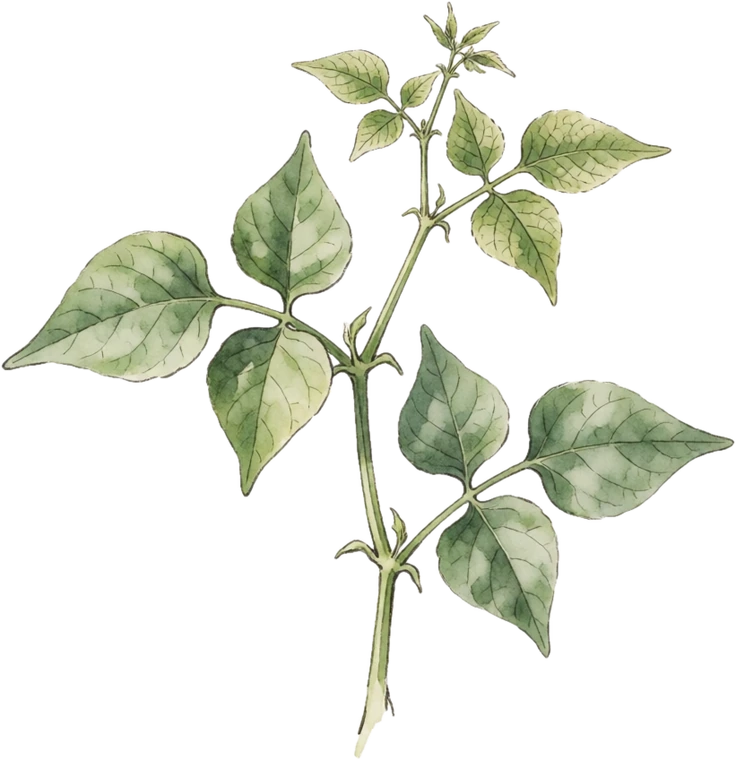
Bean covers a small dynasty here — green beans for the skillet, scarlet runners whose red flowers pull in hummingbirds, favas for spring, limas for the pot. Between the four types, cooked and buttered, they cover more of the year and the menu than any other single word in the garden.
Like most legumes, beans feed the soil while they feed you, fixing their own nitrogen as they climb or bush along in full sun. Serve every type cooked — that's the family rule — and pick your growth habit, pole or bush, to fit the space you actually have.
 Full Sun
 Moderate water
 Excellent edible
Will it fruit where you are?
Enter your ZIP — we look up your USDA hardiness zone (2023 map) and check it against what bean actually needs.
 Hardy inZones 2-11
Bean · Common problems
Nothing common enough to list for bean. Watch it like anything else in the garden, and check the plants growing next to it.
Bean · Which one do you have?
Where these differ, the key facts above give the span across all of them. Each type’s own figures, as the catalogue records them:
Bean · Growing & propagation
Light Propagate
Bean · Seasonal care & spray guidance
early spring
9 jobsSowingIn springGreen BeanCheck the soil with a thermometer, not the calendar, and direct-sow only once it holds at least 60 F at a 4-inch depth. Sow 1 inch deep, 2 to 4 inches apart, in rows 2 to 3 feet apart, or two rows 18 inches apart in a 4-foot bed. Sow where the plants will stay - beans resent being moved. Bean seed is large and starchy, and in cold wet ground it sits there absorbing water faster than the embryo can grow, so soil fungi rot the seed before it germinates. Growth stays best where the mean temperature runs 70 to 85 F.
SowingIn springFava Bean (Broad Bean)Direct sow 1 to 2 inches deep once soil temperature is somewhere between 42 and 70 F, with 60 to 65 F ideal. Space seeds 5 to 6 inches apart in rows 24 to 36 inches apart. Do not wait for your last frost date the way you would with a snap bean. Fava germinates in cold ground that would rot most legume seed, and it needs to reach bloom and pod fill before summer arrives, because growth and yield fall off above 90 F and seed will not germinate at all above about 76 F.
SowingIn springLima Bean (Butter Bean)Delay sowing until the soil temperature is at least 65 degrees F. Lima beans need warmer soil, warmer weather and a somewhat longer season than common snap beans, so the date that works for green beans is too early here. Sow fresh treated seed each year rather than seed you saved from last year's plants. Lima seed sown into cold ground rots or germinates weakly instead of growing, and the crop needs the whole warm season to fill pods. Saved seed carries bean diseases over from one year to the next, which is why fresh seed is worth buying.
SowingIn springScarlet Runner BeanAfter your last frost, when soil temperature is at least 50 F, push seeds 2 to 3 inches deep and 4 to 8 inches apart along a support that stands 8 feet or taller. Expect germination in 7 to 14 days. Where summers are short you can start seed indoors a few weeks before the last frost and harden the plants off before setting them out. Shield the seedlings from rabbits and slugs, which chew young runner beans to the ground. Runner bean seed rots rather than sprouts in cold wet ground, and the vines climb 15 feet or taller, so the support has to be standing before the plant needs it.
 FeedingIn springFava Bean (Broad Bean)
At every sowing, spring or fall, treat seed with a Rhizobium leguminosarum inoculant - the pea and vetch group, not the garden bean group - any time favas or peas have not grown in that ground for several years. Skip nitrogen fertilizer on well-nodulated plants, and band phosphorus 2 inches to the side and 2 inches below the seed if a soil test shows P is low. Rhizobia enter the root hairs within days of germination, and a well-nodulated fava fixes 90 to 200 pounds of nitrogen per acre for itself. Added nitrogen buys leafy growth at the expense of pods, and poor performance on acidic or waterlogged soil is usually a nodulation failure rather than a fertility one.
FeedingIn springLima Bean (Butter Bean)Do not push lima beans with nitrogen fertilizer, either at planting or as a side-dressing later. Like all beans they fix their own nitrogen, so a heavy feed is worse than no feed at all. Excessive nitrogen promotes lush leafy growth but inhibits pod formation - the plant spends the season building foliage it does not need and sets almost no pods. Lima beans grow best when temperatures are between 70 and 80 degrees F, and in most gardens weather, not fertilizer, is what sets the yield.
FeedingIn springScarlet Runner BeanWork compost or organic matter into the bed before planting and then leave the fertilizer alone. Do not side-dress with a high-nitrogen feed once the vines take off. Runner beans fix their own nitrogen, so a heavy feed only promotes lush foliage instead of flowers and beans, and you end up with a beautiful green curtain carrying nothing to eat.
 ProtectionIn springGreen Bean
Where Mexican bean beetle is a known problem, cover the row with floating row cover right after sowing and seal the edges to the soil. Unlike squash or melons, you can leave the cover on until harvest, or as long as is practical. Overwintered adults find bean plantings early and lay their egg masses on the seedlings, so the cover works only if it is on before they arrive - once beetles are inside, it protects them instead of the crop.
ProtectionIn springFava Bean (Broad Bean)Once plants are about knee high, drive sturdy stakes at the corners of each row and every 4 feet along it, then run string around the outside at roughly 12 inch intervals, adding lines as the plants climb. Dwarf varieties grown in double rows generally hold each other up and need nothing. Fava stems are square and hollow, and standard varieties carry a full load of pods at 3 to 4 feet. A row that lodges in wind or heavy rain puts its pods on the wet ground, where they rot instead of filling.
at bloom
10 jobsWateringAt bloomGreen BeanFrom first bloom until the pods are full, water enough to wet the soil 6 inches deep, going less often but deeper rather than a daily sprinkle. Deliver it at the base of the plants and keep the leaves dry. Pod formation is the crop's critical moisture window - a plant that runs short of water while flowering drops its blossoms and simply sets fewer pods, and no amount of watering afterward brings them back. Shallow sprinkling also keeps roots near the surface where they dry out first.
WateringAt bloomFava Bean (Broad Bean)Give the bed a thorough soak when the lowest flowers open and again about two weeks later as pods are filling, keeping the top foot of soil at or above 50 percent of available water. Water in the early morning so the foliage dries before nightfall. Bloom and pod set are the two moments named as critical for water, and stress here drops flowers and shrivels the beans instead of merely slowing the plant. Manage moisture in the top foot of soil, where the feeder roots and the water you apply actually meet. Morning watering matters because chocolate spot, a Botrytis, needs long wet periods on the leaves to establish.
WateringAt bloomLima Bean (Butter Bean)From the day the first blossoms open until the pods have filled, give the planting one inch of water per week from rain and irrigation combined. This is the one stretch of the year where missing a week costs you the crop rather than just slowing it down. Hot, dry conditions during blossoming make the flowers drop off without setting pods, and a lima that has dropped its blossoms does not get a second chance at them. Steady soil moisture through bloom and pod development is what carries the flowers through to beans.
WateringAt bloomScarlet Runner BeanFrom first bloom through the end of cropping, water deeply in dry weather, roughly 1 to 2.5 gallons per square yard twice a week, and mulch to hold that moisture. Do not mist or spray the flowers themselves. Dry soil at the roots is one of the main causes of runner beans failing to set pods, and the flowers abort before a bean ever forms.
FeedingAt bloomGreen BeanAs flower buds form and BEFORE the first blooms open, sidedress with 34-0-0 at 1 pound per 100 feet of row, or 15.5-0-0 calcium nitrate at 2 pounds per 100 feet of row. Work it in beside the row, not against the stems, and water it in. If you had no soil test, 5-10-10 at 3 pounds per 100 square feet worked in before planting is the baseline. Beans need only moderate fertilizer, and heavy nitrogen early buys you vine instead of pods - beans fix their own nitrogen, so avoid heavy nitrogen fertilization. Demand climbs once the plant starts flowering and filling pods, so the sidedress goes on just ahead of first bloom: it has to be in place and watered in before pod set begins, not applied after the plant already needs it.
 PruningAt bloomFava Bean (Broad Bean)
When small pods have formed at the lowest flower cluster, snap off the top 2 to 3 inches of every stem. Do not throw the tips away - they are good steamed or in a stir-fry. Black bean aphid colonizes the soft growing point first, so removing it takes away the landing site before the colony builds. It also redirects the plant into filling the pods it already carries rather than opening more flowers it cannot ripen.
 What to watch forAt bloomFava Bean (Broad Bean)
From first bloom, check shoot tips and the undersides of the upper leaves weekly for dense black colonies. Pinch off and destroy infested tips, which at garden scale is usually the whole intervention. Give the ladybird beetles, lacewings and parasitic wasps time to find the colony before escalating - fava's extrafloral nectaries on the leaf stipules feed those predators directly. Black bean aphid is the most damaging pest of fava worldwide and it arrives just as the plant turns reproductive, feeding on phloem at exactly the stage that decides the crop. Its honeydew then grows the sooty moulds and Botrytis that follow.
What to watch forAt bloomLima Bean (Butter Bean)Walk the planting while it is in bloom and look over the flowers and young pods for southern green stink bugs and tarnished plant bugs. For southern green stink bug, an average of one bug per 15 feet of row is the level at which treatment is called for. Tarnished plant bug has no published threshold on beans and rarely reaches pest status - note it, but let the stink bug count drive your decision. Neither pest simply chews - both withdraw sap and inject toxic saliva. The toxins may halt the development of blooms and young pods and cause dark spots on older pods, and in lima beans the developing seed turns brown where the bugs fed and introduced yeast infections. The pod can look perfectly sound from the outside.
 SprayingAt bloomLima Bean (Butter Bean)
Once the plants begin to flower, part the canopy and check the pods and flower stalks low on the plant for a dense, cottony white mat with a brown to red margin around it - that margin is diagnostic. Apply a fixed copper fungicide preventatively at or after flowering when the weather turns wet and cool. Phytophthora phaseoli infects young expanding tissue and goes after pods and racemes rather than leaves, so it takes your crop directly. It needs more than about 1.2 inches of rain in a week paired with average daily temperatures under 78 degrees F, and heavy dew reduces the rain it needs. Above 90 degrees F the disease cycle stalls, which is why it shows up in late summer and early fall rather than at midsummer peak heat.
ProtectionAt bloomScarlet Runner BeanIf row cover or netting is still over the vines, take it off as soon as flower buds start to open, and keep it off. A sheltered planting site helps too, because bees work runner bean flowers far more willingly out of cold wind. Unlike common beans, runner beans depend on pollinating insects to set pods, and cold, wet or windy conditions that keep bees away are a leading cause of a vine that flowers beautifully and never makes a bean. A cover left on through bloom locks the pollinators out entirely.
the growing season
4 jobsSowingIn summerGreen BeanIf you grow bush beans, sow another short row every two weeks through the summer rather than one big planting. Stop once the days remaining before your average first fall frost drop below your variety's days to maturity. Bush beans set nearly their whole crop in one flush over a week or two and then quit, so a single sowing gives you a glut and then nothing. Staggered sowings hand you a steady picking instead. Pole beans do not need this - they keep bearing for weeks.
What to watch forThrough summerGreen BeanCheck the undersides of leaves weekly for Mexican bean beetle: yellow-orange egg masses in clusters of 40 to 50, and bright yellow spiny oval larvae. Crush the egg clusters between your fingers as you find them. Treat only if defoliation passes 20 percent before bloom, or 10 percent once pods are forming. It is the larvae, not just the adults, that skeletonize leaves from the underside, and one female's egg cluster becomes 40-odd feeders in a few days. A full generation takes only 30 to 40 days in summer heat, so a cluster missed now is a population next month.
What to watch forThrough summerScarlet Runner BeanSearch the undersides of leaves for coppery brown adults with black spots, yellow-orange egg clusters of 40 to 50, and spiny yellow larvae. Crush eggs, larvae and adults by hand as you find them. Treat if defoliation passes about 20 percent before bloom or about 10 percent once pods are filling. Overwintered adults move in around June and each generation is larger than the last, so populations often do not turn damaging until August, exactly when the vines are filling pods and least able to spare the leaves.
SprayingThrough summerGreen BeanOnly if scouting shows defoliation past 20 percent pre-bloom or 10 percent during pod formation, spray spinosad, covering leaf undersides where the larvae actually feed. Do not spray on a schedule - beans below threshold do not need it. The larvae feed on the undersides and a spray that only wets the tops of the leaves misses them entirely, which is why sprays here fail more often from bad coverage than from the wrong product.
as it ripens, and picking
6 jobsSprayingBefore harvestLima Bean (Butter Bean)Once bloom has finished and pods are filling, treat stink bugs that are running over the one-bug-per-15-feet threshold with spinosad. Bifenthrin and carbaryl are also labeled for beans if you need an alternative. Stink bugs feed straight through the pod wall into the developing seed and inject a toxin, so you get brown discolored beans inside a pod that looks perfectly sound from the outside. The injury happens while the seed is filling, which makes this the only window where a spray actually protects anything.
HarvestingAt harvestGreen BeanPick snap beans at any stage up until the individual seeds start to show as bulges through the pod wall. Go over the planting every 2 to 3 days and pick everything ready, holding the stem with one hand so you do not tear the plant. Once seeds swell, the pod diverts its sugars into them and turns fibrous and stringy. Pods left to mature also signal the plant that it has reproduced, which shuts down further flowering - so a missed picking costs you the rest of the crop, not just those pods.
HarvestingAt harvestFava Bean (Broad Bean)Harvest when pods are thick, glossy and well filled but the seeds inside are still full-sized and green - roughly 100 to 120 days from a spring sowing, since dry seed takes 130 to 150 and green-pod harvest runs about 30 days ahead of that. Take the lower pods first and check every few days. For dried beans instead, leave the crop until nearly all pods have gone black but the stems are not yet fully dry and brittle. Fava sets pods from the bottom up over several weeks, so the plant ripens as a sequence rather than a single event and the bottom of the plant is always ahead. Once the seed scar inside the pod darkens from white or green to black the sugars have gone starchy and the seed coat has toughened. Waiting too long for dry seed costs yield to pod cracking and lodging.
HarvestingAt harvestLima Bean (Butter Bean)Harvest for fresh-shelled beans when the seed color has changed from green to cream or white and the pods are starting to bulge in the shape of the seed. Bush types give two to three pickings; pole types can be picked until the first frost as long as you take the old pods off before the beans mature on the vine. For dried limas, let the pods dry completely on the plant, then thresh. The bulge is the honest signal - it tells you the seed has filled rather than the pod merely being long. Leaving mature pods on a pole lima tells the plant its work is done and shuts down further flowering, so picking is what keeps the vine producing.
HarvestingAt harvestScarlet Runner BeanTake pods while they are young, tender and stringless, roughly 8 to 10 inches long and snapping cleanly, with the seeds inside still small and pale. Go back over the vines every two to three days for the whole cropping period. If pods are allowed to mature on the vine the plant reads its job as done and stops flowering, so a few missed pods shut down the rest of the season's crop.
HarvestingAs fruit ripensScarlet Runner BeanOnce you have had your fill of snap pods, stop picking and let the remaining pods hang on the vines as long as possible, ideally until they are completely dry and brittle, then shell out the large seeds. Shell beans can instead be taken earlier, while the seeds are still moist and glossy. The seed only reaches full size and storage quality if the pod is allowed to dry down on the plant, and runner bean seed is the reason many people grow the crop at all.
autumn, and putting it to bed
3 jobsSowingIn autumnFava Bean (Broad Bean)Where winter lows stay above roughly 14 F, sow a cold-hardy variety such as Aquadulce Claudia in early to mid fall so plants overwinter as young seedlings. Use a heavier seeding rate than you would in spring to cover some over-winter mortality. Fall-sown favas overwinter at the three to six node stage and resume growth early, reaching pods well before heat shuts down pod set. The limit is genetic, not technique: the hardiest Mediterranean cultivars tolerate about 14 F and the toughest European lines about 5 F, so this is a mild-winter play.
PruningAfter harvestLima Bean (Butter Bean)When picking is finished, pull the plants and remove all the plant debris from the bed rather than turning it under. If the crop showed disease, do not plant beans in that ground for two to three years. Next season, avoid overhead watering and avoid splashing soil onto the plants when you water. Lima beans are particularly susceptible to anthracnose, seen as irregular reddish-brown spots on leaves and pods. The fungus survives in the soil for two years on plant debris and gets back onto the plants by rain and irrigation splashing it upward, so removing the debris and moving the crop is what actually breaks the cycle - a spray cannot.
ProtectionIn autumnScarlet Runner BeanIn zones 7a to 11b the vine behaves as a short-lived perennial and resprouts from its tuberous roots each spring, so simply cut the top growth back. Colder than that, dig the tuberous roots after the tops die back and store them in cool, damp sand for replanting in spring. Scarlet runner bean is a tender perennial from the highlands of Mexico and Central America, not a true annual, and an established tuber wakes up faster and crops earlier than a seed sown into cold spring soil.
Bean · Calculators & field guides
Bean · Yearly calendar
No fixed season calendar for bean — its care follows conditions, not the calendar.
Bean · Ecology & uses
Moisture Deer
DeerProtect young plants
 Origin
! Some parts toxic — see notesSafe cooked · Raw beans toxic — cook them; flowers/young pods edible · RARE genetic condition (favism/G6PD deficiency) makes fava beans dangerous for some people — otherwise cook and enjoy · Cook thoroughly — raw lima beans (esp. some heirlooms) contain cyanogenic compounds; cooked are safe
Edible valueEdibility, identification, and traditional-use notes here are general reference — not medical or veterinary advice, and not a claim that any plant treats or prevents anything. Medicinal ratings record how strongly a plant features in herbal tradition, nothing more. Never eat or dose a plant you have not positively identified. More on how to use this library.
Bean · Varieties & cultivars
Compare hardiness, mature size, growth habit, days to maturity and intended use in the seller’s variety description. Where this guide covers several plant types, start with the type you want to grow, then choose a variety for your season and space.
Sources & plant identity
Hardiness, size and timing vary with your cultivar, soil and climate.
University extension research, brought together with hands-on growing experience at Story Thyme Farms.
 Clemson University
 Mississippi State University
 University of Massachusetts
 University of Maryland
 University of Minnesota
 University of Georgia
 University of Illinois
 Oregon State University
 projects.sare.org
 Royal Horticultural Society
 territorialseed.com
 University of Wisconsin-Madison
 anniesheirloomseeds.com
 kingsseeds.com
 reimerseeds.com
 reneesgarden.com
 sowseeds.co.uk
 superseeds.com
Publisher marks identify sources, not sponsorship or endorsement.
Bean questions, answered straight.
With care. Safe cooked · Raw beans toxic — cook them; flowers/young pods edible · RARE genetic condition (favism/G6PD deficiency) makes fava beans dangerous for some people — otherwise cook and enjoy · Cook thoroughly — raw lima beans (esp. some heirlooms) contain cyanogenic compounds; cooked are safe Site it accordingly if children or pets roam the garden. This is general reference, not medical or veterinary advice — call a vet or poison control if something has actually been eaten.
From seed.
Where bean sits in the library.
 Tomato
 Pepper
 Cucumber
 Squash