The illustrated growing guide

Silver Buffaloberry

Shepherdia argentea

Family Elaeagnaceae

Est. zones 2-7

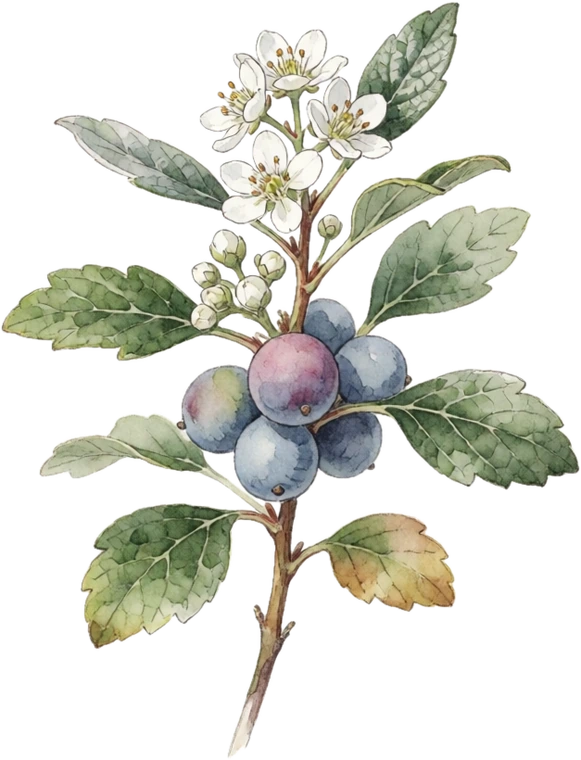
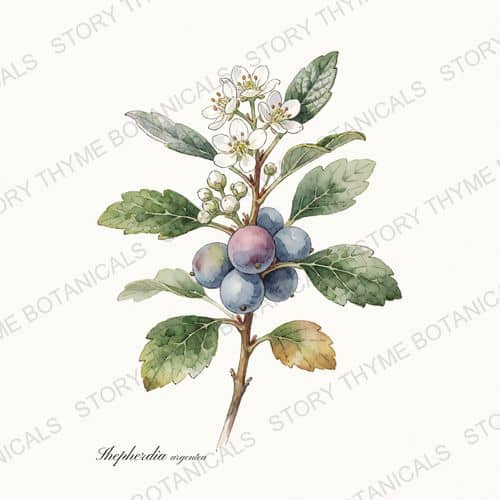
Botanical illustration of Silver Buffaloberry
Shrub · Shepherdia argentea

The toughest fruiting shrub for brutal northern-plains conditions — silver foliage, nitrogen-fixing roots, and hardiness to zone 2, thriving in dry, salty, alkaline dirt nothing else fruits in. The tart, lycopene-rich red berries make a fine jelly and the traditional whipped 'Indian ice cream.' Thorny and dioecious, so plant a male among the females.

Shrub · NativeFull SunLow waterModerate growthNative to North AmericaExcellent edibleAttracts beesNeeds a pollination partner

Where to buy the plant — 1 nursery

I

Overview

Will silver buffaloberry suit your garden, and what goes wrong.

Will it fruit where you are?

Enter your ZIP — we look up your USDA hardiness zone (2023 map) and check it against what silver buffaloberry actually needs.

Hardy inZones 2-7
PollinationPartner needed

Silver Buffaloberry at a glance

HardinessUSDA 2–7
Mature size6-12 ft, thorny, suckering
PollinationDIOECIOUS — need male + female; early flowers feed bees; berries feed birds
Chill requirementNot yet established
Bloom seasonEarly Spring (before leaves)
Harvest seasonTart red berries in late summer — high in lycopene, made into jelly and a traditional Plains 'Indian ice cream'
Growth rateModerate

Common silver buffaloberry problems

  • Almost none
  • Almost none
  • Poor pollination → low fruit set (plant a partner)

II

Growing

Light, water, soil, propagation and the season’s jobs.

How to grow silver buffaloberry: light, water & soil

LightFull Sun
WaterVery low — extremely drought-, cold-, and salt-tough; nitrogen-fixer
SoilAny, even poor, alkaline, or salty · pH 6.0 - 8.5
FertilizerNone — fixes its own nitrogen
PruningLate Winter — A tough silver-leaved native of the northern plains — nitrogen-fixing, hardy to zone 2, and thriving in the poor, dry, salty, alkaline soil that kills most fruit. Tart red berries (heavy in lycopene) make excellent jelly and the whipped Plains dessert called 'wojapi'/Indian ice cream. Dioecious and thorny — plant a male with your females.
Spacing6-8 ft

How to plant & propagate silver buffaloberry

PropagateGrafted, or from cuttings/layering (seed won't come true)

The silver buffaloberry growing playbook

Field-tested instructions for every job silver buffaloberry asks of you, compiled from university extension guidance — in the order the season brings them.

Sowing

Sow cleaned seed outdoors in mid-SeptemberSep

Macerate the picked fruit and float the pulp off the seed, changing the water several times. Sow the cleaned, non-stratified seed about half an inch deep in mid-September and cover the seedbed with sand to stop it crusting. To raise seedlings indoors instead, stratify the seed 90 days at 41 degrees F to break dormancy. Seedlings can be transplanted after two growing seasons. The seed is a small, very hard achene with a real dormancy - a September sowing lets winter in the ground do the chilling, which is why direct seeding into native grassland works.

Planting out

Plant bare-root seedlings in spring, and plant both sexes

Set bare-root seedlings out in spring once the threat of frost is past, spacing plants 4 to 6 feet apart, into ground cleared of competing grass. Buffaloberry carries male and female flowers on separate plants, so a lone shrub will never fruit - plant a group and keep at least one male among the females. The species is dioecious and insect-pollinated, mostly by honey bees and bumble bees, so berries only form on female plants that a nearby male has pollinated. Seedlings establish readily when planted free of competing vegetation.

The shrub is thorny and suckers into thickets, so keep it away from paths and cultivated ground.

Mulching

Keep grass off young plants, and cultivate shallow

Through the establishment years, keep invading grasses and weeds off the root zone. Where you cultivate, work shallow rather than deep. Control of invading weeds and grasses is the main thing that decides whether a young buffaloberry planting takes, and shallow cultivation works best over its spreading root system.

Feeding

Skip the nitrogen - this shrub makes its own

Do not push nitrogen fertilizer at an established buffaloberry. On poor, dry, or alkaline ground it needs no feeding to carry a crop. Buffaloberry fixes atmospheric nitrogen in root nodules that hold bacteria, which is a large part of why it tolerates infertile soils - the nitrogen it fixes can even feed the woody species around it.

Thinning

Cut back suckers straying out of bounds

Watch the ground around the shrub for suckers pushing out beyond where you want the thicket, and cut or cultivate them off. Where you want a dense wildlife thicket or a windbreak row, let the suckers run. Buffaloberry is a suckering, thicket-forming shrub, and suckers left alone will root into lawns, paths and cropped ground. Cultivation stops the spread of shoots and suckers, and regularly cultivated shelterbelts show little sign of suckering.

Pruning

Thin out old and rotting stems while dormant

Late in the dormant season, before growth begins, cut out dead, damaged and diseased stems at ground level, along with the oldest stems. Thin whole stems rather than shearing the shrub over, and take no more than a third of the stems in any one year, spreading a heavy renovation across three years. White heart rot is a common problem on older buffaloberry, along with stem decay and branch canker, and cutting the diseased wood out prolongs the life of the planting. Extension puts the best pruning window in the late dormant season, before growth begins, and thinning whole stems rather than shearing keeps the flower buds on the stems you leave.

The stems are thorny - wear heavy gloves and eye protection.

Protection

Fence young plants against deer browse before winter

Cage or fence young buffaloberry going into winter, when deer work the twigs hardest and other browse is gone. Shake heavy snow off the stems rather than letting it load up. Deer commonly browse buffaloberry twigs and leaves, and it is a browse source for big game and rodents - repeated browsing sets young plants back badly. Stems are also sometimes broken outright by snow load.

Harvesting

Pick slightly under-ripe for jelly, after frost for fresh

Berries form in late spring and ripen by late summer. For jelly, pick them slightly under ripe. For eating fresh, wait until after a light frost. Harvest by shaking the branches and catching the fruit in a sheet or flat pan spread on the ground, rather than picking through the thorns by hand. Under-ripe fruit carries higher pectin, which is what sets a jelly, while fruit harvested after a light frost tastes sweeter. Ripe berries hang on the shrub and dry ones may still be there the following spring, so there is no rush once they colour.

The berries contain saponin, which can irritate the digestive system - small amounts carry little risk, but do not eat them in quantity raw.

III

The year

What silver buffaloberry asks for, month by month.

The silver buffaloberry year, month by month

MonthJanFebMarAprMayJunJulAugSepOctNovDec
Bloom
Prune
Harvest

What each band means

  • Bloomflowers open — pollinators working, frost on blossoms is the danger.
  • Pruneshape it now — cuts heal cleanly and structure is visible.
  • Harvestpicking time — check ripeness every few days.

The silver buffaloberry year as text

  • Jan quiet month
  • Feb pruning
  • Mar bloom, pruning
  • Apr bloom
  • May quiet month
  • Jun quiet month
  • Jul quiet month
  • Aug harvest
  • Sep quiet month
  • Oct quiet month
  • Nov quiet month
  • Dec quiet month

These are the species' typical months — expect them a few weeks earlier in warm zones and later in cold ones. Watch the plant, not just the calendar.

IV

Ecology & uses

What it does for the garden, and what it is grown for.

Silver Buffaloberry in the garden system

  • Shrub layer shrub
  • N-fixer
  • Nectary/insectary
AttractsBees, Birds
MoistureUpland / dry
DeerBrowsed — protect young plants
OriginNative to North America

What silver buffaloberry is grown for

✓ Commonly eatenBerries edible (tart); safe

UseJelly
UseN-fixing hedge
UseExtreme-cold fruit
UseNative
Edible value4/5

Harvesting & storing silver buffaloberry

Tart red berries in late summer — high in lycopene, made into jelly and a traditional Plains 'Indian ice cream'.

Edibility, identification, and traditional-use notes here are general reference — not medical or veterinary advice, and not a claim that any plant treats or prevents anything. Medicinal ratings record how strongly a plant features in herbal tradition, nothing more. Never eat or dose a plant you have not positively identified. More on how to use this library.

V

Cultivars

Named varieties of silver buffaloberry, ruled as a catalogue.

Best silver buffaloberry varieties & cultivars

1 on file

Named varieties of silver buffaloberry differ in winter-chill needs, ripening time, hardiness, and whether they set fruit on their own — pick one that fits your climate.

Sakakawea

Needs a pollinizer
RipensLate summerZones2-6SizeLarge shrub, 6 to 14 feet tall and 8 to 14 feet wide at maturity

Tart, best cooked into jelly — Developed by the USDA-NRCS Plant Materials Center at Bismarck, North Dakota from open-pollinated seed collected in Canada in 1954, and selected for uniform growth, excellent survival and stand establishment, and good seed production. It is a seed strain rather than a clone, so plants are a mix of males and females and 12 to 20 percent of them bear yellow fruit instead of the usual red. Seedlings are available from many commercial conservation nurseries.

Where to buy ‘Sakakawea

Story Thyme Farms may earn a small commission from these links, at no cost to you — it never changes what we recommend.

VI

Sources & plant ID

Where the care distinctions come from, and how the plant is filed.

Research basis

Sources behind this profile

No extension citations are attached to silver buffaloberryyet. The care figures below come from the library's own catalogue rather than a traced primary source.

Plant ID

BinomialShepherdia argentea
FamilyElaeagnaceae
TypeShrub · Perennial
USDA symbolSHAR
OriginNative to North America
Invasive riskLow

VII

Where to buy

Third-party nurseries — not Story Thyme Farms.

Third-party nurseries, not Story Thyme Farms. Prices are theirs.

Story Thyme Farms may earn a small commission from these links, at no cost to you — it never changes what we recommend.

Silver Buffaloberry needs a pollination partner — plant two genetically distinct plants (two different cultivars, or a cultivar plus a seedling).

VIII

Questions

Silver Buffaloberry questions, answered straight.

Why isn't my silver buffaloberry fruiting?

Most often: it has no genetically distinct partner nearby. Silver Buffaloberry can't pollinate itself — dioecious — need male + female; early flowers feed bees; berries feed birds. Plant a second, unrelated one nearby; two different cultivars, or a cultivar plus a seedling, is the classic pairing.

Is silver buffaloberry safe for kids and pets?

Silver Buffaloberry is commonly eaten and isn't considered toxic, but "commonly eaten" isn't a guarantee for any particular person or animal — allergies, quantity, and which part you eat all matter. One caveat on this one: Berries edible (tart); safe. Never eat a plant you haven't positively identified, and check with a vet before letting pets or livestock graze anything new.

When do you harvest silver buffaloberry?

Tart red berries in late summer — high in lycopene, made into jelly and a traditional Plains 'Indian ice cream'.

How do you propagate silver buffaloberry?

Grafted, or from cuttings/layering (seed won't come true).

IX

Elsewhere

Where silver buffaloberry sits in the library.

Where silver buffaloberry sits in the library

Grows in the same world