The illustrated growing guide

Grapefruit

Citrus × paradisi

Family Rutaceae

Est. zones 9-11

Botanical illustration of Grapefruit
Tree · Citrus × paradisi

The heat hog of the citrus family — it needs long hot summers to get sweet, so it's really a Deep-South and desert-Southwest tree, marginal in a northern pot. Note the drug-interaction warning is about eating the fruit, not growing it.

TreeFull Sun — needs the most heat of any citrusModerate waterModerate growthExcellent edibleAttracts beesNone winter chill

Where to buy the plant — 3 nurseries

Grapefruit — a print from the Citrus Grove collection

From the print shop

Growing grapefruit? Hang it.

Our Citrus Grove collection carries grapefruitCitrus paradisi, print Nº 4, “Grapefruit.”

16 designsfrom $21.99white or black groundmatte poster, unframed

Shop Citrus Grove botanical prints →

I

Overview

Will grapefruit suit your garden, and what goes wrong.

Will it fruit where you are?

Enter your ZIP — we look up your USDA hardiness zone (2023 map) and check it against what grapefruit actually needs.

Life cyclePerennial zones 9–11, annual elsewhere
Winter chillNone
PollinationSelf-fertile

Grapefruit at a glance

Life cyclePerennial zones 9–11, annual elsewhere
Mature size20-30 ft
PollinationSelf-fertile
Chill requirementNone (not chill-dependent)
Bloom seasonSpring
Harvest seasonRipens over a LONG season — hangs on the tree from winter into spring, sweetening the whole time
Growth rateModerate

Common grapefruit problems

II

Growing

Light, water, soil, propagation and the season’s jobs.

How to grow grapefruit: light, water & soil

LightFull Sun — needs the most heat of any citrus
WaterModerate, deep
SoilSandy loam, drained · pH 6.0 - 7.0
FertilizerCitrus feed Feb-Sep
PruningLate Winter — Minimal; remove suckers and deadwood.
Spacing15-20 ft

How to plant & propagate grapefruit

PropagateGrafted, or from cuttings/layering (seed won't come true)

When to spray grapefruit

Dormant season. Oil in late winter.

Growing season. Oil for scale; certified stock in FL/CA/TX.

The grapefruit growing playbook

Field-tested instructions for every job grapefruit asks of you, compiled from university extension guidance — in the order the season brings them.

Mulching

Mulch the root zone but leave a bare foot around the trunk

Spread organic mulch over the root zone out toward the canopy edge, then pull it back so at least a foot of bare soil rings the trunk. Keep that collar clear when you top the mulch up. Foot rot is a soil-borne fungus that needs a persistently damp trunk base to get established. Mulch piled against the bark holds exactly that moisture there, and the infection can seriously debilitate or outright kill the tree.

Pull mulch back from the trunk before a forecast freeze if you plan to mound soil over the bud union, and remember that bare moist soil radiates more heat to the tree overnight than mulched soil does.

Feeding

Split the year's nitrogen: before bloom, then twice while fruit sizesFeb – Jun

Give a mature tree about 1 pound of actual nitrogen a year, roughly 5 pounds of ammonium sulfate, divided into three feedings: the first in January or February just before bloom, the second in May, the third in June. Young trees need far less and ramp up slowly, about a quarter pound of nitrogen in year two, half a pound in year three, three quarters in year four, reaching the full pound by year five. Broadcast it out to the canopy edge and never against the trunk. Citrus sets its whole crop on the spring growth flush, so the nitrogen has to already be in the soil when the tree blooms. Feeding past midsummer pushes leaves at the moment the tree should be pouring sugar into fruit instead.

Stop nitrogen after June. Late-season fertilization affects fruit quality, delays fruit coloring, and roughens the rind. Do not feed nitrogen in fall: trees should be hardened off going into winter with lower nitrogen, because succulent new growth is the most frost-sensitive tissue on the tree. Resume in late winter just before bloom.

Pruning

Prune lightly in spring, and rub off rootstock sprouts

In late winter to early spring, as the tree wakes up and starts pushing growth, take out deadwood, crossing branches that rub, and every shoot rising from below the bud union. Rootstock sprouts give themselves away with trifoliate three-part leaves against the scion's single broad leaf, and while they are soft you can rub them off with a thumb instead of cutting. Keep canopy pruning to the minimum the tree actually needs. A mature grapefruit rarely needs canopy pruning to stay productive, and unnecessary cuts only cost you fruit. Rootstock sprouts are the real target: they bear inedible fruit, and left alone they outgrow and eventually replace the variety you paid for.

Do not prune in fall. Succulent new growth is the most frost-sensitive tissue on a citrus tree, and a fall cut pushes tender shoots straight into freeze season.

What to watch for

Check every new flush for Asian citrus psyllidMar – Oct

Every couple of weeks through the warm months, go over each round of new leaf growth. Adults are aphid-sized and mottled brown and feed in an unmistakable pose, head down with the tail tipped up in the air. Look for tiny yellow-orange almond-shaped eggs tucked into the folded new leaves, and nymphs trailing curly white waxy tubules. Watch the older leaves too for blotchy yellow mottling that is asymmetric across the midrib, green on one side and yellow on the other, which is huanglongbing. Control ants while you are at it, since they defend psyllids from the wasps and beetles that would otherwise eat them. The psyllid can only breed on tender new flush, so the flush is both its nursery and the window in which it picks up and injects the huanglongbing bacterium. There is no cure for huanglongbing and it kills a tree within about five years, which makes catching the insect the only real defense.

Report suspected huanglongbing to your county agricultural commissioner, and never move citrus plants, budwood, or clippings out of your area. If you treat, do not apply insecticide while the tree is in bloom.

Spraying

Greasy spot: oil the leaf undersides once the summer flush has expanded

Soon after the major summer flush has pushed and expanded, spray the canopy with horticultural petroleum oil, working for real coverage on the undersides of the leaves. On grapefruit, add a copper fungicide, because grapefruit is among the susceptible varieties where copper is usually required in the spray to control greasy spot rind blotch on the fruit itself. The fungus reproduces by spores on infected and decaying leaves lying on the soil surface, and rain splashes those spores up into the canopy where they germinate and penetrate the stomata on the leaf undersides. The oil works by physically blocking that penetration, so it has to be on the leaf before infection, not after. You will not see the damage for months, then the tree drops its leaves in late winter and the next crop pays for it.

Do not apply petroleum oil when temperatures exceed 94 F. Copper controls greasy spot rind blotch on grapefruit but may spot the fruit, especially applied with petroleum oil or at high rates in hot, dry weather. Follow the product label. Rake up and remove fallen leaves under the tree, which is the only place the spores are produced.

Protection

Before a hard freeze: wet the ground, mound the bud union, cover the tree

Grapefruit is among the hardier citrus and may survive temperatures as low as 20 F without significant damage, but when a hard freeze is forecast, water the soil a day ahead and keep it bare rather than mulched. Mound soil up the trunk to above the bud union. Cover small trees with blankets, quilts, or burlap, and for extra warmth hang a string of old-style incandescent lights inside the canopy under the cover, keeping the bulbs clear of water. Pick any mature fruit first. Soil kept moist does not radiate as much heat away to the atmosphere overnight, and that effect is much stronger where the ground around the tree is bare. The soil mound is the insurance policy: soil almost never freezes, so even if the whole top is killed the tree can be regenerated from the trunk just above the bud union instead of reverting to rootstock.

Do not prune a frost-damaged tree until the spring growth flush shows the extent of the damage. Live wood is green just under the bark, dead wood is brown. Paint any bark newly exposed to sun with white latex paint or whitewash to prevent sunburn.

Harvesting

Taste one fruit at a time, and let the rest hang

Color is only a rough hint and can mislead you, so pick a single fruit and eat it, then wait and try another in a couple of weeks until the flavor is where you want it. Flavor is always the best indicator of ripeness. Grapefruit holds on the tree for months and gets better while it hangs, which is the whole appeal of the crop: a tree you harvest from all winter rather than all at once. Grapefruit sweetens on the tree as its acidity falls through the winter. Duncan, for example, is edible in November but sweetens and is best in February when the acidity is lower (Univ. of Arizona AZ1925). Flavor is the only honest maturity test.

Strip the tree ahead of a hard freeze: frozen citrus will not recover and will decay. Cold-damaged fruit goes water-soaked inside, then within one to two weeks the rind separates and the fruit turns soft and puffy, and finally pithy (Univ. of Arizona AZ1222); juice it quickly if it has already been frozen. Do not leave a ripe crop hanging indefinitely either, because held fruit delays future growth.

III

The year

What grapefruit asks for, month by month.

The grapefruit year, month by month

MonthJanFebMarAprMayJunJulAugSepOctNovDec
Bloom
Prune
Harvest

What each band means

  • Bloomflowers open — pollinators working, frost on blossoms is the danger.
  • Pruneshape it now — cuts heal cleanly and structure is visible.
  • Harvestpicking time — check ripeness every few days.

The grapefruit year as text

  • Jan harvest
  • Feb pruning, harvest
  • Mar bloom, pruning, harvest
  • Apr bloom, harvest
  • May bloom, harvest
  • Jun quiet month
  • Jul quiet month
  • Aug quiet month
  • Sep quiet month
  • Oct quiet month
  • Nov quiet month
  • Dec harvest

These are the species' typical months — expect them a few weeks earlier in warm zones and later in cold ones. Watch the plant, not just the calendar.

IV

Ecology & uses

What it does for the garden, and what it is grown for.

Grapefruit in the garden system

  • Canopy layer tree
AttractsBees
HabitatDry/rocky
MoistureFacultative / average
DeerBrowsed — protect young plants
OriginIntroduced

What grapefruit is grown for

! Some parts toxic — see notesGrapefruit interacts with many medications (a real caution for the fruit itself)

UseBreakfast
UseJuice
UseSegments
Edible value4/5

Harvesting & storing grapefruit

Ripens over a LONG season — hangs on the tree from winter into spring, sweetening the whole time.

Edibility, identification, and traditional-use notes here are general reference — not medical or veterinary advice, and not a claim that any plant treats or prevents anything. Medicinal ratings record how strongly a plant features in herbal tradition, nothing more. Never eat or dose a plant you have not positively identified. More on how to use this library.

V

Cultivars

Named varieties of grapefruit, ruled as a catalogue.

Best grapefruit varieties & cultivars

11 on file

Named varieties of grapefruit differ in winter-chill needs, ripening time, hardiness, and whether they set fruit on their own — pick one that fits your climate.

Ruby Red · Redblush, Ruby, Henninger's Ruby

Self-fertile
RipensNov-MayZones9-11DiseasemoderateSizestandard tree 15-20 ft; dwarf on rootstock

mild sweet-tart, pink flesh, nearly seedless — The easy, forgiving classic red grapefruit: self-fertile, reliable wherever winters stay above the low 20s F. Like all citrus it has no chill requirement.

Where to buy ‘Ruby Redverified

Story Thyme Farms may earn a small commission from these links, at no cost to you — it never changes what we recommend.
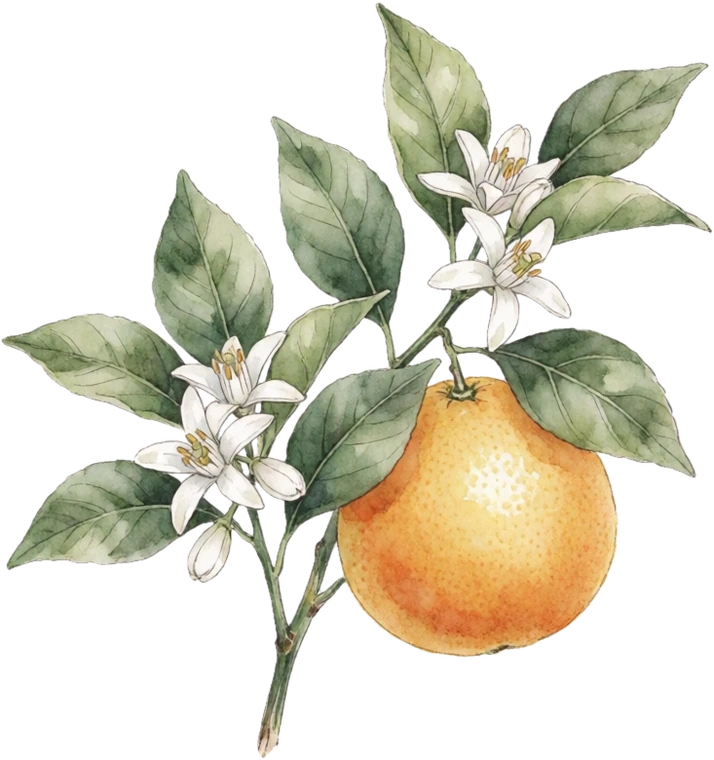
Rio Red · sold under the Rio Star / Rio Star brand (a TexaSweet trademark also covering Ruby-Sweet)

Self-fertile
RipensDec-MayZones9-11DiseasemoderateSizestandard, vigorous 15-20 ft

deep red flesh, very juicy, sweet — A vigorous Ruby Red mutation (Texas A&M, released 1984) whose deep-red flesh holds color well into the season; a top pick for red, sweet fruit. Perfect self-fertile flowers, no second tree required.

Where to buy ‘Rio Redverified

Story Thyme Farms may earn a small commission from these links, at no cost to you — it never changes what we recommend.

Star Ruby

Self-fertile
RipensJan-MayZones9b-11Diseasesusceptible; herbicide- and cold-sensitiveSizecompact, slow-growing 12-15 ft

darkest red flesh, rich sweet, few seeds — Reddest flesh of all but a finicky, slow, cold- and herbicide-sensitive grower with naturally low, inconsistent yields (pollination trials show poor set without supplemental pollination). Self-fertile — it needs no partner variety — but choose it only for a sheltered, well-managed spot.

Where to buy ‘Star Rubyverified

Story Thyme Farms may earn a small commission from these links, at no cost to you — it never changes what we recommend.

Marsh · Marsh Seedless, White Marsh

Self-fertile
RipensNov-MayZones9-11DiseasemoderateSizestandard, vigorous 15-20 ft

classic tangy white-to-buff flesh, seedless (6 or fewer seeds) — The benchmark seedless white grapefruit: heavy-bearing and holds on the tree for months, giving a long fresh-eating season and true grapefruit tang.

Where to buy ‘Marsh

Story Thyme Farms may earn a small commission from these links, at no cost to you — it never changes what we recommend.

Duncan

Self-fertile
RipensOct-MayZones8b-11Diseasemoderate; among the hardier grapefruitSizelarge, vigorous 18-22 ft

rich, sweet white flesh but very seedy; best for juice — An old Florida white (circa 1830s) prized for the richest flavor and relative cold-hardiness; its many seeds make it more a juicing than fresh-eating variety. Reliably hardy only in zone 9+, though it tolerates a bit more cold than most grapefruit.

Where to buy ‘Duncan

Story Thyme Farms may earn a small commission from these links, at no cost to you — it never changes what we recommend.

Flame

Self-fertile
RipensNov-MayZones9-11DiseasemoderateSizestandard, vigorous 15-20 ft

bright red flesh, sweet, nearly seedless — A vigorous, commercially seedless red grapefruit selected from Henderson/Ruby Red seedlings (UF Whitmore Farm, released 1987), with internal color nearly as deep as Star Ruby but easier to grow. Mid-to-late season; fruit holds on the tree into spring.

Where to buy ‘Flame

Story Thyme Farms may earn a small commission from these links, at no cost to you — it never changes what we recommend.

Oroblanco · Oro Blanco; Sweetie

Self-fertile
RipensDec-MarZones9-11Sizelarge, vigorous, spreading tree

mild and sweet, distinctly sweeter and lower in acid than a white grapefruit; very pale yellow flesh, thick rind, and pummelo bitterness in the rind and membranes — A triploid hybrid of an acidless pummelo and a seedy white grapefruit, made at UC Riverside in 1958 and released in 1980. Its three sets of chromosomes make it completely seedless even when cross-pollinated by other citrus. Early to mature and holds very well on the tree. Sold at the supermarket as 'Oroblanco grapefruit' and marketed in Israel as a 'Sweetie'.

Where to buy ‘Oroblanco

Story Thyme Farms may earn a small commission from these links, at no cost to you — it never changes what we recommend.
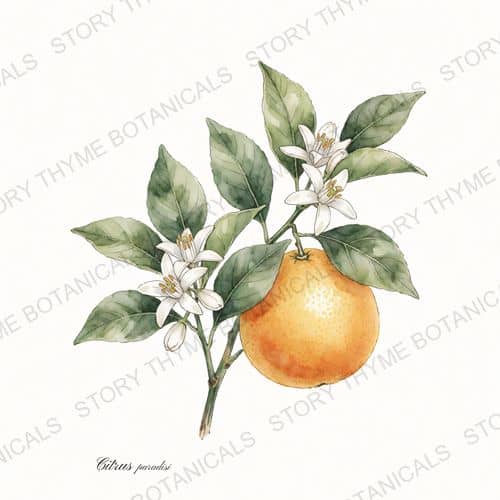
Melogold

Self-fertile
RipensDec-MarZones9-11Sizevigorous, large, somewhat spreading tree

mild, sweet, and low in acid, reminiscent more of pummelo than of grapefruit; pale yellow flesh, tender and juicy, smooth medium-to-dark yellow rind — A triploid sibling of Oroblanco from the same UC Riverside cross of acidless pummelo and 4N seedy Marsh grapefruit, released in 1986. Largely seedless, though it sets more seed than Oroblanco does. Fruit are notably large, averaging about a pound each. Ripens early December through March at Riverside, slightly earlier at cooler Lindcove, and it has retained more pummelo character than Oroblanco. Best adapted to inland citrus areas.

Where to buy ‘Melogold

Story Thyme Farms may earn a small commission from these links, at no cost to you — it never changes what we recommend.

Ray Ruby

Self-fertile
RipensFeb-JunZones9-11Sizestandard tree 15-20 ft

light red to medium pink flesh, juicy, with the balance of sweetness and acid expected of a Texas red — One of the Texas red grapefruit selections, received by the UC Riverside collection as budwood from the Texas Agricultural Extension Service at Weslaco in 1985; its exact parentage is unrecorded. Ripens February to June at Riverside, making it one of the latest grapefruit you can grow. Seediness varies a good deal by site and season. Grown commercially in Texas alongside Henderson.

Where to buy ‘Ray Ruby

Story Thyme Farms may earn a small commission from these links, at no cost to you — it never changes what we recommend.

Henderson Ruby · Henderson

Self-fertile
RipensFeb-JunZones9-11Sizestandard tree 15-20 ft

light red to medium-dark red flesh depending on when it is picked, juicy — A Texas red grapefruit received by the UC Riverside collection as budwood from the Texas Agricultural Extension Service at Weslaco in 1985, parentage unrecorded. Ripens February to June at Riverside. Seed count in the collection's fruit ran high and varied widely by site, so do not expect the near-seedless fruit of Rio Red or Flame. Henderson's grove near Houston is also where the Flame grapefruit originated.

Where to buy ‘Henderson Ruby

Story Thyme Farms may earn a small commission from these links, at no cost to you — it never changes what we recommend.

Thompson · Pink Marsh; Marsh Pink; Thompson Pink

Self-fertile
RipensFeb-JunZones9-11Sizevigorous, large, productive tree

tender and juicy with good flavor much like Marsh; flesh chamois to dark buff, light pink under favorable conditions but never pink in the juice — The fountainhead of the pink and red grapefruit line: it appeared as a limb sport on a Marsh tree in W.B. Thompson's orchard at Oneco, Florida in 1913, discovered by S.A. Collins, and was the first seedless pigmented grapefruit ever found. It went on to give rise by bud mutation to Redblush and Burgundy. Seeds few or none. Midseason, earlier than Marsh, and it holds on the tree unusually well, though the color fades considerably the longer it hangs.

Where to buy ‘Thompson

Story Thyme Farms may earn a small commission from these links, at no cost to you — it never changes what we recommend.

VI

Sources & plant ID

Where the care distinctions come from, and how the plant is filed.

Research basis

Sources behind this profile

No extension citations are attached to grapefruityet. The care figures below come from the library's own catalogue rather than a traced primary source.

Plant ID

BinomialCitrus × paradisi
FamilyRutaceae
TypeTree · Tender Perennial
USDA symbolCIPA3
OriginIntroduced
Invasive riskLow

VII

Where to buy

Third-party nurseries — not Story Thyme Farms.

Third-party nurseries, not Story Thyme Farms. Prices are theirs.

Story Thyme Farms may earn a small commission from these links, at no cost to you — it never changes what we recommend.

VIII

Questions

Grapefruit questions, answered straight.

Do I need two grapefruit plants to get fruit?

No — grapefruit is self-fertile, so a single plant will set a crop. A second one usually improves yields, but it isn't required.

Is grapefruit safe for kids and pets?

With care. Grapefruit interacts with many medications (a real caution for the fruit itself) Site it accordingly if children or pets roam the garden. This is general reference, not medical or veterinary advice — call a vet or poison control if something has actually been eaten.

When do you harvest grapefruit?

Ripens over a LONG season — hangs on the tree from winter into spring, sweetening the whole time.

How do you propagate grapefruit?

Grafted, or from cuttings/layering (seed won't come true).

IX

Elsewhere

Where grapefruit sits in the library.