The illustrated growing guide

Highbush Cranberry

Viburnum trilobum

Family Viburnaceae

Est. zones 2-7

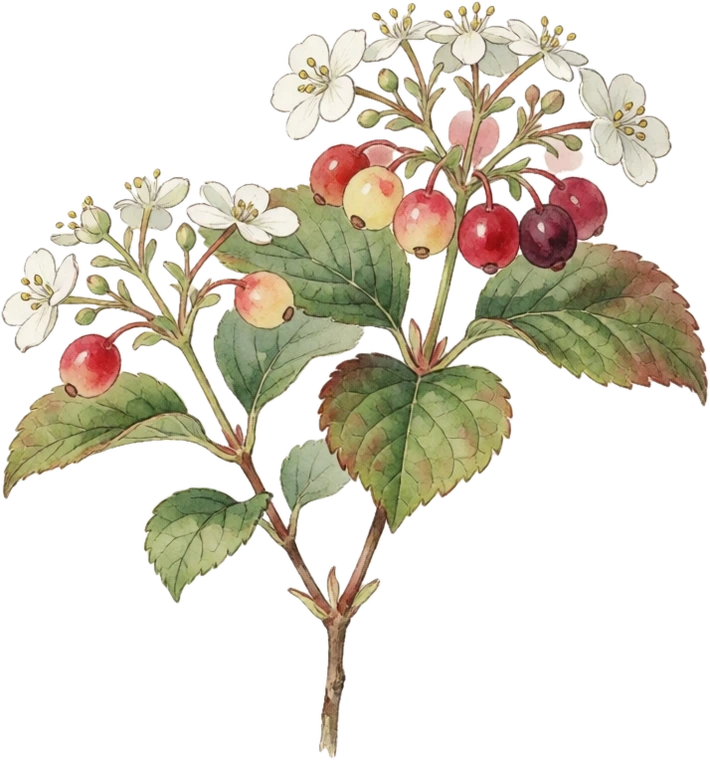
Botanical illustration of Highbush Cranberry
Shrub · Viburnum trilobum

Not a true cranberry — better: a gorgeous native viburnum whose frost-kissed scarlet clusters cook into a tart jelly that IS the north-woods holiday condiment. Trifecta shrub: spring lace, fall crimson, winter bird fruit.

Shrub · NativeFull Sun to Part ShadeModerate waterModerate growthNative to North AmericaExcellent edible

Where to buy the plant — 1 nursery

I

Overview

Will highbush cranberry suit your garden, and what goes wrong.

Will it fruit where you are?

Enter your ZIP — we look up your USDA hardiness zone (2023 map) and check it against what highbush cranberry actually needs.

Hardy inZones 2-7
PollinationSelf-fertile

Highbush Cranberry at a glance

HardinessUSDA 2–7
Mature size8-12 ft
PollinationLacecap flowers feed natives; self-fruitful (better with two)
Chill requirementNot yet established
Bloom seasonMay - June (white lace)
Harvest seasonSeptember - October: translucent scarlet clusters, best AFTER frost — jelly not snacking (musky raw)
Growth rateModerate

Common highbush cranberry problems

  • VIBURNUM LEAF BEETLE (this species is susceptible — winter twig patrol)
  • Few

II

Growing

Light, water, soil, propagation and the season’s jobs.

How to grow highbush cranberry: light, water & soil

LightFull Sun to Part Shade
WaterModerate; swampy-edge tolerant
SoilAny moist · pH 5.5 - 7.0
FertilizerNone needed
PruningAfter flowering — Renewal-prune; watch it isn't the lookalike EUROPEAN V. opulus (bitter fruit) — buy 'trilobum' verified.
Spacing6-8 ft

How to plant & propagate highbush cranberry

PropagateGrafted, or from cuttings/layering (seed won't come true)

When to spray highbush cranberry

Dormant season. Snip off beetle egg rows on twig undersides each winter.

The highbush cranberry growing playbook

Field-tested instructions for every job highbush cranberry asks of you, compiled from university extension guidance — in the order the season brings them.

Pruning

Viburnum leaf beetle: cut out egg-laden twigs while the shrub is bareJan – Dec

Once the leaves drop, go over the youngest twigs and look for straight rows of small raised bumps on the undersides, each a capped pit holding five to eight eggs. Prune those twigs out and destroy them any time between October and bud break. Every female lays up to 500 eggs sealed into last season's twigs, so the whole of next spring's larval population is sitting on wood you can see and cut while the plant is leafless.

Shape the shrub as the flowers fade

Once the white lacecap flowers finish, take out crossing, dead and crowded stems and shorten the shrub to the size you want. It is an 8 to 15 foot shrub left alone. Highbush cranberry sets next year's flower buds on wood it grows this summer, so pruning right after bloom leaves a full season for the replacement wood to form buds, while a late-summer or spring cut removes the flowers before they open.

Anything you cut now was carrying this year's fruit clusters, so keep the flowering stems you actually want to harvest from and confine hard cuts to the wood you can give up.

What to watch for

Watch for the second round: adult beetles from midsummer on

From July into September, check the foliage for golden-brown adult beetles chewing ragged holes, and for fresh egg pits appearing on this year's twigs. Note which twigs they are using so you can prune them out after leaf drop, which is the control that costs you nothing and does not touch the fruit. There is one generation a year, but the adults that emerge in July feed a second time and then lay eggs into the twigs right up until frost, which is what sets the size of next spring's larval attack.

Do not reach for the landscape insecticides here: this adult window runs straight into the September-October harvest on fruit you intend to eat. Chlorantraniliprole products sold for viburnums (e.g. Acelepryn) are ornamental-only and their label bars use on plants that will bear edible fruit within a year of application. If you spray at all, use only a product whose label lists edible crops and observe its stated pre-harvest interval. Bloom is long over by adult emergence, but never spray a shrub that is flowering. Dormant twig removal after leaf drop is the preferred control on a fruiting bush.

Spraying

Dormant oil on the twigs before buds break

In late dormancy, before the buds break, spray horticultural oil at the dormant rate of 4 percent and cover the young twigs thoroughly, where the egg pits are. The eggs are glued into pits on the stems and the oil smothers them before hatch, which is far easier than chasing larvae once they are spread through the canopy.

Dormant rate oil must go on before green tissue emerges - the 4 percent rate will burn opening buds and leaves.

Viburnum leaf beetle larvae: hit them small, as the leaves expand

As the new leaves unfold, turn them over and look for clusters of small greenish larvae skeletonizing the undersides. Spray insecticidal soap at 2 percent or spinosad while the larvae are still small, and repeat once if they persist. American cranberrybush is one of the most susceptible viburnums and a heavy larval year can strip the shrub bare, and both soap and spinosad only work well on the youngest instars, which hatch just as the leaves are expanding.

This window is before bloom - do not carry spinosad into flowering, it is toxic to pollinators and must never be applied to plants in bloom. If you intend to eat the fruit, use only a product whose label lists edible/food crops: the extension guidance for this pest is written for ornamental plantings, and many spinosad and soap products sold for landscape viburnums are not cleared for crops you will harvest. Follow the label of the product you actually buy.

Harvesting

Pick the clusters slightly under-ripe, and let frost do the rest

Cut whole clusters once the fruit has coloured scarlet and turned translucent. The flavour is better if you pick slightly under-ripe and after a frost has hit the bush. Expect nothing for roughly the first five years after planting. The americanum form is tart rather than bitter, and cold sharpens it into jelly fruit - fully ripe, unfrosted berries are musky and the seed and skin dominate.

III

The year

What highbush cranberry asks for, month by month.

The highbush cranberry year, month by month

MonthJanFebMarAprMayJunJulAugSepOctNovDec
Bloom
Harvest

What each band means

  • Bloomflowers open — pollinators working, frost on blossoms is the danger.
  • Harvestpicking time — check ripeness every few days.

The highbush cranberry year as text

  • Jan quiet month
  • Feb quiet month
  • Mar quiet month
  • Apr quiet month
  • May bloom
  • Jun bloom
  • Jul quiet month
  • Aug quiet month
  • Sep harvest
  • Oct harvest
  • Nov quiet month
  • Dec quiet month

These are the species' typical months — expect them a few weeks earlier in warm zones and later in cold ones. Watch the plant, not just the calendar.

IV

Ecology & uses

What it does for the garden, and what it is grown for.

Highbush Cranberry in the garden system

  • Shrub layer shrub
AttractsBirds
MoistureWetland / wet-tolerant
DeerBrowsed — protect young plants
OriginNative to North America

What highbush cranberry is grown for

✓ Commonly eatenRaw quantity = stomachache; cooked = fine

UseJelly
UseNorthern natives
UseFour-season hedge
Edible value4/5

Harvesting & storing highbush cranberry

September - October: translucent scarlet clusters, best AFTER frost — jelly not snacking (musky raw).

Edibility, identification, and traditional-use notes here are general reference — not medical or veterinary advice, and not a claim that any plant treats or prevents anything. Medicinal ratings record how strongly a plant features in herbal tradition, nothing more. Never eat or dose a plant you have not positively identified. More on how to use this library.

V

Cultivars

Named varieties of highbush cranberry, ruled as a catalogue.

Best highbush cranberry varieties & cultivars

7 on file

Named varieties of highbush cranberry differ in winter-chill needs, ripening time, hardiness, and whether they set fruit on their own — pick one that fits your climate.

Wentworth

Self-fertile
RipensearlyZones3-7Sizestandard, 8-12 ft

tart, good quality edible fruit — In the Wisconsin uncommon fruit trial Wentworth was slow to establish and its fruit was lighter red and matured nearly two weeks earlier than Phillips. Selected for quality edible fruit and it colours well red in fall.

Where to buy ‘Wentworth

Story Thyme Farms may earn a small commission from these links, at no cost to you — it never changes what we recommend.

Phillips

Self-fertile
RipenslateZones3-7Sizeabout 6 ft in trial at 5 years

tart — Established quickly in the Wisconsin trial and yielded about 15 lbs from two plants in 2011. Fruit is darker and firmer than Wentworth and borne on larger cymes, maturing nearly two weeks later. A late frost cost the whole crop the following year.

Where to buy ‘Phillips

Story Thyme Farms may earn a small commission from these links, at no cost to you — it never changes what we recommend.

Hahs

Self-fertile
Zones2-7Sizedwarf, 8 ft tall and wide

tart, culinary — A dwarf selection at 8 ft tall and wide, notable for larger fruit useful for culinary purposes. Zone range follows the species, which UConn rates hardy to zone 2 and Maine Extension lists as zones 2-7.

Where to buy ‘Hahs

Story Thyme Farms may earn a small commission from these links, at no cost to you — it never changes what we recommend.

Andrews

Self-fertile
Zones2-7Sizecompact, dense

tart, superior fruit — One of the standard selections made for superior fruit, and the least common of them in the trade. Habit is more compact and dense than the species. Zone range follows the species, which UConn rates hardy to zone 2 and Maine Extension lists as zones 2-7.

Where to buy ‘Andrews

Story Thyme Farms may earn a small commission from these links, at no cost to you — it never changes what we recommend.

Compactum

Self-fertile
Zones2-7Sizecompact, 6 ft

tart — The most commonly sold form of the species, a handsome compact plant to 6 ft. Fall colour can disappoint - a poor yellow rather than the brilliant red of the species.

Where to buy ‘Compactum

Story Thyme Farms may earn a small commission from these links, at no cost to you — it never changes what we recommend.

Bailey Compact

Self-fertile
Zones2-7Sizedwarf, 6 ft

tart — One of the dwarf forms in the trade, to 6 ft, with red fall foliage and a satisfactory fruit set - a compact form that still crops, unlike some of the dwarf selections.

Where to buy ‘Bailey Compact

Story Thyme Farms may earn a small commission from these links, at no cost to you — it never changes what we recommend.

Alfredo

Self-fertile
Zones2-7Sizedense, 6 ft tall and wide

tart — A newer variation on the Compactum theme, said to grow more densely into a 6 ft tall and wide shrub, with reportedly excellent red autumn colour. Grown for looks more than for the crop.

Where to buy ‘Alfredo

Story Thyme Farms may earn a small commission from these links, at no cost to you — it never changes what we recommend.

VI

Sources & plant ID

Where the care distinctions come from, and how the plant is filed.

Research basis

Sources behind this profile

No extension citations are attached to highbush cranberryyet. The care figures below come from the library's own catalogue rather than a traced primary source.

Plant ID

BinomialViburnum trilobum
FamilyViburnaceae
TypeShrub · Perennial
USDA symbolVITR8
OriginNative to North America
Invasive riskLow

VII

Where to buy

Third-party nurseries — not Story Thyme Farms.

Third-party nurseries, not Story Thyme Farms. Prices are theirs.

Story Thyme Farms may earn a small commission from these links, at no cost to you — it never changes what we recommend.

VIII

Questions

Highbush Cranberry questions, answered straight.

Do I need two highbush cranberry plants to get fruit?

No — highbush cranberry is self-fertile, so a single plant will set a crop. A second one usually improves yields, but it isn't required.

Is highbush cranberry safe for kids and pets?

Highbush Cranberry is commonly eaten and isn't considered toxic, but "commonly eaten" isn't a guarantee for any particular person or animal — allergies, quantity, and which part you eat all matter. One caveat on this one: Raw quantity = stomachache; cooked = fine. Never eat a plant you haven't positively identified, and check with a vet before letting pets or livestock graze anything new.

When do you harvest highbush cranberry?

September - October: translucent scarlet clusters, best AFTER frost — jelly not snacking (musky raw).

How do you propagate highbush cranberry?

Grafted, or from cuttings/layering (seed won't come true).

IX

Elsewhere

Where highbush cranberry sits in the library.

Where highbush cranberry sits in the library

Grows in the same world