The illustrated growing guide
Molokhia (Egyptian Spinach)
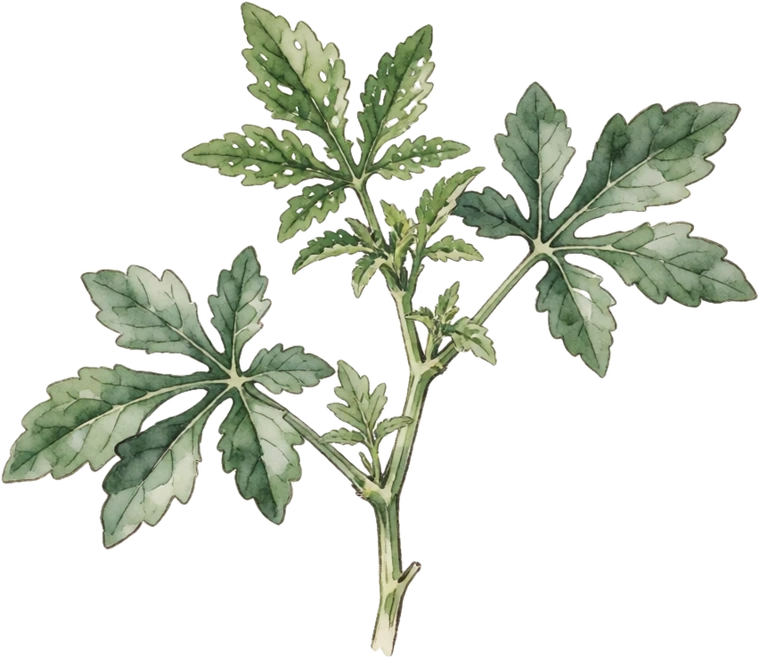
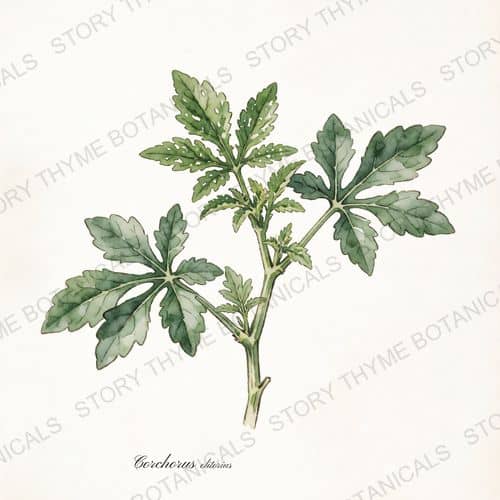
Corchorus olitorius
Family Malvaceae
Grown as an annual

The ancient leafy green of the Nile — molokhia — that turns brutal summer heat into a crop when spinach can't cope. Its cooked leaves are famously silky and thickening, the heart of a stew eaten across Egypt and the Levant for millennia. Pinch tips for continuous tender harvest.
I
Overview
Will molokhia (egyptian spinach) suit your garden, and what goes wrong.
Will it fruit where you are?
Enter your ZIP — we look up your USDA hardiness zone (2023 map) and check it against what molokhia (egyptian spinach) actually needs.

Molokhia (Egyptian Spinach) at a glance
Common molokhia (egyptian spinach) problems
- Almost none
- Almost none
II
Growing
Light, water, soil, propagation and the season’s jobs.
How to grow molokhia (egyptian spinach): light, water & soil
How to plant & propagate molokhia (egyptian spinach)
The molokhia (egyptian spinach) growing playbook
Field-tested instructions for every job molokhia (egyptian spinach) asks of you, compiled from university extension guidance — in the order the season brings them.
Sowing
Sow molokhia once the soil hits 65F
Wait until the soil has warmed to 65F before sowing outdoors, then sow very shallow - the seed should be barely covered with soil. Space rows 30 to 36 inches apart. Do not rush this by the calendar; check the soil with a thermometer, because 65F arrives in April in the South and not until June in the far North. Molokhia is a warm-season annual from the tropics, and its seed sits and rots rather than germinating in cold ground. The seed is tiny, so burying it deep means it exhausts itself before reaching light.
Planting out
Start transplants indoors if your season is short
Molokhia can be direct seeded or transplanted. If your summer is short, start seed indoors in trays and set plants out only after the soil has reached 65F. Transplanting is the more reliable route wherever the outdoor stand is unpredictable or the warm window is narrow. Extension notes that molokhia's small seeds make consistent germination difficult outdoors, so sowing in a controlled tray gets a reliable stand and buys back weeks a short-season grower cannot spare.
Watering
Water it in well, then ease off
Water thoroughly at seeding or transplanting and keep the ground damp until the plants take hold. Once established, molokhia tolerates drought, so water deeply and only when the plants genuinely need it rather than on a fixed schedule. The crop is drought tolerant once its roots are down, but a seedling has no root system to draw on and a dry spell at that stage kills the stand outright.
Feeding
Feed for leaves, and aim the pH at 6.0 to 7.0
Molokhia has an average nitrogen appetite: 50 to 90 pounds of nitrogen per acre, which works out to roughly 0.1 to 0.2 pounds of actual nitrogen per 100 square feet of garden. Use the lower end on soil already rich in organic matter. Target a soil pH of 6.0 to 7.0, and soil test rather than guess for phosphorus and potassium. Every part you eat is a leaf, and leaves are built on nitrogen. Phosphorus and potassium are worth testing for instead of adding blind, since excess simply runs off into water.
Thinning
Thin to the spacing your harvest style calls for
Once the seedlings have their first true leaves, thin them. For bunched greens cut all at once, thin to 2 to 3 inches apart in the row. For plants you will pick from all summer, thin to 6 to 12 inches apart. The two spacings serve two different crops. Tight spacing gives slender single-cut stems, while wide spacing gives each plant the room to branch into the bush that carries repeated pickings.
Pruning
Clear the debris when the crop is finished
When the planting is done for the year, pull the crop and remove the debris from the bed rather than leaving old stems standing. If anthracnose showed up during the season - depressed yellow-brown, water-soaked stem lesions that turn black and necrotic - take that residue out of the field entirely rather than burying it in place. (Deep plowing of residue is the recommendation for sclerotium rot, a different disease, not for anthracnose.) The anthracnose fungus Glomerella cingulata carries over on last year's stems and debris, so ground left littered hands next season's planting its own infection. Removing the residue from the field is what lowers inoculum; burying it in the same bed leaves it there.
What to watch for
Scout for aphids, Japanese beetles, and mites
Check the plants weekly through the warm months. Extension lists molokhia as vulnerable to aphids and to leaf-eating beetles including Japanese beetles, and plants grown under glass or plastic are vulnerable to spider mites. Turn leaves over to inspect the undersides, where aphids and mites feed. If you find pests, standard physical measures for any leafy green apply: hand-pick beetles and rinse aphid colonies off with a firm spray of water. Aphids and mites both feed on the undersides of leaves where you will not see them from above, and beetles chew the very tissue you intend to eat, so damage on this crop is damage to the harvest itself.
⚠ Molokhia is picked continuously all summer, which leaves no clean gap in which to observe an insecticide's pre-harvest interval. Handle these pests physically, and if you do consider any product, use only one whose label names a leafy green you are harvesting and follow its pre-harvest interval exactly.
Harvesting
Start picking at 40 days and keep cutting
For a bunched cut, the crop is ready in 40 to 60 days. For continuous picking, start taking individual leaves and tender shoot tips at about 40 days and keep going all summer as the plants turn bush-like. Treat it as cut-and-come-again: new growth pushes from below each cut. Every cut releases the buds beneath it to break, so the plant answers repeated picking by branching instead of running up to a single stem. Taking the young tips also keeps you eating the tender growth rather than the tough older leaves.
III
The year
What molokhia (egyptian spinach) asks for, month by month.
The molokhia (egyptian spinach) year, month by month
What each band means
- Bloom — flowers open — pollinators working, frost on blossoms is the danger.
- Harvest — picking time — check ripeness every few days.
The molokhia (egyptian spinach) year as text
- Jan quiet month
- Feb quiet month
- Mar quiet month
- Apr quiet month
- May quiet month
- Jun bloom, harvest
- Jul bloom, harvest
- Aug bloom, harvest
- Sep quiet month
- Oct quiet month
- Nov quiet month
- Dec quiet month
These are the species' typical months — expect them a few weeks earlier in warm zones and later in cold ones. Watch the plant, not just the calendar.
IV
Ecology & uses
What it does for the garden, and what it is grown for.
Molokhia (Egyptian Spinach) in the garden system
- Herbaceous layer annual
What molokhia (egyptian spinach) is grown for
✓ Commonly eatena traditional staple
Harvesting & storing molokhia (egyptian spinach)
Leaves all summer — the mucilaginous green of Egyptian molokhia soup; harvest tips continually, thickens like okra when cooked. About 60 days from planting.
Edibility, identification, and traditional-use notes here are general reference — not medical or veterinary advice, and not a claim that any plant treats or prevents anything. Medicinal ratings record how strongly a plant features in herbal tradition, nothing more. Never eat or dose a plant you have not positively identified. More on how to use this library.
V
Cultivars
Named varieties of molokhia (egyptian spinach), ruled as a catalogue.
Best molokhia (egyptian spinach) varieties & cultivars
'Egyptian Spinach' common type
VI
Sources & plant ID
Where the care distinctions come from, and how the plant is filed.
Research basis
Sources behind this profile
No extension citations are attached to molokhia (egyptian spinach)yet. The care figures below come from the library's own catalogue rather than a traced primary source.
Plant ID
VII
Where to buy
Third-party nurseries — not Story Thyme Farms.
Third-party nurseries, not Story Thyme Farms. Prices are theirs.
Story Thyme Farms may earn a small commission from these links, at no cost to you — it never changes what we recommend.
VIII
Questions
Molokhia (Egyptian Spinach) questions, answered straight.
Is molokhia (egyptian spinach) safe for kids and pets?
Molokhia (Egyptian Spinach) is commonly eaten and isn't considered toxic, but "commonly eaten" isn't a guarantee for any particular person or animal — allergies, quantity, and which part you eat all matter. One caveat on this one: a traditional staple. Never eat a plant you haven't positively identified, and check with a vet before letting pets or livestock graze anything new.
When do you harvest molokhia (egyptian spinach)?
Leaves all summer — the mucilaginous green of Egyptian molokhia soup; harvest tips continually, thickens like okra when cooked. From planting, expect about 60 days to maturity.
How do you propagate molokhia (egyptian spinach)?
From seed.
IX
Elsewhere
Where molokhia (egyptian spinach) sits in the library.
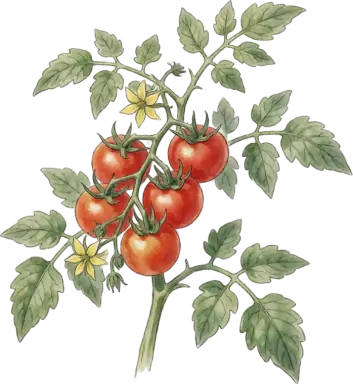
Tomato
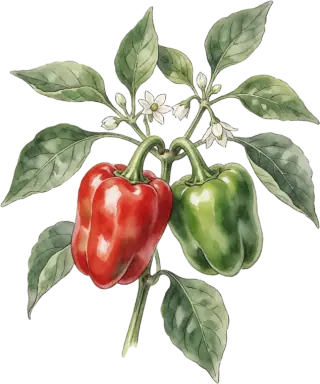
Pepper
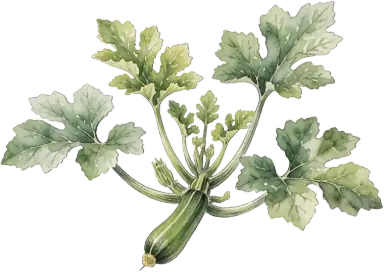
Squash
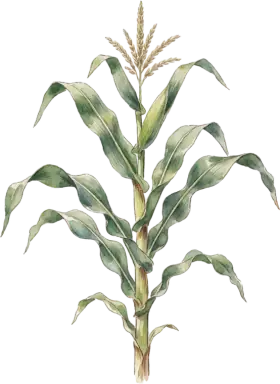
Corn