The illustrated growing guide

Nanking Cherry

Prunus tomentosa

Family Rosaceae

Est. zones 2-7

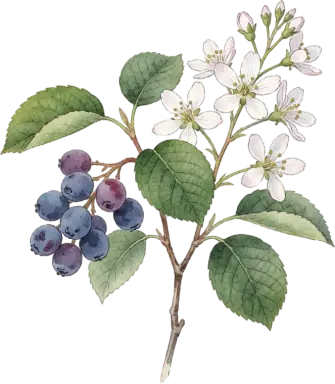
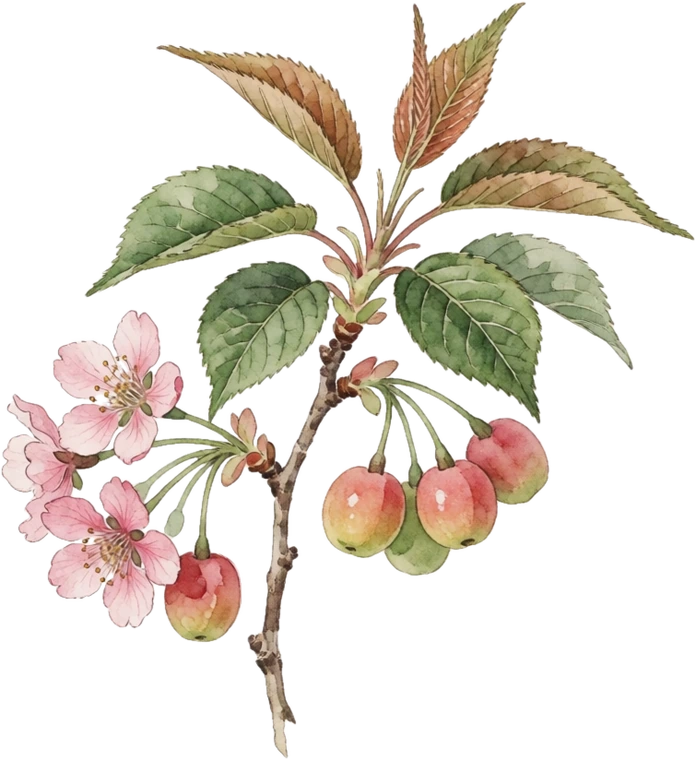
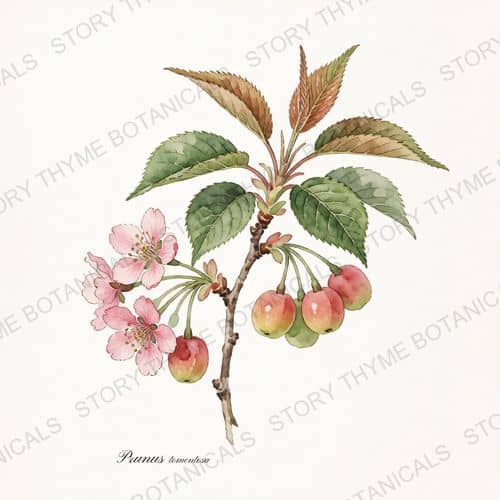
Botanical illustration of Nanking Cherry
Shrub · Prunus tomentosa

Zone-2-proof cherries on a lilac-sized bush: April blizzard of bloom, July branches BEADED in fruit, kids grazing at eye level. The pie/jelly cherry for the northern plains where trees fail — and an honest hedge besides.

ShrubFull SunLow waterFast growthExcellent edibleAttracts beesNeeds a pollination partner

Where to buy the plant — 1 nursery

Japanese Cherry — a print from the Flowering Trees collection

From the print shop

The closest print we make

We don’t print Prunus tomentosa. The closest we have is Prunus serrulata (“Japanese Cherry”) in the Flowering Trees collection — the same genus, Prunus, not the same species.

16 designsfrom $21.99white or black groundmatte poster, unframed

Shop Flowering Trees botanical prints →

I

Overview

Will nanking cherry suit your garden, and what goes wrong.

Will it fruit where you are?

Enter your ZIP — we look up your USDA hardiness zone (2023 map) and check it against what nanking cherry actually needs.

Hardy inZones 2-7
PollinationPartner needed

Nanking Cherry at a glance

HardinessUSDA 2–7
Mature size6-10 ft
PollinationNOT self-fertile — plant 2+ seedlings/cultivars
Chill requirementNot yet established
Bloom seasonApril (pink-white wreaths hugging the branches — apricot-blossom pretty)
Harvest seasonJuly: tart-sweet scarlet cherries lining every stem — pick by the milk-pail
Growth rateFast

Common nanking cherry problems

  • Cherry pests lite (less than tree cherries)
  • Brown Rot in wet Julys
  • Poor pollination → low fruit set (plant a partner)

II

Growing

Light, water, soil, propagation and the season’s jobs.

How to grow nanking cherry: light, water & soil

LightFull Sun
WaterLow — Manchurian steppe tough
SoilAny drained · pH 6.0 - 7.5
FertilizerLight compost
PruningLate Winter — Renewal-prune old wood; hedge-friendly.
Spacing4-6 ft (hedge); TWO plants minimum

How to plant & propagate nanking cherry

PropagateGrafted, or from cuttings/layering (seed won't come true)

When to spray nanking cherry

Growing season. Thin for airflow; that's usually enough.

The nanking cherry growing playbook

Field-tested instructions for every job nanking cherry asks of you, compiled from university extension guidance — in the order the season brings them.

Planting out

Plant at least two bushes, or you will get flowers and no fruit

Set two or more Nanking cherries near each other in full sun. Seedlings raised from different parents, or two different named strains, will pollinate each other. Nanking cherry requires cross pollination and must have two or more plants in the area, so a lone bush flowers beautifully and sets almost nothing. This is the single most common reason a healthy-looking planting never fruits.

Pruning

Renewal-prune 3 to 5 old canes in late winter

While the bush is still dormant, take out 3 to 5 of the oldest canes near the ground, then remove dead and damaged wood, crossing branches, and old center limbs to open the middle up. Leave the young wood alone. Flowers form on one-year-old and older growth, so a rolling supply of young canes is what carries the crop, and an open center lets this very twiggy shrub dry quickly after rain, which is the cheapest control you have for blight and branch canker.

What to watch for

Watch leaf undersides for spider mites through the hot spells

In hot dry weather, tap a branch over a sheet of white paper and look for moving specks, and check the undersides of leaves for fine stippling and webbing. If mites are present, treat with insecticidal soap or a 1 percent horticultural mineral oil every 5 to 7 days. Spider mites build up fastest on hot, dry, dusty foliage, and they breed quickly enough that one application only kills what is currently hatched - the 5 to 7 day repeat is what catches the next generation and actually breaks the cycle.

Spraying

Coryneum blight: spring spray as the petals drop

If the bush carried shothole lesions or twig cankers last season, spray chlorothalonil once the petals have fallen. A bush with clean wood does not need this spray. Coryneum spores need about four hours of standing water on a leaf or twig to germinate and infect, and 70 to 80 F is their optimum, so the soft new tissue expanding into wet spring weather right after petal fall is exactly what they colonize first.

Wait until the petals are genuinely off before spraying anything, since the bush is full of bees through bloom. Some chlorothalonil products, such as Bonide Fung-onil, are labeled for spring use only on cherry - read the label.

Western cherry fruit fly: start spraying at the first blush of color

When the cherries in the sunniest part of the bush first turn a salmon blush over the yellow, spray spinosad and repeat every 7 to 10 days until the crop is picked. Malathion is the conventional alternative, also on a 7 to 10 day interval — USU advises the 7-day end, so tighten toward 7 days in warm weather or after rain. The female lays her eggs into the fruit as soon as it begins to color, and once the maggot is inside the cherry no spray can reach it, so the entire program is about killing adult flies in the few days before they lay.

Malathion requires 3 days minimum to harvest — stop spraying it at least 3 days before your last pick, not right up to picking. Spinosad is capped at no more than 6 applications per season - check its label for the minimum days to harvest. Never apply either during bloom.

Coryneum blight: fixed copper at 50 percent leaf fall

Once about half the leaves have dropped, and before the heavy autumn rains arrive, spray a fixed copper product over the whole bush and cover the twigs thoroughly. Rake up and destroy the fallen leaves and prune out cankered twigs while you are at it. The fungus overwinters in dormant leaf buds, blossom buds and small twig cankers, and it infects through the fresh scars each falling leaf leaves behind, so copper on those scars is what stops the carry-over into next season. Bud and twig lesions can keep producing spores for two or three years if you let them stand.

Sulfur products do not work at this leaf-scar timing - use a fixed copper or a copper-ammonia complex.

Protection

Cage the base against rabbits and mice before winter

Before the ground freezes, wrap hardware cloth or a wire cage around the base of the bush and pull mulch and long grass back away from the canes. Nanking cherry is browsed by rabbits, mice and deer, and that browsing can cause serious injury if no control measures are taken - the canes are thin enough that a winter of chewing at the base kills whole stems outright.

Harvesting

Pick every day or two once the fruit is deep red and yielding

Go over the bush every day or two as the fruit colors, taking the deep red cherries that give slightly to the finger. Chill or process them the day you pick. The fruit is very soft at peak ripeness and has a very short shelf life, so the gap between perfectly ripe and mush is a couple of days, and the birds are working the same window you are.

III

The year

What nanking cherry asks for, month by month.

The nanking cherry year, month by month

MonthJanFebMarAprMayJunJulAugSepOctNovDec
Bloom
Prune
Harvest

What each band means

  • Bloomflowers open — pollinators working, frost on blossoms is the danger.
  • Pruneshape it now — cuts heal cleanly and structure is visible.
  • Harvestpicking time — check ripeness every few days.

The nanking cherry year as text

  • Jan quiet month
  • Feb pruning
  • Mar pruning
  • Apr bloom
  • May quiet month
  • Jun quiet month
  • Jul harvest
  • Aug quiet month
  • Sep quiet month
  • Oct quiet month
  • Nov quiet month
  • Dec quiet month

These are the species' typical months — expect them a few weeks earlier in warm zones and later in cold ones. Watch the plant, not just the calendar.

IV

Ecology & uses

What it does for the garden, and what it is grown for.

Nanking Cherry in the garden system

  • Shrub layer shrub
  • Nectary/insectary
  • Keystone: Keystone — hosts 340-450+ caterpillar species
AttractsBees
MoistureUpland / dry
DeerBrowsed — protect young plants
OriginIntroduced

What nanking cherry is grown for

! Some parts toxic — see notesPits toxic as all Prunus

UseKid-height cherries
UseCold climates
UseEdible hedges
Edible value4/5

Harvesting & storing nanking cherry

July: tart-sweet scarlet cherries lining every stem — pick by the milk-pail.

Edibility, identification, and traditional-use notes here are general reference — not medical or veterinary advice, and not a claim that any plant treats or prevents anything. Medicinal ratings record how strongly a plant features in herbal tradition, nothing more. Never eat or dose a plant you have not positively identified. More on how to use this library.

V

Cultivars

Named varieties of nanking cherry, ruled as a catalogue.

Best nanking cherry varieties & cultivars

4 on file

Named varieties of nanking cherry differ in winter-chill needs, ripening time, hardiness, and whether they set fruit on their own — pick one that fits your climate.

Ian · Ian Nanking White

Needs a pollinizer
RipensJuneZones3-7Size4-8 ft multi-stemmed shrub, spreading to 6-8 ft

Sweet, low acid, white fruit larger than the common red Nanking — One of three white-fruited Nanking selections made by Michael McConkey at Edible Landscaping, alongside Gabe and Jules. Ian is the most drought and heat tolerant of the three, reported to hold up above 100 F in Texas. Yields 8 to 12 lbs at maturity and begins ripening the first week of June in zone 7. No sourced chill figure exists for this cultivar.

Where to buy ‘Ian

Story Thyme Farms may earn a small commission from these links, at no cost to you — it never changes what we recommend.

Gabe · Gabe Nanking White

Needs a pollinizer
Zones3-7Size4-8 ft multi-stemmed shrub, spreading to 8 ft

White fruit, sweet and low in acid, above average size for the species — Stock plant number 1 of the three white-fruited McConkey selections. Sold as the best Nanking strain for fresh eating. Needs a red Nanking or a different white strain nearby to set fruit. No sourced chill figure exists for this cultivar.

Where to buy ‘Gabe

Story Thyme Farms may earn a small commission from these links, at no cost to you — it never changes what we recommend.

Jules · Jules Nanking White

Needs a pollinizer
Zones3-7Size4-8 ft multi-stemmed shrub, 6 ft spacing

White fruit, highly sweet and low acid, larger than most Nanking cherries — Stock plant number 3 of the three white-fruited McConkey selections. Sold for use as a foundation plant, a fruiting hedge, or in a container. Not reliably self-fertile - pair it with Ian, Gabe or a red Nanking. No sourced chill figure exists for this cultivar.

Where to buy ‘Jules

Story Thyme Farms may earn a small commission from these links, at no cost to you — it never changes what we recommend.

Leucocarpa · White Nanking cherry

Zones2-7

White fruit rather than the usual dark red — The long-standing white-fruited form of Nanking cherry, which NDSU Extension notes is available on the market. Zones here are the species range rather than a figure published for this form specifically, so treat the cold end as approximate. Some retailers advertise it as self-pollinating, but that claim contradicts extension guidance that the species requires cross pollination, so it is left unrecorded here - plant a second bush.

Where to buy ‘Leucocarpa

Story Thyme Farms may earn a small commission from these links, at no cost to you — it never changes what we recommend.

VI

Sources & plant ID

Where the care distinctions come from, and how the plant is filed.

Research basis

Sources behind this profile

No extension citations are attached to nanking cherryyet. The care figures below come from the library's own catalogue rather than a traced primary source.

Plant ID

BinomialPrunus tomentosa
FamilyRosaceae
TypeShrub · Perennial
USDA symbolPRTO80
OriginIntroduced
Invasive riskLow

VII

Where to buy

Third-party nurseries — not Story Thyme Farms.

Third-party nurseries, not Story Thyme Farms. Prices are theirs.

Story Thyme Farms may earn a small commission from these links, at no cost to you — it never changes what we recommend.

Nanking Cherry needs a pollination partner — plant two genetically distinct plants (two different cultivars, or a cultivar plus a seedling).

VIII

Questions

Nanking Cherry questions, answered straight.

Why isn't my nanking cherry fruiting?

Most often: it has no genetically distinct partner nearby. Nanking Cherry can't pollinate itself — not self-fertile — plant 2+ seedlings/cultivars. Plant a second, unrelated one nearby; two different cultivars, or a cultivar plus a seedling, is the classic pairing.

Is nanking cherry safe for kids and pets?

With care. Pits toxic as all Prunus Site it accordingly if children or pets roam the garden. This is general reference, not medical or veterinary advice — call a vet or poison control if something has actually been eaten.

When do you harvest nanking cherry?

July: tart-sweet scarlet cherries lining every stem — pick by the milk-pail.

How do you propagate nanking cherry?

Grafted, or from cuttings/layering (seed won't come true).

IX

Elsewhere

Where nanking cherry sits in the library.

Where nanking cherry sits in the library

Grows in the same world