The illustrated growing guide

Nasturtium

Tropaeolum majus

Family Tropaeolaceae

Grown as an annual

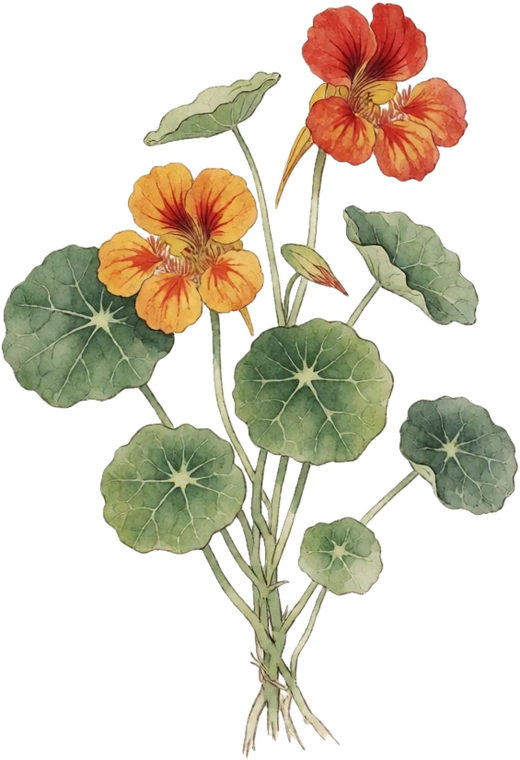
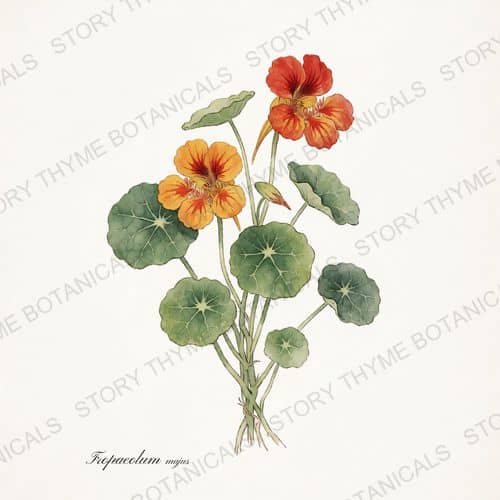
Botanical illustration of Nasturtium
Annual · Tropaeolum majus

Every part edible, thrives on neglect, pulls aphids off the vegetables, and pickled seed pods pass for capers. The definition of earning a garden spot.

AnnualFull SunLow waterFast growthExcellent edibleAttracts hummingbirdsAttracts beesNone winter chill

Where to buy the plant — 3 nurseries

I

Overview

Will nasturtium suit your garden, and what goes wrong.

Will it fruit where you are?

Enter your ZIP — we look up your USDA hardiness zone (2023 map) and check it against what nasturtium actually needs.

Life cycleAnnual
Winter chillNone

Nasturtium at a glance

Life cycleAnnual
Mature size1 ft mounds or 6 ft trailers
PollinationHummingbirds, bees
Chill requirementNone (not chill-dependent)
Bloom seasonJune - Frost
Harvest seasonLeaves + flowers (peppery salad), green seed pods (capers)
Growth rateFast

Common nasturtium problems

  • Aphids — ON PURPOSE: it's the trap crop drawing them off your beans
  • None significant

II

Growing

Light, water, soil, propagation and the season’s jobs.

How to grow nasturtium: light, water & soil

LightFull Sun
WaterLow
SoilPOOR and unfed — pamper it and it's all leaves · pH 6.0 - 7.5
FertilizerNever
PruningNone — None.
Spacing10-12 in

How to plant & propagate nasturtium

Maturity50-60 days
From seedDirect-sow after frost; large seed, easy
PropagateFrom seed

When to spray nasturtium

Growing season. Blast the aphid-covered stems with water or snip them out — that's the trap working.

The nasturtium growing playbook

Field-tested instructions for every job nasturtium asks of you, compiled from university extension guidance — in the order the season brings them.

Sowing

Direct sow after your last frost, soaking the seed first

Once all danger of frost has passed, soak the seeds in water for several hours or overnight, then sow them half an inch deep and 10 to 12 inches apart in well-drained soil in full sun. Keep the seedbed moist; expect germination in 7 to 10 days. Nasturtium is a frost-tender warm-weather annual, and its large hard-coated seed germinates faster once soaked. The half-inch depth matters because the seed needs darkness to germinate. Plants in partial shade bloom poorly.

Interplant with squash and brassicas as a companion

When you sow, put nasturtium alongside squash and pumpkins, and among broccoli and cabbage. This is one of the few companion pairings with research behind it rather than chart folklore. Trials have shown nasturtium reduces squash bug populations, and an Iowa study found that nasturtium and marigold each helped reduce squash bug and cucumber beetle damage. In brassicas, thyme, onion and nasturtium reduced cabbage looper and imported cabbageworm damage in broccoli.

Nasturtium is itself a favorite of aphids and imported cabbageworms, so site it where you can watch it rather than assume it repels everything.

Planting out

If you start indoors, use peat or paper pots and plant the whole pot

In short-season gardens, start seed indoors 4 to 6 weeks before your last expected spring frost, but sow into peat or paper pots rather than plastic cells. Set the entire pot into the ground after frost danger passes without disturbing the roots. Nasturtium resents root disturbance and does not transplant well, so a pot that goes into the soil intact avoids the transplant shock that stalls or kills bare-rooted seedlings.

Watering

Water regularly to keep the leaves mild and the bloom coming

Although nasturtium tolerates drought, water it regularly through the growing season. Keep plants well watered if you are eating the leaves. Steady water moderates the spiciness of the leaves and flowers, while heat-stressed plants turn harshly pungent. Regular water also sustains strong blooming rather than merely keeping the plant alive.

Feeding

Withhold fertilizer unless the soil is genuinely poor

Skip the feeding on average garden soil. Only fertilize if your soil is extremely poor, and then lightly. Nasturtium grows best in poor to average, well-drained ground and tolerates drought and neglect. High fertility pushes nasturtium into leaf at the expense of bloom, so a well-fed plant gives you a mound of foliage and few of the flowers you actually want. This is the single most common way growers ruin the crop.

Pruning

Deadhead through bloom, and cut back plants that go leggy

Keep picking or deadheading the flowers once bloom begins. If plants decline or go leggy by midseason, cut them back lightly and they will push new growth for the rest of the season. Deadheading or picking the flowers prolongs blooming (UW-Madison Extension), so harvesting the crop and maintaining it are the same act. Illinois Extension adds that plants that decline or go leggy in summer can be cut back lightly and will regrow for the remainder of the season.

What to watch for

Scout for aphids, cabbageworms and whiteflies, and control them without spray

Check leaf undersides and growing tips for aphids, whiteflies and imported cabbageworms. Knock aphids off with a jet of water, pick caterpillars by hand, and pull out any plant that has become an aphid colony. Leafminers may make serpentine trails on the leaves, but this does not damage the plant and needs no action. These are the pests extension records on nasturtium, and because you eat the leaves, buds, flowers and pods, the plant is a food crop where physical removal is the appropriate control rather than a chemical one.

Every part of this plant is eaten, so do not treat it with pesticides. Systemic insecticides are taken up into the tissue and cannot be washed off. Do not eat nasturtium from a florist or a cut-flower source. Plants bought from a garden center or nursery may have been treated: flush the soil with water and grow the plant on yourself before eating any part of it.

Harvesting

Pick leaves, flowers and green pods the day you will eat them

Harvest young leaves and open flowers all season, taking the youngest leaves for the most tender flavor. Pick blossoms early or late in the day while they are cool, on the day you will use them and no more than a day early. Wash gently, dry, and refrigerate in plastic bags. Gather flower buds and immature green seed pods to pickle as a caper substitute. Blossoms are thin-tissued and collapse quickly once cut and warm, so freshness at harvest is what the eating quality depends on. Older leaves turn bitter, and the seed pods must be taken while still green and soft, before they harden into seed.

Introduce any new edible flower into your diet slowly, since some people react to plants considered safe to eat.

Nasturtium companion plants

Good companions

  • Cucurbits
  • brassicas
  • tomatoes — a trap crop that lures aphids away

Underlined names have their own growing guide in this library.

III

The year

What nasturtium asks for, month by month.

The nasturtium year, month by month

MonthJanFebMarAprMayJunJulAugSepOctNovDec
Bloom

What each band means

  • Bloomflowers open — pollinators working, frost on blossoms is the danger.

The nasturtium year as text

  • Jan quiet month
  • Feb quiet month
  • Mar quiet month
  • Apr quiet month
  • May quiet month
  • Jun bloom
  • Jul quiet month
  • Aug quiet month
  • Sep quiet month
  • Oct quiet month
  • Nov quiet month
  • Dec quiet month

These are the species' typical months — expect them a few weeks earlier in warm zones and later in cold ones. Watch the plant, not just the calendar.

IV

Ecology & uses

What it does for the garden, and what it is grown for.

Nasturtium in the garden system

  • Groundcover layer annual
  • Pest control
  • Nectary/insectary
AttractsHummingbirds, Bees
MoistureUpland / dry
DeerBrowsed — protect young plants
OriginIntroduced

What nasturtium is grown for

✓ Commonly eatenfully edible

UseEdible flowers
UseTrap crop
UsePoor-man's capers
Edible value4/5

Harvesting & storing nasturtium

Leaves + flowers (peppery salad), green seed pods (capers). About 50-60 days from planting.

Edibility, identification, and traditional-use notes here are general reference — not medical or veterinary advice, and not a claim that any plant treats or prevents anything. Medicinal ratings record how strongly a plant features in herbal tradition, nothing more. Never eat or dose a plant you have not positively identified. More on how to use this library.

V

Cultivars

Named varieties of nasturtium, ruled as a catalogue.

Best nasturtium varieties & cultivars

7 on file

Named varieties of nasturtium differ in days to maturity, disease resistance, flavor, and habit — pick one that fits your season and space.

Empress of India

RipensBloom through frostZones2-11SizeCompact bush, about 12 inches

Peppery — Compact semi-bush type carrying crimson to purple-red flowers over dark blue-green foliage. Small enough for beds, borders and containers without a trellis.

Where to buy ‘Empress of India

Story Thyme Farms may earn a small commission from these links, at no cost to you — it never changes what we recommend.

Alaska · Alaska Hybrids;Alaska Series

RipensBloom through frostZones2-11SizeDwarf bush, about 12 inches

Peppery — Dwarf bushy type grown as much for its cream-and-white-splashed variegated foliage as its flowers. Compact enough for beds, edging and containers.

Where to buy ‘Alaskaverified

Story Thyme Farms may earn a small commission from these links, at no cost to you — it never changes what we recommend.

Tom Thumb · Tom Thumb Hybrids

RipensBloom through frostZones2-11SizeDwarf bush, 8 to 10 inches

Peppery — Long-grown dwarf bush type at 8 to 10 inches tall with mixed flower colors, suited to edging, small containers and tight beds.

Where to buy ‘Tom Thumb

Story Thyme Farms may earn a small commission from these links, at no cost to you — it never changes what we recommend.

Jewel of Africa

RipensBloom through frostZones2-11SizeClimbing to 8 feet

Peppery — Climbing type reaching 8 feet with a mix of red, yellow, orange and cream flowers over white-spotted leaves. Needs a fence, trellis or bank to run on.

Where to buy ‘Jewel of Africa

Story Thyme Farms may earn a small commission from these links, at no cost to you — it never changes what we recommend.

Moonlight

RipensBloom through frostZones2-11SizeTrailing vine to 6 feet

Peppery — Trailing or climbing vine to about 6 feet carrying pale, light yellow flowers rather than the usual hot orange and red.

Where to buy ‘Moonlight

Story Thyme Farms may earn a small commission from these links, at no cost to you — it never changes what we recommend.

Troika · Troika Series

RipensBloom through frostZones2-11SizeTrailing, 3 to 4 foot spread

Peppery — Trailing series spreading 3 to 4 feet, a middle ground between the dwarf bush types and the tall climbers. Good for hanging baskets and groundcover.

Where to buy ‘Troika

Story Thyme Farms may earn a small commission from these links, at no cost to you — it never changes what we recommend.

Vintage

RipensBloom through frostZones2-11SizeTrailing

Peppery — Trailing type grown for its double flowers, which give more petal per bloom for garnish and salad use than the single-flowered types.

Where to buy ‘Vintage

Story Thyme Farms may earn a small commission from these links, at no cost to you — it never changes what we recommend.

VI

Sources & plant ID

Where the care distinctions come from, and how the plant is filed.

Research basis

Sources behind this profile

No extension citations are attached to nasturtiumyet. The care figures below come from the library's own catalogue rather than a traced primary source.

Plant ID

BinomialTropaeolum majus
FamilyTropaeolaceae
TypeAnnual
USDA symbolTRMA7
OriginIntroduced
Invasive riskLow

VII

Where to buy

Third-party nurseries — not Story Thyme Farms.

Third-party nurseries, not Story Thyme Farms. Prices are theirs.

Story Thyme Farms may earn a small commission from these links, at no cost to you — it never changes what we recommend.

VIII

Questions

Nasturtium questions, answered straight.

Is nasturtium safe for kids and pets?

Nasturtium is commonly eaten and isn't considered toxic, but "commonly eaten" isn't a guarantee for any particular person or animal — allergies, quantity, and which part you eat all matter. One caveat on this one: fully edible. Never eat a plant you haven't positively identified, and check with a vet before letting pets or livestock graze anything new.

When do you harvest nasturtium?

Leaves + flowers (peppery salad), green seed pods (capers). From planting, expect about 50-60 days to maturity.

What grows well with nasturtium?

Proven companions include cucurbits, brassicas, tomatoes — a trap crop that lures aphids away — the full companion list, and what to keep away, is in the Growing tab above.

How do you propagate nasturtium?

From seed.

IX

Elsewhere

Where nasturtium sits in the library.

Where nasturtium sits in the library

Grows in the same world