The illustrated growing guide
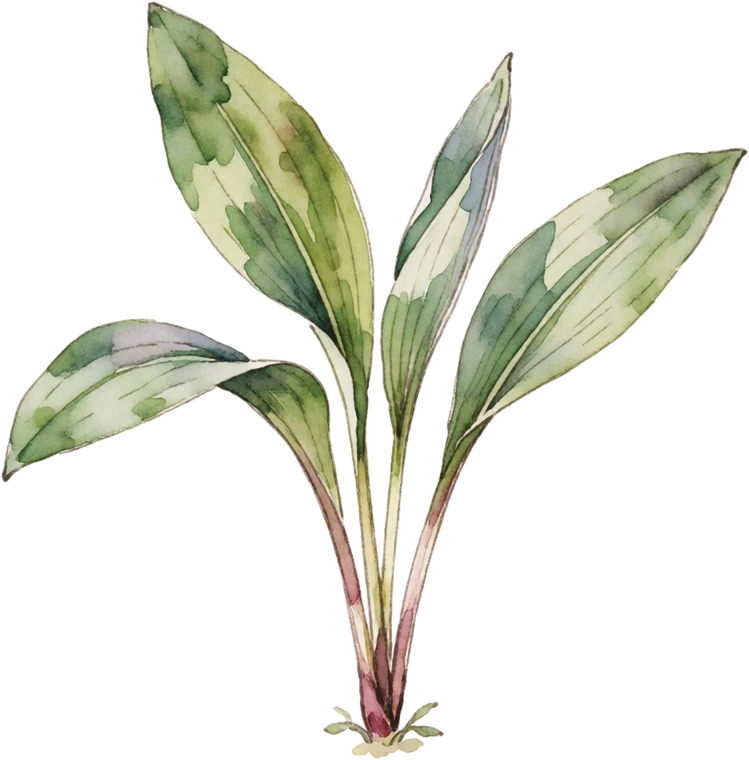
Ramps (Wild Leek)
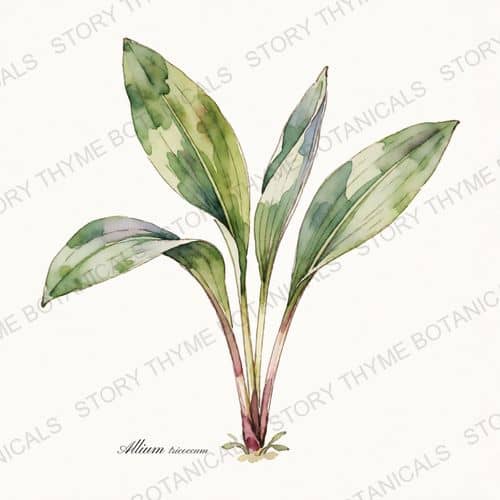
Allium tricoccum
Family Amaryllidaceae
Est. zones 3-7

The onion-garlic woodland ephemeral that restaurants strip-mined from Appalachia. Plant a patch under your fruit trees, harvest one-leaf-per-plant, and in a decade you have a self-spreading spring delicacy your grandkids inherit. The anti-instant crop.

From the print shop
The closest print we make
We don’t print Allium tricoccum. The closest we have is Allium schoenoprasum (“Chives”) in the Herbs, Greenery & Desert collection — the same genus, Allium, not the same species.
16 designsfrom $21.99white or black groundmatte poster, unframed
I
Overview
Will ramps (wild leek) suit your garden, and what goes wrong.
Will it fruit where you are?
Enter your ZIP — we look up your USDA hardiness zone (2023 map) and check it against what ramps (wild leek) actually needs.
Ramps (Wild Leek) at a glance
Common ramps (wild leek) problems
- None
- None
II
Growing
Light, water, soil, propagation and the season’s jobs.
How to grow ramps (wild leek): light, water & soil
How to plant & propagate ramps (wild leek)
The ramps (wild leek) growing playbook
Field-tested instructions for every job ramps (wild leek) asks of you, compiled from university extension guidance — in the order the season brings them.
Sowing
Sow seed in fall, and forget about it for a year
From late summer through early fall, sow seed thinly on a prepared shady seedbed, press it gently into the soil rather than burying it, and cover the bed with several inches of hardwood leaves. Expect nothing for the first spring. Germination takes 6 to 18 months and often straddles two growing seasons. Ramp seed carries a dormant, under-developed embryo. It needs a warm moist period to break root dormancy and then a cold period to break shoot dormancy, so a fall sowing hands the seed both cues in the right order. Fall-sown seed germinates better than spring-sown, and seed sown in a forest setting outperforms seed under artificial shade or in the open.
⚠ Seed is the slow road: about four years to a leaf harvest and five to seven to a bulb harvest. Plant seed and bulbs together if you want food before then.
Planting out
Set bulbs in late winter, tips just breaking the surfaceFeb – Mar
Plant bulbs about 3 inches deep and 4 to 6 inches apart, keeping just the very tip of the bulb above the soil surface. Lift and handle them with as little root damage as you can, and replant the same day. September through March all work, but February and March are best. Bulbs planted while the ground is workable and the plant is still dormant root in before the short spring window opens, and bulbs over half an inch across give a harvestable plant in two to three years instead of the five to seven that seed demands.
⚠ Space them at 4 to 6 inches because a healthy clump multiplies by splitting; crowd them at planting and you will be digging them apart in a few seasons.
Mulching
Mulch with hardwood leaves as the canopy drops them
Rake 2 to 3 inches of hardwood leaves over the patch each fall. Beech, maple, birch and poplar leaves are ideal. Do not substitute pine bark or bagged commercial mulches. Leaf litter is the soil ramps evolved in. It holds moisture through the year, feeds the bed as it rots, buffers the bulbs through winter, hides seed from wildlife, and suppresses the weeds that otherwise outrun a slow plant.
Feeding
Feed calcium with gypsum, not lime
Test the bed before planting. Ramps want a pH between 4.7 and 6.7 and will not thank you for lime once pH is above 4.9. Where calcium is short, work in about 100 pounds of gypsum per 1,000 square feet, along with composted leaves and other decaying plant material. Ramps are a calcium-hungry plant of rich limestone-influenced woods, but they are also an acid-soil plant. Gypsum is calcium sulfate, so it supplies the calcium without pushing pH up the way lime does. Their real fertility comes from decomposing hardwood leaf litter, not from a bag.
What to watch for
Allium leaf miner: watch for the row of punctures as leaves emerge
From the time leaves push up, check leaf tops in the cool of the morning for a characteristic linear series of round wounds. That is the female feeding and laying, and it is far easier to spot than the fly itself. Daffodil and forsythia bloom mark the start of the flight, which runs 5 to 7 weeks. If you have had damage before, exclusion netting laid down before the flight begins gives complete protection. Allium leaf miner overwinters as a pupa in leaf tissue and soil and runs a spring generation and a fall one. The larva mines inside the leaf, so once it is in, the leaf you were going to eat is the damaged part. The other thing you will see on ramps, Septoria leaf spot, is unsightly but does little real harm; this is the one that costs you the crop.
⚠ Do not spray. The insecticides trialed against allium leaf miner are labeled on onion and leek, not on forest-grown ramps; use no product unless its label names ramps or wild leek. Netting works and carries no label risk.
Harvesting
Take one leaf per plant while the leaves are tender
Cut a single leaf per plant at soil level while the foliage is still tender and the tree canopy is still open. Leave the rest of the foliage and the bulb in the ground. Never strip a plant bare. A ramp carries only one to three leaves and has a few short weeks to bank a year of sugar before the canopy closes over it and shuts down photosynthesis. Every leaf you take is subtracted from next year's bulb. Taking one and walking away lets the plant finish its season.
⚠ Leaf-only harvest is the sustainable option, but only if enough leaf area is left for the plant to feed itself. Remove too many leaves, or remove them too early, and the plant cannot photosynthesize the carbohydrates it needs. On a plant with a single leaf, take nothing.
If you dig bulbs, cap it at 15 percent and rotate
Digging bulbs is a different act from picking a leaf. In a planted patch, take no more than 15 percent in a year. In a wild stand, research supports 5 to 10 percent at most. If you clear a plot outright, put it on a 5 to 7 year rotation and dig a different plot each year. Always leave plants standing to flower and set seed. Ramps take five to seven years to reach flowering age, so a dug bulb is not replaced for most of a decade. Overharvest is exactly why wild populations of Allium tricoccum and A. burdickii have declined across eastern forests, and a patch mined faster than it recruits does not come back.
⚠ Know which species you have before a shovel comes out. Narrow-leaf ramps, Allium burdickii, are relatively rare and grow in smaller scattered patches; Penn State Extension advises not harvesting them until research establishes how widespread and numerous they are. Check your own state's rules before digging — ramp harvest is restricted or banned on some public land, and some states protect the narrow-leaf species outright.
III
The year
What ramps (wild leek) asks for, month by month.
The ramps (wild leek) year, month by month
What each band means
- Bloom — flowers open — pollinators working, frost on blossoms is the danger.
- Harvest — picking time — check ripeness every few days.
The ramps (wild leek) year as text
- Jan quiet month
- Feb quiet month
- Mar quiet month
- Apr harvest
- May harvest
- Jun bloom
- Jul quiet month
- Aug quiet month
- Sep quiet month
- Oct quiet month
- Nov quiet month
- Dec quiet month
These are the species' typical months — expect them a few weeks earlier in warm zones and later in cold ones. Watch the plant, not just the calendar.
IV
Ecology & uses
What it does for the garden, and what it is grown for.
Ramps (Wild Leek) in the garden system
- Herbaceous layer perennial
What ramps (wild leek) is grown for
✓ Commonly eatenDelicious for people — but it is an Allium, so it is toxic to dogs, cats and horses (organosulfur compounds; Heinz-body haemolytic anaemia). Ramp bulbs carry allicin at roughly 10-50% of garlic levels.
Harvesting & storing ramps (wild leek)
April - May: harvest ONE LEAF per plant and walk away — never dig wild-style.
Edibility, identification, and traditional-use notes here are general reference — not medical or veterinary advice, and not a claim that any plant treats or prevents anything. Medicinal ratings record how strongly a plant features in herbal tradition, nothing more. Never eat or dose a plant you have not positively identified. More on how to use this library.
V
Cultivars
Named varieties of ramps (wild leek), ruled as a catalogue.
Best ramps (wild leek) varieties & cultivars
Wild type; some nurseries sell started colonies
VI
Sources & plant ID
Where the care distinctions come from, and how the plant is filed.
Research basis
Sources behind this profile
No extension citations are attached to ramps (wild leek)yet. The care figures below come from the library's own catalogue rather than a traced primary source.
Plant ID
VII
Where to buy
Third-party nurseries — not Story Thyme Farms.
Third-party nurseries, not Story Thyme Farms. Prices are theirs.
Story Thyme Farms may earn a small commission from these links, at no cost to you — it never changes what we recommend.
VIII
Questions
Ramps (Wild Leek) questions, answered straight.
Is ramps (wild leek) safe for kids and pets?
Ramps (Wild Leek) is commonly eaten and isn't considered toxic, but "commonly eaten" isn't a guarantee for any particular person or animal — allergies, quantity, and which part you eat all matter. One caveat on this one: Delicious for people — but it is an Allium, so it is toxic to dogs, cats and horses (organosulfur compounds; Heinz-body haemolytic anaemia). Ramp bulbs carry allicin at roughly 10-50% of garlic levels. Never eat a plant you haven't positively identified, and check with a vet before letting pets or livestock graze anything new.
When do you harvest ramps (wild leek)?
April - May: harvest ONE LEAF per plant and walk away — never dig wild-style.
How do you propagate ramps (wild leek)?
Division or seed.
IX
Elsewhere
Where ramps (wild leek) sits in the library.
Tomato
Pepper
Squash
Corn