The illustrated growing guide

Scallion (Bunching Onion)

Allium fistulosum

Family Amaryllidaceae

Est. zones 6-9

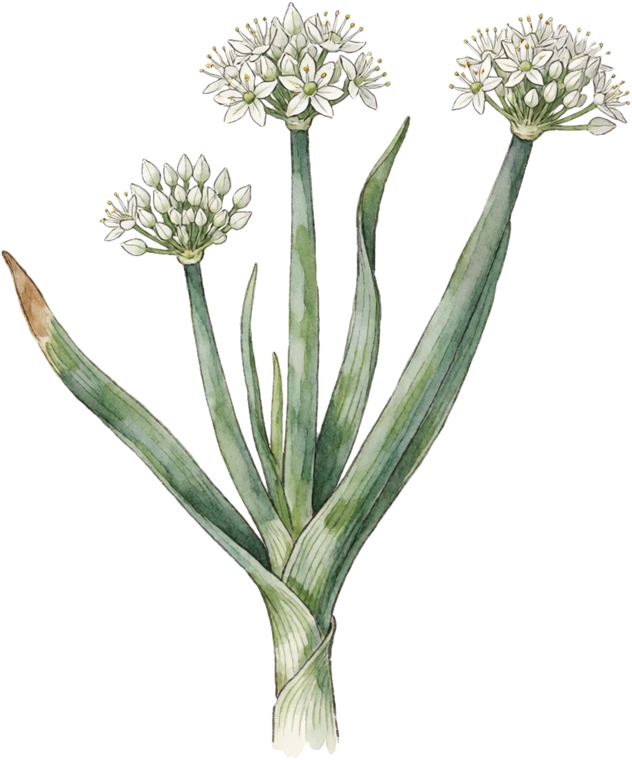
Botanical illustration of Scallion (Bunching Onion)
Perennial · Allium fistulosum

Never buy green onions again: 'Evergreen Hardy' is a true perennial clump you snip all season and it regrows, surviving zone-4 winters underground. Even a grocery bunch re-roots in water. The most foolproof allium there is.

PerennialFull Sun to Part ShadeModerate waterFast growthExcellent edibleAttracts bees

Where to buy the plant — 1 nursery

Welsh Onion — a print from the Roots & Alliums collection

From the print shop

Growing scallion (bunching onion)? Hang it.

Our Roots & Alliums collection carries scallion (bunching onion)Allium fistulosum, print Nº 8, “Welsh Onion.”

16 designsfrom $21.99white or black groundmatte poster, unframed

Shop Roots & Alliums botanical prints →

I

Overview

Will scallion (bunching onion) suit your garden, and what goes wrong.

Will it fruit where you are?

Enter your ZIP — we look up your USDA hardiness zone (2023 map) and check it against what scallion (bunching onion) actually needs.

Hardy inZones 6-9

Scallion (Bunching Onion) at a glance

HardinessUSDA 6–9
Mature size12-18 in
PollinationN/A
Chill requirementNot yet established
Bloom seasonRound white puffs (bees like them)
Harvest seasonSnip greens anytime; whole plants when pencil-thick
Growth rateFast (60 days from seed)

Common scallion (bunching onion) problems

  • Onion Thrips
  • Few

II

Growing

Light, water, soil, propagation and the season’s jobs.

How to grow scallion (bunching onion): light, water & soil

LightFull Sun to Part Shade
WaterModerate
SoilAny decent soil · pH 6.0 - 7.0
FertilizerLight N for regrowth
PruningNone — Cut-and-come-again: snip an inch above the white and they regrow 2-3 times.
Spacing1-2 in (grow thick)

How to plant & propagate scallion (bunching onion)

Maturity60 days
From seedDirect-sow; cut-and-come-again; perennial types persist
PropagateFrom seed or division

The scallion (bunching onion) growing playbook

Field-tested instructions for every job scallion (bunching onion) asks of you, compiled from university extension guidance — in the order the season brings them.

Sowing

Sow scallions as soon as the soil can be worked

Direct seed a quarter to a half inch deep in a two inch wide band, with rows 12 to 18 inches apart, in full sun. You can also start seed indoors four weeks ahead and set the transplants an inch apart in a two inch deep furrow, trimming the roots to a half inch and the tops to four inches first. Scallions are a cool season allium with no bulb to size up, so an early sowing puts all the leaf growth into the stalk while the weather still favors it, and brings the crop to pencil thickness before summer heat turns the stalks fibrous and drops their quality. Note that heat is not what makes an allium bolt - a prolonged spell of 40 to 50F is - so it is the overwintered stand, not the hot one, that runs the flowering risk.

Sow again in late summer to overwinter for a spring harvest

Make a second sowing in late summer. Allium fistulosum is very hardy, so this stand can be left in the ground through winter wherever the soil is well drained, then pulled the following spring long before your spring sowing is ready. Bunching onions never form a true bulb and have no dormancy to break, so an overwintered planting simply resumes growth as soon as the ground thaws and hands you the first fresh food of the year.

Watering

Give scallions about an inch of water a week

Supply roughly one inch of rain or irrigation each week and soak the bed thoroughly rather than sprinkling it daily. Water more often on sandy ground, where an inch penetrates about ten inches deep against six inches in clay. Do not leave the bed waterlogged. Alliums are shallow rooted, so they run dry within days of a hot spell, yet they are also sensitive to standing water - it is the steady middle that keeps stalks tender instead of fibrous.

Mulching

Hill soil around the stems two to three weeks before pulling

Two to three weeks ahead of harvest, draw about two inches of soil up around the base of the stems to blanch them. Keeping light off the stem bases is what turns them white and tender, and two to three weeks is roughly how long that blanch takes to develop before the stalks come out of the ground.

Feeding

Band nitrogen beside the row in two or three small doses

Band fertilizer in a strip alongside the row rather than broadcasting it over the bed, and split the season's nitrogen into two or three small applications instead of one large one. Aim for a soil pH of 6.0 to 6.8 and full sun. Allium roots never extend far from the plant, so broadcast fertilizer mostly lands where the crop cannot reach it, and two or three small nitrogen doses keep the supply steady instead of one flush that leaches straight past a shallow root zone.

Thinning

Thin seedlings early to one plant per inch

Thin young scallions to about one plant per inch and weed gently and often while the plants are still small. Do not throw the thinnings out - they are edible as baby scallions. Scallions are thin, upright, and shallow rooted, so early in the season weeds easily outcompete them and crowded seedlings stunt each other; once the stand closes over, the plants hold their own.

What to watch for

Onion maggot: rotate and clean up before you sow

Site new scallions as far from last year's alliums and from any cull pile as your ground allows - a quarter mile is the commercial standard. Destroy crop debris, remove culls, and when you work the bed bury surface organic matter rather than leaving it lying on top. Watch for seedlings that yellow, wilt, and pull up easily. Onion maggots overwinter as pupae in the soil and in cull piles, and the flies lay eggs right at the base of allium plants in spring; the larvae then crawl in under the leaf sheath, so by the time the tops wilt the insect is somewhere no spray reaches and control is no longer possible.

Scout for onion thrips through hot, dry weather

Check the leaves for silvery streaking and whitish blotches, worsening to dry yellow patches and browned leaf tips. Hang yellow or white sticky traps at the edge of the bed to catch the first arrivals, and clear plant debris from the bed and the ground around it. Act on what you find early, while the thrips are still out in the open. Thrips feed down inside the leaf sheath where sprays and predators cannot follow them, and they turn over five to eight generations a year with hot, dry weather speeding every one - a population missed during a dry spell is effectively unrecoverable.

No treatment threshold has been established for onions, and insecticides reach thrips poorly once they are tucked into the sheath, so sanitation and early detection carry most of the load. Scallion leaves are the part you eat - if you do treat, use only a product whose label lists green onions and follow its pre-harvest interval.

Harvesting

Pull scallions once the tops are six inches tall and pencil thick

Pull green onions any time the tops are at least six inches tall and the stems are a half to one inch across. Loosen the soil with a trowel first so the plants do not snap off. Strip the discolored outer skin, trim the leaves, bunch them, and get them cool. Scallions have no bulb to size up and no die-back to wait for, so usable size is the only real signal - and because the harvested part is a living leaf, quality starts dropping the moment it is pulled unless you cool it.

III

The year

What scallion (bunching onion) asks for, month by month.

The scallion (bunching onion) year, month by month

MonthJanFebMarAprMayJunJulAugSepOctNovDec
Harvest

What each band means

  • Harvestpicking time — check ripeness every few days.

The scallion (bunching onion) year as text

  • Jan harvest
  • Feb harvest
  • Mar harvest
  • Apr harvest
  • May harvest
  • Jun harvest
  • Jul harvest
  • Aug harvest
  • Sep harvest
  • Oct harvest
  • Nov harvest
  • Dec harvest

These are the species' typical months — expect them a few weeks earlier in warm zones and later in cold ones. Watch the plant, not just the calendar.

IV

Ecology & uses

What it does for the garden, and what it is grown for.

Scallion (Bunching Onion) in the garden system

  • Herbaceous layer perennial
AttractsBees
MoistureFacultative / average
DeerBrowsed — protect young plants
OriginIntroduced

What scallion (bunching onion) is grown for

! Some parts toxic — see notesToxic to dogs, cats and horses — organosulfur compounds cause Heinz-body haemolytic anaemia; also toxic to cattle, sheep and goats. Cats are the most sensitive.

UseEveryday cooking
UseCut-and-regrow
UsePerennial patch
Edible value4/5

Harvesting & storing scallion (bunching onion)

Snip greens anytime; whole plants when pencil-thick. About 60 days from planting.

Edibility, identification, and traditional-use notes here are general reference — not medical or veterinary advice, and not a claim that any plant treats or prevents anything. Medicinal ratings record how strongly a plant features in herbal tradition, nothing more. Never eat or dose a plant you have not positively identified. More on how to use this library.

V

Cultivars

Named varieties of scallion (bunching onion), ruled as a catalogue.

Best scallion (bunching onion) varieties & cultivars

6 on file

Named varieties of scallion (bunching onion) differ in winter-chill needs, ripening time, hardiness, and whether they set fruit on their own — pick one that fits your climate.

Evergreen Hardy White · Nebuka;Evergreen White Bunching

Ripensabout 65 days from sowing; overwintered plants cut back to 2 inches regrow tender scallions for an early spring (April) harvestDiseasepink root and smut

A Japanese heirloom dating to the 1880s, open-pollinated and non-bulbing. Left in the ground it behaves as a true perennial, regrowing tender scallions from the roots after being cut back to about two inches. Not the same variety as 'Evergreen Long White', which is the one UC Master Gardeners list.

Where to buy ‘Evergreen Hardy White

Story Thyme Farms may earn a small commission from these links, at no cost to you — it never changes what we recommend.

Parade

Open-pollinated, with no bulbing and dark green foliage. The uniform upright habit is what makes it fast to harvest and clean, and it takes well to hilling for blanched stalks. One of three scallion varieties recommended by UC Master Gardeners.

Where to buy ‘Parade

Story Thyme Farms may earn a small commission from these links, at no cost to you — it never changes what we recommend.

Deep Purple

Open-pollinated red bunching onion, cold tolerant enough to overwinter and with good bolting resistance. Suitable for spring or summer sowing.

Where to buy ‘Deep Purple

Story Thyme Farms may earn a small commission from these links, at no cost to you — it never changes what we recommend.

Tokyo Long White · Tokyo Long White Bunching

Zones6-9Diseasepink root and smutSize16-18 inch stalks when blanched

mild — Japanese scallion with bluish-green tops and long single stems that read almost as a slim leek. Heat tolerant and frost tolerant, does well in containers, and greens can be taken by repeated cutting. One of three scallion varieties recommended by UC Master Gardeners.

Where to buy ‘Tokyo Long Whiteverified

Story Thyme Farms may earn a small commission from these links, at no cost to you — it never changes what we recommend.

Feast

Diseaseintermediate resistance to downy mildew

Open-pollinated and reported to perform across a wide range of climates. Worth choosing where downy mildew is the thing that ends your allium season - it is one of the diseases RHS lists for this species.

Where to buy ‘Feast

Story Thyme Farms may earn a small commission from these links, at no cost to you — it never changes what we recommend.

Ishikura · Long White Ishikura

Ripenssummer through autumnSize0.1-0.5 m tall and wide, flower stems to 60cm in year two

Evergreen clump-forming perennial with elongated straight white stems and hollow green leaves. RHS rates it H5, hardy through most of the UK down to about -15 to -10C, and lists it as beneficial to pollinators when it flowers in its second year. Toxic to dogs and cats.

Where to buy ‘Ishikura

Story Thyme Farms may earn a small commission from these links, at no cost to you — it never changes what we recommend.

VI

Sources & plant ID

Where the care distinctions come from, and how the plant is filed.

Research basis

Sources behind this profile

No extension citations are attached to scallion (bunching onion)yet. The care figures below come from the library's own catalogue rather than a traced primary source.

Plant ID

BinomialAllium fistulosum
FamilyAmaryllidaceae
TypePerennial
USDA symbolALFI4
OriginIntroduced
Invasive riskLow

VII

Where to buy

Third-party nurseries — not Story Thyme Farms.

Third-party nurseries, not Story Thyme Farms. Prices are theirs.

Story Thyme Farms may earn a small commission from these links, at no cost to you — it never changes what we recommend.

VIII

Questions

Scallion (Bunching Onion) questions, answered straight.

Is scallion (bunching onion) safe for kids and pets?

With care. Toxic to dogs, cats and horses — organosulfur compounds cause Heinz-body haemolytic anaemia; also toxic to cattle, sheep and goats. Cats are the most sensitive. Site it accordingly if children or pets roam the garden. This is general reference, not medical or veterinary advice — call a vet or poison control if something has actually been eaten.

When do you harvest scallion (bunching onion)?

Snip greens anytime; whole plants when pencil-thick. From planting, expect about 60 days to maturity.

How do you propagate scallion (bunching onion)?

From seed or division.

IX

Elsewhere

Where scallion (bunching onion) sits in the library.

Where scallion (bunching onion) sits in the library

Grows in the same world