The illustrated growing guide

Tomatillo

Physalis philadelphica

Family Solanaceae

Grown as an annual

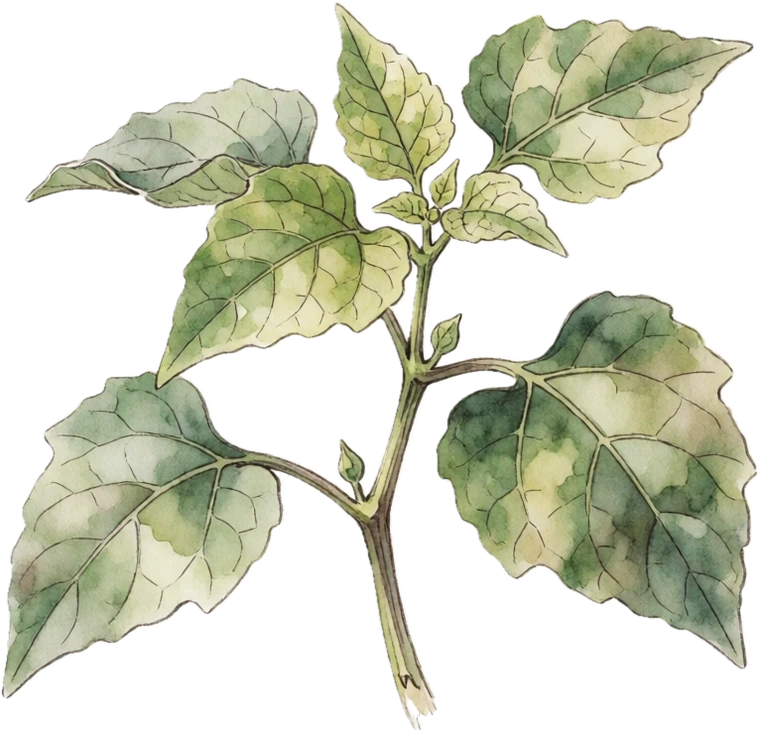
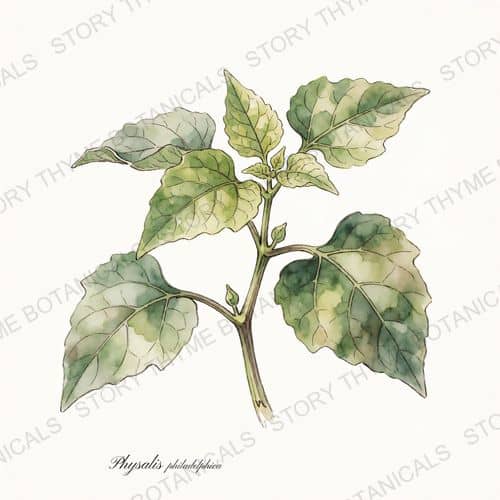
Botanical illustration of Tomatillo
Annual · Physalis philadelphica

The salsa verde machine: two plants out-produce a family's enchilada habit all summer, in heat that stalls tomatoes. The #1 tomatillo failure is planting ONE — it cannot pollinate itself. Two plants or no salsa.

AnnualFull SunDrought-tolerant · low waterFast growthExcellent edibleAttracts beesNone winter chillNeeds a pollination partner

Where to buy the plant — 3 nurseries

Chinese Lantern — a print from the Seed Heads & Pods collection

From the print shop

The closest print we make

We don’t print Physalis philadelphica. The closest we have is Physalis alkekengi (“Chinese Lantern”) in the Seed Heads & Pods collection — the same genus, Physalis, not the same species.

16 designsfrom $21.99white or black groundmatte poster, unframed

Shop Seed Heads & Pods botanical prints →

I

Overview

Will tomatillo suit your garden, and what goes wrong.

Will it fruit where you are?

Enter your ZIP — we look up your USDA hardiness zone (2023 map) and check it against what tomatillo actually needs.

Life cycleAnnual
Winter chillNone
PollinationPartner needed

Tomatillo at a glance

Life cycleAnnual
Mature size3-4 ft sprawl
PollinationSELF-INCOMPATIBLE — one tomatillo = pretty husks, zero fruit; always plant 2+
Chill requirementNone (not chill-dependent)
Bloom seasonSummer
Harvest seasonJuly - Frost: harvest when the husk splits and fruit fills it, still green and tacky
Growth rateFast

Common tomatillo problems

  • Flea Beetles
  • Hornworms (less than tomato)
  • Fewer diseases than tomato
  • Poor pollination → low fruit set (plant a partner)

II

Growing

Light, water, soil, propagation and the season’s jobs.

How to grow tomatillo: light, water & soil

LightFull Sun
WaterModerate — more drought-proof than tomatoes
SoilAverage, drained · pH 6.0 - 7.0
FertilizerCompost at planting; less N than tomatoes
PruningNone — Cage or sprawl on mulch; pinching optional.
Spacing24-30 in; TWO PLANTS minimum

How to plant & propagate tomatillo

Maturity75-100 days
From seedStart indoors 6 wks early like tomatoes; plant 2+ for pollination
PropagateFrom seed

When to spray tomatillo

Growing season. Row cover young plants.

The tomatillo growing playbook

Field-tested instructions for every job tomatillo asks of you, compiled from university extension guidance — in the order the season brings them.

Sowing

Start seed indoors four to five weeks before setting out

Sow a quarter inch deep in sterile soilless mix and hold the flat at 75F to 85F until seedlings emerge, then grow them on at about 70F. Start a week or two later than you would tomatoes, and harden the plants off over one to two weeks before they go out. Sow at least two plants, ideally of two different varieties. Tomatillo germinates on soil heat rather than air temperature, and the seedlings get leggy if started as early as tomatoes. Two plants is not a suggestion: tomatillo flowers will not set on their own pollen, so a lone plant husks up and stays empty.

Planting out

Transplant once frost is past and soil is over 60F

Set plants out after all danger of frost has passed and the soil has warmed past 60F, spacing them 2 feet apart in rows 3 feet apart, or up to 3 feet apart if you are not caging them. Cage or stake at planting, and rotate the bed each year rather than replanting where tomatoes, peppers, potatoes or eggplant grew last season. Tomatillo has an indeterminate, sprawling habit and benefits from staking or caging to keep the fruit off the ground and improve air circulation through the plant. Utah State's guidance for holding disease down on this crop is simple rotation: move the crop placement in your garden every year rather than returning nightshades to the same ground.

Watering

One to one and a half inches a week, delivered at the ground

Give about 1 to 1.5 inches of water per week and keep the moisture even, never letting more than the top inch of soil dry out. Use drip or a soaker hose rather than overhead sprinklers, and water in the morning if you must wet the leaves. Tomatillo is more drought- and heat-tolerant than tomato thanks to a strong root system, but overhead sprinkling makes the plants more disease-prone. Flowers also drop above 90F and below 55F, and steady soil moisture buffers the plant through heat.

Feeding

Side-dress lightly at four and eight weeks after transplanting

Side-dress about 1 tablespoon of 21-0-0 per plant at four weeks and again at eight weeks after transplanting, watering it in away from the stem. Apply phosphorus and potassium only to your soil test. Tomatillo answers extra nitrogen by making more plant. Over-fertilized plants go bushy and leafy and are slow to bear, so the goal is a light nudge, not a feeding.

What to watch for

Three-lined potato beetle: hand-pick from the first leaves on

Check leaf undersides for orange-yellow egg clusters and for larvae that carry their own excrement on their backs. Knock adults and larvae into soapy water and crush the egg clusters. Pull ground cherry and other nightshade weeds nearby. This beetle is a curiosity on most crops and a serious defoliator on tomatillo specifically, and the larvae do the real damage. Ground cherry is its alternate host, so a weedy edge keeps reseeding the problem.

No insecticide is well matched to this beetle and few labels even list it. Hand removal is the recommended control, and it avoids spraying a crop that is in bloom and depending on bees for nearly its whole season.

Hornworms: check twice a week and treat them small

Look for dark droppings and stripped stems at least twice a week, and hand-pick the caterpillars into soapy water. If there are too many to pick, spray Bacillus thuringiensis kurstaki and cover the leaf undersides, since the caterpillars must eat it. Leave any hornworm covered in white cocoons where it is. Bt only kills young caterpillars, so the twice-weekly check is what makes it work; a full-grown hornworm will shrug it off and defoliate a plant in a day. The white cocoons are braconid wasps that will emerge and hunt the next generation for you.

Bt kurstaki is specific to caterpillars and does not harm bees, which is why it is the right choice on a crop that is in bloom and bee-dependent all season. Follow the label rate and its pre-harvest interval.

Protection

Black plastic and row cover for an early start

Lay black plastic mulch about two weeks before your last frost to warm the soil, and float a row cover over young plants for faster early growth. Vent the cover whenever the air temperature inside it exceeds 80F. Take the cover off once the weather has stabilized, and in any case the moment the first flowers open. Warm soil is what a tomatillo is waiting on, and black plastic warms the soil, conserves water and helps control weeds. Once flowering starts the cover becomes a liability: Utah State is explicit that tomatillos are not self-fertile and need multiple plants for proper fruit set, and that pollen has to be carried between them.

Remove row covers at first bloom. Tomatillo cannot self-pollinate and depends on insects to cross-pollinate between plants, so a cover left on through bloom will cost you the crop.

Harvesting

Pick when the fruit fills and splits the husk, still green

Harvest once the fruit has completely filled the papery husk and the husk has dried, turned from green to tan and begun to split open, while the fruit itself is still green and firm. Ripe fruit comes off the plant easily — twist and pull gently, or snip it with scissors. Green varieties should be picked before they start to turn yellow or purple, and the plant is indeterminate, so keep picking through to frost. A tomatillo fills its husk before it colors, and the husk drying and splitting is the plant telling you the fruit is sized. Once the fruit turns yellow or purple the acidity that carries a salsa verde has faded and the flesh has gone soft.

Where the husk splits, the fruit is exposed to soil contamination from rain splash and from any fruit that drops. Peel and wash tomatillos before use.

III

The year

What tomatillo asks for, month by month.

The tomatillo year, month by month

MonthJanFebMarAprMayJunJulAugSepOctNovDec
Bloom
Harvest

What each band means

  • Bloomflowers open — pollinators working, frost on blossoms is the danger.
  • Harvestpicking time — check ripeness every few days.

The tomatillo year as text

  • Jan quiet month
  • Feb quiet month
  • Mar quiet month
  • Apr quiet month
  • May quiet month
  • Jun bloom
  • Jul bloom, harvest
  • Aug bloom
  • Sep quiet month
  • Oct quiet month
  • Nov quiet month
  • Dec quiet month

These are the species' typical months — expect them a few weeks earlier in warm zones and later in cold ones. Watch the plant, not just the calendar.

IV

Ecology & uses

What it does for the garden, and what it is grown for.

Tomatillo in the garden system

  • Herbaceous layer annual
AttractsBees
MoistureUpland / dry
DeerBrowsed — protect young plants
OriginIntroduced

What tomatillo is grown for

! Some parts toxic — see notesUnripe fruit + husks not for eating; ripe fruit safe (it's salsa verde)

UseSalsa verde
UseRoasting
UseCanning
Edible value4/5

Harvesting & storing tomatillo

July - Frost: harvest when the husk splits and fruit fills it, still green and tacky. About 75-100 days from planting.

Edibility, identification, and traditional-use notes here are general reference — not medical or veterinary advice, and not a claim that any plant treats or prevents anything. Medicinal ratings record how strongly a plant features in herbal tradition, nothing more. Never eat or dose a plant you have not positively identified. More on how to use this library.

V

Cultivars

Named varieties of tomatillo, ruled as a catalogue.

Best tomatillo varieties & cultivars

9 on file

Named varieties of tomatillo differ in days to maturity, disease resistance, flavor, and habit — pick one that fits your season and space.

Toma Verde

Needs a pollinizer
Ripenssummer to frostZones2-11Sizesprawling

tart green — The standard green tomatillo and the one most seed racks carry. Sprawling habit, so cage it. Utah State puts the crop at 60 to 75 days from transplant.

Where to buy ‘Toma Verde

Story Thyme Farms may earn a small commission from these links, at no cost to you — it never changes what we recommend.

Rendidora

Needs a pollinizer
Ripenssummer to frostZones2-11Sizeupright

tart green — Utah State lists Rendidora as the upright, high-yielding green type, in contrast to the sprawling Gigante, Tamayo, Toma Verde and Gulliver.

Where to buy ‘Rendidora

Story Thyme Farms may earn a small commission from these links, at no cost to you — it never changes what we recommend.

Gigante

Needs a pollinizer
Ripenssummer to frostZones2-11Sizesprawling

tart green — Listed by Utah State among the green varieties with sprawling growth; plan on a cage or trellis.

Where to buy ‘Gigante

Story Thyme Farms may earn a small commission from these links, at no cost to you — it never changes what we recommend.

Gulliver Hybrid · Gulliver

Needs a pollinizer
Ripenssummer to frostZones2-11Sizesprawling

tart green — Green hybrid listed by Utah State Extension, sprawling in habit.

Where to buy ‘Gulliver Hybrid

Story Thyme Farms may earn a small commission from these links, at no cost to you — it never changes what we recommend.

Purple de Milpa · de Milpa

Needs a pollinizer
Ripenssummer to frostZones2-11Sizesprawling

tangy, sweeter than the green types — Purple type listed by Utah State and South Dakota State. NC State groups de Milpa with the high-yielding, pest-tolerant selections. Purple varieties are ripe when the husk fills, same as the greens.

Where to buy ‘Purple de Milpa

Story Thyme Farms may earn a small commission from these links, at no cost to you — it never changes what we recommend.

Purple Coban · Coban

Needs a pollinizer
Ripenssummer to frostZones2-11Sizesprawling

tangy purple — Purple variety listed by both Utah State and NC State Extension.

Where to buy ‘Purple Coban

Story Thyme Farms may earn a small commission from these links, at no cost to you — it never changes what we recommend.

Pineapple

Needs a pollinizer
Ripenssummer to frostZones2-11Sizesprawling

sweet, pineapple-like — South Dakota State lists Pineapple among the yellow-fruited tomatillos; NC State notes the pineapple-like flavor. Small fruit, eaten fresh more than cooked.

Where to buy ‘Pineapple

Story Thyme Farms may earn a small commission from these links, at no cost to you — it never changes what we recommend.

Verde Puebla

Needs a pollinizer
Ripenssummer to frostZones2-11Sizesprawling

tart green — Green variety listed by South Dakota State Extension alongside Toma Verde, Miltomate and Zuni.

Where to buy ‘Verde Puebla

Story Thyme Farms may earn a small commission from these links, at no cost to you — it never changes what we recommend.

Cisneros

Needs a pollinizer
Ripenssummer to frostZones2-11Sizesprawling

tart green — NC State Extension groups Cisneros with de Milpa and Super Verde as the varieties noted for high yields and pest resistance.

Where to buy ‘Cisneros

Story Thyme Farms may earn a small commission from these links, at no cost to you — it never changes what we recommend.

VI

Sources & plant ID

Where the care distinctions come from, and how the plant is filed.

Research basis

Sources behind this profile

No extension citations are attached to tomatilloyet. The care figures below come from the library's own catalogue rather than a traced primary source.

Plant ID

BinomialPhysalis philadelphica
FamilySolanaceae
TypeAnnual
USDA symbolPHPH2
OriginIntroduced
Invasive riskLow

VII

Where to buy

Third-party nurseries — not Story Thyme Farms.

Third-party nurseries, not Story Thyme Farms. Prices are theirs.

Story Thyme Farms may earn a small commission from these links, at no cost to you — it never changes what we recommend.

Tomatillo needs a pollination partner — plant two genetically distinct plants (two different cultivars, or a cultivar plus a seedling).

VIII

Questions

Tomatillo questions, answered straight.

Why isn't my tomatillo fruiting?

Most often: it has no genetically distinct partner nearby. Tomatillo can't pollinate itself — self-incompatible — one tomatillo = pretty husks, zero fruit; always plant 2+. Plant a second, unrelated one nearby; two different cultivars, or a cultivar plus a seedling, is the classic pairing.

Is tomatillo safe for kids and pets?

With care. Unripe fruit + husks not for eating; ripe fruit safe (it's salsa verde) Site it accordingly if children or pets roam the garden. This is general reference, not medical or veterinary advice — call a vet or poison control if something has actually been eaten.

When do you harvest tomatillo?

July - Frost: harvest when the husk splits and fruit fills it, still green and tacky. From planting, expect about 75-100 days to maturity.

How do you propagate tomatillo?

From seed.

IX

Elsewhere

Where tomatillo sits in the library.

Where tomatillo sits in the library

Grows in the same world