The illustrated growing guide

Turkish Rocket

Bunias orientalis

Family Brassicaceae

Est. zones 3-9

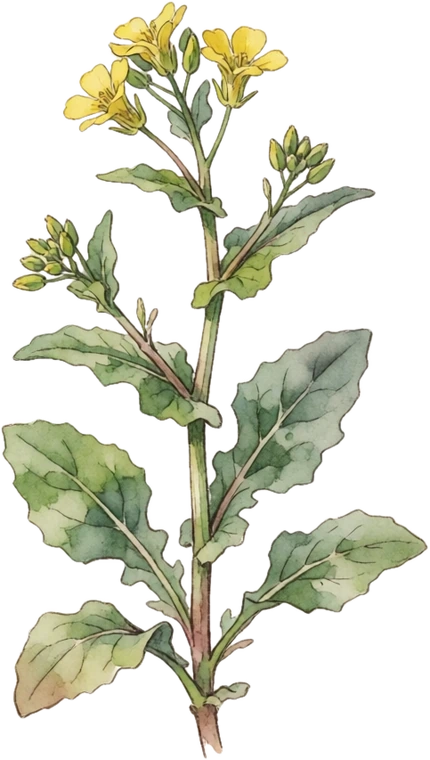
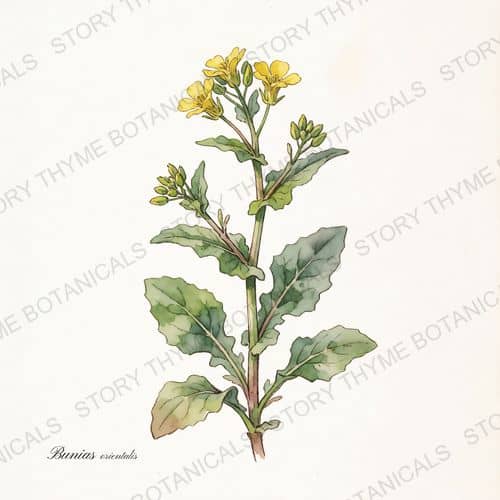
Botanical illustration of Turkish Rocket
Perennial · Bunias orientalis

A perennial broccoli substitute for the permaculture patch: unkillable deep-rooted plant that throws edible flower buds every spring and feeds the first bees. Vigorous to the point of weedy — give it a boundary. The definition of a low-input perennial vegetable.

PerennialFull SunDrought-tolerant · low waterFast growthExcellent edibleAttracts bees

Where to buy the plant — 1 nursery

I

Overview

Will turkish rocket suit your garden, and what goes wrong.

Will it fruit where you are?

Enter your ZIP — we look up your USDA hardiness zone (2023 map) and check it against what turkish rocket actually needs.

Hardy inZones 3-9

Turkish Rocket at a glance

HardinessUSDA 3–9
Mature size2-4 ft
PollinationYellow racemes feed early bees
Chill requirementNot yet established
Bloom seasonSpring (bright yellow, bee-covered)
Harvest seasonBroccoli-like flower buds in spring; young leaves cooked (peppery)
Growth rateFast, deep taproot

Common turkish rocket problems

  • Almost none — pest-tough
  • Few

II

Growing

Light, water, soil, propagation and the season’s jobs.

How to grow turkish rocket: light, water & soil

LightFull Sun
WaterLow — drought-proof once established
SoilAny, tolerates poor · pH 6.0 - 7.5
FertilizerNone
PruningCut back after bloom — Very deep taproot = nearly permanent; harvest buds before they open. Can spread — site with care.
Spacing2 ft

How to plant & propagate turkish rocket

PropagateDivision or seed

The turkish rocket growing playbook

Field-tested instructions for every job turkish rocket asks of you, compiled from university extension guidance — in the order the season brings them.

Planting out

Check your state's regulated list, then site it once and for good

Before you plant, check whether your state or county regulates Bunias orientalis - Wisconsin lists it as prohibited across most of the state and restricted in Dane, Grant, Green, Iowa, Lafayette and Rock counties. Where it is legal, put it somewhere you will never need to take it back out, well away from pasture, meadow and roadside edges. It anchors on a taproot at least an inch wide in a cluster of roots that is extremely hard to pull or dig out, and it regrows from root cuttings, so a bed you change your mind about is a bed you fight for years.

Prohibited or restricted plants are illegal to plant, transport or sell in the listed jurisdictions - confirm your own state's invasive plant rule before buying seed.

Pruning

Cut every flower stalk you did not eat, as the flowers open

Any stalk that got past you and opened its yellow flowers should be cut as close to the ground as you can manage, before the warty pods form. Expect to go back through the planting a second time later in summer, because cut plants push new stalks. Each of those little warty fruits carries two to four seeds and the flowers are self-fertile, so a single plant left to finish seeds a wide area without any pollen partner.

Cutting once can provoke heavier seed production than leaving it alone, so commit to the follow-up cut rather than doing this half way.

What to watch for

Slugs and snails on the young spring growth

Check the new leaves as they push up in spring for slug and snail damage, which shows as ragged holes chewed from the leaf margins inward. Established clumps outgrow the damage, but first-year plants can be set back. The tender early growth emerges when slugs and snails are most active and there is little else green to eat, and a small plant has no reserves to replace what it loses.

Walk the ground beyond the bed for escapes before seeds mature

Through summer, walk out from the planting and look for seedlings and stray rosettes in field edges, roadsides, meadow and any disturbed or tilled ground. Cut or dig what you find before the seed matures, and plan on two passes over the summer. It invades grasslands, pastures, roadsides and disturbed ground, and it can build monoculture stands in high quality habitat, so escapes are cheapest to stop in their first season before they set the seedbank.

Dig out the whole root cluster - fragments left behind can regrow, since the plant is propagated deliberately from root cuttings.

Spraying

Herbicide for escaped stands only, before the flowers open

For a stand that has escaped into non-crop ground and is too large to cut or dig, foliar spray 2,4-D or metsulfuron once the stalks bolt but before any flower opens, and always before seed set. If the stand is already in open bloom, do not spray it - cut the stalks to the ground instead and save the spray for the regrowth. Tillage to dislodge the root system is the mechanical alternative where spraying is not appropriate. Both are broadleaf herbicides that move into the deep taproot, which is what a cut stalk never reaches, and treating before seed set stops the stand from banking seed even if the roots take another pass to kill. Spraying at the bolted bud stage also puts the herbicide on full leaf area before the flowers draw pollinators in.

Do not spray this plant in bloom - bees work the yellow flowers heavily. Neither 2,4-D nor metsulfuron is labeled for garden vegetables: never spray plants you intend to eat, and do not harvest buds or leaves from treated plants. Both kill broadleaf plants on contact, so keep spray off nearby vegetables and ornamentals. Follow the product label for your site - it is the law, and it governs rates, buffers and grazing or haying restrictions on pasture ground.

Harvesting

Cut the bud clusters while they are still tight and green

As the flower stalks rise and the bud clusters form, cut them while the buds are still closed and no yellow shows, and cook them like broccoli florets. Young leaves are mild and cabbage-like and can be picked alongside them. The buds are sweetest and most tender before the flowers open, and the leaves turn progressively hotter and coarser as the plant ages into bloom.

III

The year

What turkish rocket asks for, month by month.

The turkish rocket year, month by month

MonthJanFebMarAprMayJunJulAugSepOctNovDec
Bloom
Harvest

What each band means

  • Bloomflowers open — pollinators working, frost on blossoms is the danger.
  • Harvestpicking time — check ripeness every few days.

The turkish rocket year as text

  • Jan quiet month
  • Feb quiet month
  • Mar bloom, harvest
  • Apr bloom, harvest
  • May bloom, harvest
  • Jun quiet month
  • Jul quiet month
  • Aug quiet month
  • Sep quiet month
  • Oct quiet month
  • Nov quiet month
  • Dec quiet month

These are the species' typical months — expect them a few weeks earlier in warm zones and later in cold ones. Watch the plant, not just the calendar.

IV

Ecology & uses

What it does for the garden, and what it is grown for.

Turkish Rocket in the garden system

  • Herbaceous layer perennial
  • Nectary/insectary
AttractsBees
MoistureUpland / dry
DeerBrowsed — protect young plants
OriginIntroduced

What turkish rocket is grown for

✓ Commonly eatencooked; raw leaves are strong

UsePerennial 'broccoli'
UseEarly bee forage
UseTough-site food
Edible value4/5

Harvesting & storing turkish rocket

Broccoli-like flower buds in spring; young leaves cooked (peppery).

Edibility, identification, and traditional-use notes here are general reference — not medical or veterinary advice, and not a claim that any plant treats or prevents anything. Medicinal ratings record how strongly a plant features in herbal tradition, nothing more. Never eat or dose a plant you have not positively identified. More on how to use this library.

V

Cultivars

Named varieties of turkish rocket, ruled as a catalogue.

Best turkish rocket varieties & cultivars

Straight species

VI

Sources & plant ID

Where the care distinctions come from, and how the plant is filed.

Research basis

Sources behind this profile

No extension citations are attached to turkish rocketyet. The care figures below come from the library's own catalogue rather than a traced primary source.

Plant ID

BinomialBunias orientalis
FamilyBrassicaceae
TypePerennial
USDA symbolBUOR
OriginIntroduced
Invasive riskLow

VII

Where to buy

Third-party nurseries — not Story Thyme Farms.

Third-party nurseries, not Story Thyme Farms. Prices are theirs.

Story Thyme Farms may earn a small commission from these links, at no cost to you — it never changes what we recommend.

VIII

Questions

Turkish Rocket questions, answered straight.

Is turkish rocket safe for kids and pets?

Turkish Rocket is commonly eaten and isn't considered toxic, but "commonly eaten" isn't a guarantee for any particular person or animal — allergies, quantity, and which part you eat all matter. One caveat on this one: cooked; raw leaves are strong. Never eat a plant you haven't positively identified, and check with a vet before letting pets or livestock graze anything new.

When do you harvest turkish rocket?

Broccoli-like flower buds in spring; young leaves cooked (peppery).

How do you propagate turkish rocket?

Division or seed.

IX

Elsewhere

Where turkish rocket sits in the library.

Where turkish rocket sits in the library

Grows in the same world