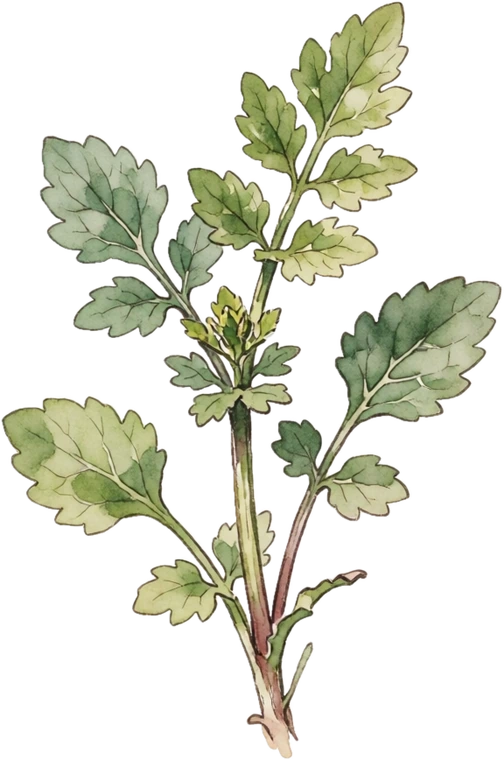
The illustrated growing guide
Upland Cress (Land Cress)
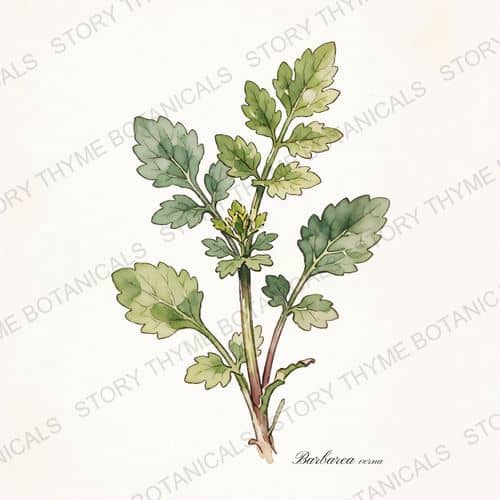
Barbarea verna
Family Brassicaceae
Est. zones 2-11

The watercress substitute for people without a stream — same bright peppery bite, grown in ordinary moist soil. Cold-hardy and productive from fall into spring, it's a cut-and-come-again patch that self-sows once established. Zip up salads, sandwiches, and potato soups.
I
Overview
Will upland cress (land cress) suit your garden, and what goes wrong.
Will it fruit where you are?
Enter your ZIP — we look up your USDA hardiness zone (2023 map) and check it against what upland cress (land cress) actually needs.
Upland Cress (Land Cress) at a glance
Common upland cress (land cress) problems
- Flea Beetle
- Almost none
II
Growing
Light, water, soil, propagation and the season’s jobs.
How to grow upland cress (land cress): light, water & soil
How to plant & propagate upland cress (land cress)
When to spray upland cress (land cress)
Growing season. Row cover for flea beetle.
The upland cress (land cress) growing playbook
Field-tested instructions for every job upland cress (land cress) asks of you, compiled from university extension guidance — in the order the season brings them.
Sowing
Sow upland cress for the cool season
Sow the tiny seed about a half inch deep into a smooth, moist, clod-free bed, either broadcast and raked in or drilled in rows about a foot apart. Sow fairly thick, since the seed is small and you will thin later. Upland cress is extremely hardy and, like spinach, grows best during the coolest months of the year, so a sowing as summer heat breaks carries leaves from fall through winter into spring.
Sow again in spring where winter is too hard
In cold zones sow in early spring once the ground has thawed and the bed can be worked, at the same shallow half inch depth into moist, clod-free soil, and plan to pick the crop before summer heat arrives. The source's rule is that this crop, like spinach, is grown during the coolest months of the year because it is extremely hardy; its own September-to-December window is Florida's version of those months. North of the mild-winter belt the coolest workable window opens in spring instead, so a spring sowing is how cold-zone growers apply the same principle. Spring timing is an adaptation of the sourced cool-season rule, not a date printed in the source, hence medium confidence.
Watering
Water regularly, but skip the stream
Give the patch plenty of sun and water it regularly instead of letting the bed swing dry, and keep the surface damp until the shallow-sown seed is up. Creasy greens need very little care once established, but sunshine and regular watering are the two things they do ask for, and seed set a half inch deep will not come up through a surface that crusts dry.
Thinning
Thin the seedlings once they are up
When the seedlings are big enough to handle, pull the weakest to leave plants about 3 to 6 inches apart in rows roughly a foot apart. Do the same after any spring sowing. The seed is sown thick on purpose to guarantee a stand, and thinning down to the strongest plants is what turns a crowded fuzz of seedlings into full, pickable rosettes.
What to watch for
Scout seedlings for flea beetle shot-holes
Check the patch at least two or three times a week while the plants are small, walking the same route each time and counting beetles on random plants before you judge the leaf damage. Flea beetles colonize a planting fast and cluster once they arrive, and chewing that an established rosette would shrug off can stunt or kill a seedling outright.
⚠ The common extension rule of thumb is treatment at 10 to 20 percent leaf damage, but that is a market-cosmetic standard, and less damage is tolerated on crops sold as leafy greens. On cress the damaged leaf is the thing you eat, so respond with a cover rather than a spray.
Protection
Cover new sowings to shut flea beetles out
Lay a fine-mesh insect netting over the bed immediately after sowing, before any beetles find it, and bury or weight every edge so there are no gaps. Cover late-summer and fall sowings the same way. Flea beetles are highly mobile and hit young seedlings hardest, and in trials a properly sealed fine-mesh cover installed at planting has been as effective as conventional insecticides.
⚠ Rotate away from ground that grew brassicas last season before you cover it. Beetles emerging from the soil under a sealed cover are trapped in a sheltered spot with no natural enemies and can do more damage than if the bed were open.
Harvesting
Pick once the rosettes reach four inches
When plants are well established and about four inches high, pick the leaves and leave the stem and roots intact so new ones grow back for later picking. Alternatively take the entire plant at once if you want the bed back. Cress regrows from an undisturbed crown, so picking leaves and leaving the roots turns a single sowing into a long cut-and-come-again supply through the cold months.
Year two: pick before the flower stalk, then let a few bloom
In its second spring the plant throws up a yellow flower stalk. Snip your last leaves as it rises, and leave a few plants standing to flower and seed rather than clearing the whole patch. The greens taste best snipped and eaten before the plant goes to seed, and the yellow flowers left behind feed bees and butterflies early in the year while reseeding the patch for the seasons after.
⚠ Never put an insecticide on cress that is in flower. These are early-season blooms working for bees and butterflies, and there is nothing on a bolted plant worth spraying for.
III
The year
What upland cress (land cress) asks for, month by month.
The upland cress (land cress) year, month by month
What each band means
- Bloom — flowers open — pollinators working, frost on blossoms is the danger.
- Harvest — picking time — check ripeness every few days.
The upland cress (land cress) year as text
- Jan quiet month
- Feb quiet month
- Mar bloom, harvest
- Apr bloom, harvest
- May bloom, harvest
- Jun quiet month
- Jul quiet month
- Aug quiet month
- Sep harvest
- Oct harvest
- Nov harvest
- Dec quiet month
These are the species' typical months — expect them a few weeks earlier in warm zones and later in cold ones. Watch the plant, not just the calendar.
IV
Ecology & uses
What it does for the garden, and what it is grown for.
Upland Cress (Land Cress) in the garden system
- Herbaceous layer biennial
What upland cress (land cress) is grown for
✓ Commonly eaten
Harvesting & storing upland cress (land cress)
Peppery leaves like watercress — but grown in ordinary garden soil, no stream required; cold-hardy, harvested fall through spring. About 50 days from planting.
Edibility, identification, and traditional-use notes here are general reference — not medical or veterinary advice, and not a claim that any plant treats or prevents anything. Medicinal ratings record how strongly a plant features in herbal tradition, nothing more. Never eat or dose a plant you have not positively identified. More on how to use this library.
V
Cultivars
Named varieties of upland cress (land cress), ruled as a catalogue.
Best upland cress (land cress) varieties & cultivars
'Upland' / 'Early Winter Cress'
VI
Sources & plant ID
Where the care distinctions come from, and how the plant is filed.
Research basis
Sources behind this profile
No extension citations are attached to upland cress (land cress)yet. The care figures below come from the library's own catalogue rather than a traced primary source.
Plant ID
VII
Where to buy
Third-party nurseries — not Story Thyme Farms.
Third-party nurseries, not Story Thyme Farms. Prices are theirs.
Story Thyme Farms may earn a small commission from these links, at no cost to you — it never changes what we recommend.
VIII
Questions
Upland Cress (Land Cress) questions, answered straight.
Is upland cress (land cress) safe for kids and pets?
Upland Cress (Land Cress) is commonly eaten and isn't considered toxic, but "commonly eaten" isn't a guarantee for any particular person or animal — allergies, quantity, and which part you eat all matter. Never eat a plant you haven't positively identified, and check with a vet before letting pets or livestock graze anything new.
When do you harvest upland cress (land cress)?
Peppery leaves like watercress — but grown in ordinary garden soil, no stream required; cold-hardy, harvested fall through spring. From planting, expect about 50 days to maturity.
How do you propagate upland cress (land cress)?
From seed.
IX
Elsewhere
Where upland cress (land cress) sits in the library.
Tomato
Pepper
Squash
Corn