The illustrated growing guide

Lettuce

Lactuca sativa

Family Asteraceae

Grown as an annual

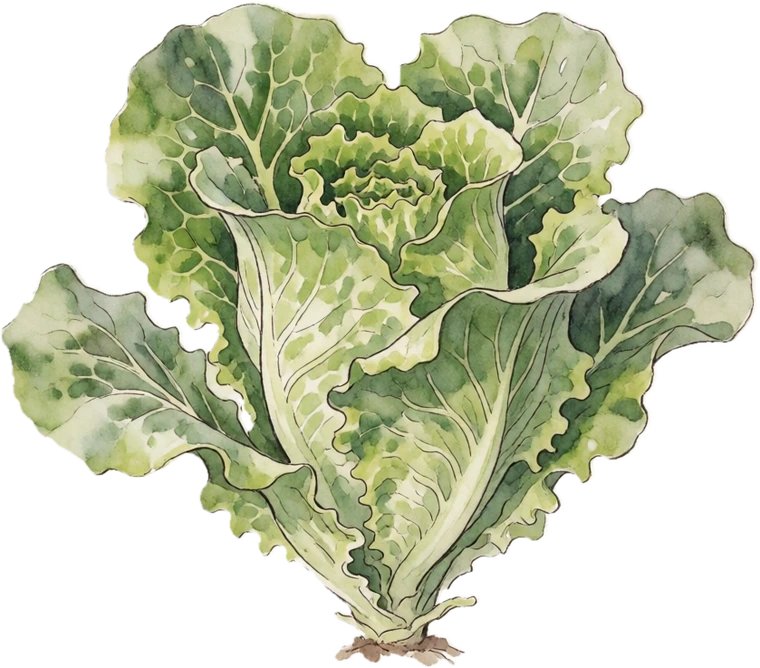
Botanical illustration of Lettuce
Annual · Lactuca sativa

Bitter lettuce = heat or drought stress. Succession sow every 2 weeks; switch to heat-tolerant types in June. Fall lettuce under row cover eats fresh into December.

AnnualFull SunModerate waterFast growthExcellent edibleNone winter chill

Where to buy the plant — 3 nurseries

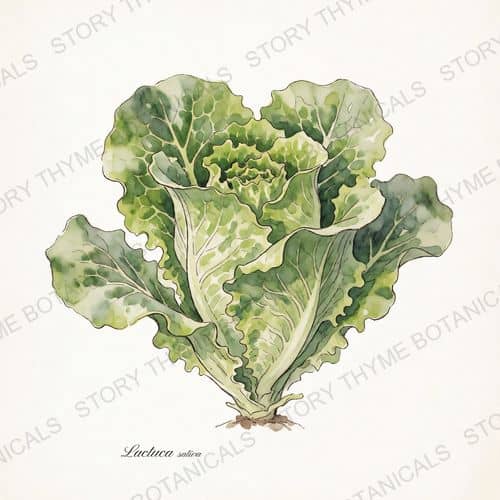
Lettuce — a print from the Vegetables Vol. 1 collection

From the print shop

Growing lettuce? Hang it.

Our Vegetables Vol. 1 collection carries lettuceLactuca sativa, print Nº 16, “Lettuce.”

16 designsfrom $21.99white or black groundmatte poster, unframed

Shop Vegetables Vol. 1 botanical prints →

I

Overview

Will lettuce suit your garden, and what goes wrong.

Will it fruit where you are?

Enter your ZIP — we look up your USDA hardiness zone (2023 map) and check it against what lettuce actually needs.

Life cycleAnnual
Winter chillNone

Lettuce at a glance

Life cycleAnnual
Mature size6-12 inches
PollinationNone (harvested before bloom)
Chill requirementNone (not chill-dependent)
Bloom seasonBolts in heat
Harvest seasonApril - June, September - November
Growth rateFast

Common lettuce problems

II

Growing

Light, water, soil, propagation and the season’s jobs.

How to grow lettuce: light, water & soil

LightFull Sun (spring/fall), afternoon shade (summer)
WaterLight, frequent. Shallow roots
SoilRich, Moist · pH 6.0 - 7.0
FertilizerNitrogen-forward liquid feed every 2 weeks.
PruningNone (annual) — Cut-and-come-again: shear leaf types 1 inch above crown.
Spacing8-12 inches

How to plant & propagate lettuce

Maturity45-60 days
From seedDirect-sow or start early; germinates 40-70°F (won't sprout in heat)
PropagateFrom seed

When to spray lettuce

Growing season. Slugs: iron phosphate bait or beer traps. Rabbits: fence — nothing else works.

The lettuce growing playbook

Field-tested instructions for every job lettuce asks of you, compiled from university extension guidance — in the order the season brings them.

Sowing

Direct-sow as soon as the soil can be worked

Sow seed a quarter to a half inch deep once soil reaches 40 degrees F, about two to three weeks before your last frost, and sow a short new row every two to three weeks to keep the harvest coming. Thin to 8-12 inches between plants with 12-18 inches between rows. Lettuce germinates best at 55-65 degrees F and emerges in 7-10 days, but germination drops off above 80 degrees F, so the seed has to go down while the soil is still cold. Succession sowing matters because a single planting all matures at once and then bolts.

Sow the fall crop in late summer

Sow leaf and butterhead types in late summer, and transplant crisphead and romaine for fall. Carry the planting later into autumn with floating row covers or a cold frame. For an overwintered crop, set healthy three-week-old seedlings out around mid-October using a cultivar bred for it, such as Winter Density or Black Seeded Simpson. Fall is the better half of lettuce's year in most of the country: the crop matures into falling temperatures instead of racing rising ones, so it sizes up without bolting and the leaves stay sweet. Row covers also blunt slug feeding while they promote growth.

Planting out

Set out three to four week old transplants in spring

Start seed indoors about three to four weeks before you want to plant, and set transplants out in spring as soon as the soil can be worked. Space leaf, cos and butterhead types 4-10 inches apart in rows 12-24 inches apart; space crisphead 12-15 inches apart in rows 20-30 inches apart. Setting out transplants in succession buys an earlier harvest and skips thinning entirely. Transplants get a head start on the heat. Increasing day length and high summer temperatures cause seedstalk formation and bitter flavor, so weeks bought at the front of the season are weeks of sweet leaves before the crop bolts.

Watering

One to two inches a week, delivered in the morning

Give lettuce 1-2 inches of water per week and keep it steady rather than letting the bed swing from dry to soaked. If you water overhead, always do it in the morning so the plants have time to dry off. Moisture fluctuation makes the leaves tough, slows head development and causes off-flavors, and wet-then-dry swings favor tipburn, a browning of the edges of the inner leaves on this shallow-rooted crop. Watering overhead in the morning leaves time for the foliage to dry before evening.

Feeding

Side-dress nitrogen four weeks after planting

Four weeks after transplanting, or at thinning for direct-sown rows, apply a quarter cup of a nitrogen fertilizer such as 21-0-0 per 10 feet of row. Place it beside the plants rather than on them and irrigate it into the soil. Lettuce is harvested as leaves, so the whole crop is vegetative growth, and it has to be fast: a plant that grows slowly sits in the bed long enough to meet the heat and bolt before it sizes up.

Do not overdo the nitrogen. High foliar nitrogen encourages aphid reproduction, so heavy feeding buys you a pest problem alongside the growth.

What to watch for

Check leaf undersides and plant centers for aphids

Look under the outer leaves and down into the heart of the plant, not just at the top growth. Wash light infestations off with a strong stream of water, hand-wipe small localized colonies, and control any ants farming the honeydew. If you must treat, insecticidal soap (potassium salts of fatty acids) or azadirachtin are the products listed for home use. Aphids feed in colonies on the leaves and prefer the newer growth, so the youngest leaves in the center of the plant are where an infestation establishes before it is obvious from the outside. Keeping nitrogen moderate matters too: high foliar nitrogen encourages aphid reproduction.

Follow the label. Both products kill on contact only, so they do nothing to aphids already sealed inside a closed head. Skip broad-spectrum insecticides, which kill the ladybird beetles, lacewings, syrphid fly larvae and parasitic wasps doing the work for free, and do not spray any plant that has bolted into flower, since the blooms draw bees. Wash lettuce before eating.

Spraying

Slugs: iron phosphate bait, put out in the evening

Clear the weeds, debris, rocks and boards that give slugs daytime shelter first, then scatter an iron phosphate bait such as Sluggo or Escar-Go around the bed in the evening, when slugs come out to feed. Hand-pick any you find. Look for the silvery dried slime trail to confirm slugs rather than insect chewing. Slugs feed at night in cool, moist weather and go for leafy greens first. They will strip a lettuce seedling to nothing before you have a crop to defend, and holes in mature leaves are the same animal at a later stage.

Iron phosphate is the active ingredient listed for home use on lettuce and is the safer choice around pets, but do not expose baits to pets or other animals, and follow the label.

Protection

Shade the crop once the heat arrives

Site long-season lettuce where a taller crop such as sweet corn, staked tomatoes or pole beans shades it through the hottest part of the day, or run shade cloth over the bed. Switch to slow-bolting or heat-resistant varieties such as the oak-leaf types for anything you are asking to stand through summer. Increasing day length and high summer temperatures together cause seedstalk formation and bitter flavor, and lettuce grown above 80 degrees F turns bitter. Day length is not something you can change, so shade is the one lever a grower actually has over bolting.

Harvesting

Cut before the seedstalk forms

Take leaf lettuce any time after the leaves form but before the seed stalk appears, either by pulling the older outer leaves or, for a thickly sown bed, cutting the whole plant just above ground level with sharp scissors at 6-10 inches so it regrows for a second cut in 2-3 weeks. Cut crisphead when the head is firm, and butterhead and romaine at the early heading stage. Once the seedstalk starts, the plant moves its sugars into flowering and the leaves turn bitter, and no amount of watering brings them back. Harvesting on schedule rather than pushing for size is the whole game with lettuce.

Lettuce companion plants

Good companions

Avoid

  • Brassicas (competition)

Underlined names have their own growing guide in this library.

III

The year

What lettuce asks for, month by month.

The lettuce year, month by month

MonthJanFebMarAprMayJunJulAugSepOctNovDec
Harvest

What each band means

  • Harvestpicking time — check ripeness every few days.

The lettuce year as text

  • Jan quiet month
  • Feb quiet month
  • Mar quiet month
  • Apr harvest
  • May harvest
  • Jun harvest
  • Jul quiet month
  • Aug quiet month
  • Sep harvest
  • Oct harvest
  • Nov harvest
  • Dec quiet month

These are the species' typical months — expect them a few weeks earlier in warm zones and later in cold ones. Watch the plant, not just the calendar.

IV

Ecology & uses

What it does for the garden, and what it is grown for.

Lettuce in the garden system

  • Herbaceous layer annual
MoistureFacultative / average
DeerBrowsed — protect young plants
OriginIntroduced

What lettuce is grown for

✓ Commonly eaten

UseSalad
UseFresh
Edible value4/5

Harvesting & storing lettuce

April - June, September - November. About 45-60 days from planting.

Edibility, identification, and traditional-use notes here are general reference — not medical or veterinary advice, and not a claim that any plant treats or prevents anything. Medicinal ratings record how strongly a plant features in herbal tradition, nothing more. Never eat or dose a plant you have not positively identified. More on how to use this library.

V

Cultivars

Named varieties of lettuce, ruled as a catalogue.

Best lettuce varieties & cultivars

13 on file

Named varieties of lettuce differ in days to maturity, disease resistance, flavor, and habit — pick one that fits your season and space.

Muir

DiseaseDowny mildew, lettuce mosaic virus, dieback complex (Cornell list)

Stayed non-bitter under heat — This is the variety that lets you sow lettuce in June and still harvest. In a Delaware June 22 sowing, only Muir and Nevada produced marketable lettuce - everything else failed. Variety choice comes first: the same trial found mulch alone did NOT save heat-sensitive varieties.

Where to buy ‘Muir

Story Thyme Farms may earn a small commission from these links, at no cost to you — it never changes what we recommend.

Nevada

DiseaseBottom rot, downy mildew, lettuce mosaic virus (Cornell list)

Thick, crisp, low bitterness under heat — Did not bolt at all across a Colorado June-to-September planting series, so it can be succession-sown through midsummer instead of stopping in May. One of only two varieties to survive a Delaware June 22 sowing.

Where to buy ‘Nevada

Story Thyme Farms may earn a small commission from these links, at no cost to you — it never changes what we recommend.

Jericho

DiseaseBottom rot, downy mildew, powdery mildew, lettuce mosaic (Cornell list)

Stayed non-bitter under heat — Heat tolerance is real but rank it honestly: Jericho was among the low-bitterness varieties in the June 5 trial, yet in the hotter June 22 sowing only Muir and Nevada made marketable heads. Use it for a hot spring romaine, not for midsummer.

Where to buy ‘Jericho

Story Thyme Farms may earn a small commission from these links, at no cost to you — it never changes what we recommend.

Buttercrunch

DiseaseBottom rot. NOTE: CSU found it the most disease-susceptible of the butterheads

Tender, delicate — Inverted from most lettuce: it holds over 90 days without bolting, so DISEASE ends the crop, not heat. Space for airflow, water in the morning, and harvest on schedule rather than pushing for size.

Where to buy ‘Buttercrunchverified

Story Thyme Farms may earn a small commission from these links, at no cost to you — it never changes what we recommend.

Parris Island Cos

DiseaseLettuce mosaic virus (Cornell list)

Stretches further into warm weather than most romaine, but CSU rates it 'not the longest to bolt'. A spring-into-early-summer romaine, not a midsummer one - switch to Jericho for real heat.

Where to buy ‘Parris Island Cosverified

Story Thyme Farms may earn a small commission from these links, at no cost to you — it never changes what we recommend.

Red Sails

DiseaseLettuce mosaic virus (Cornell list)

A slow-bolting red leaf and a low-risk pick for a warm spring. At 60 days it is slower than Salad Bowl, so it holds the bed longer - sow it where the succession interval allows.

Where to buy ‘Red Sailsverified

Story Thyme Farms may earn a small commission from these links, at no cost to you — it never changes what we recommend.

Salad Bowl

DiseaseResistant to disorders (Cornell list, no specific pathogens)

Fast AND slow to bolt, which is the forgiving combination: succession-sow every 10-14 days through spring and cut before heat arrives. Cut-and-come-again works because it is looseleaf, not heading.

Where to buy ‘Salad Bowlverified

Story Thyme Farms may earn a small commission from these links, at no cost to you — it never changes what we recommend.

Black Seeded Simpson

DiseaseDowny mildew, lettuce drop (Cornell list)

CORRECTION TO ITS REPUTATION: this famous heirloom is not bolt resistant. CSU: 'It bolts very quickly all summer long.' Sow as early as the soil can be raked, cut young at 50 days, and finish spring plantings by May in the South. Do not use it for a summer sowing.

Where to buy ‘Black Seeded Simpsonverified

Story Thyme Farms may earn a small commission from these links, at no cost to you — it never changes what we recommend.

Little Gem

DiseaseResistant to disorders (Cornell list, no specific pathogens)

Its value is SPACE, not heat: small heads suit containers and tight spacing. Honest gap - despite its reputation, no extension source found makes a bolt-resistance claim, and it was absent from the heat trial. For a hot-climate romaine use Jericho.

Where to buy ‘Little Gemverified

Story Thyme Farms may earn a small commission from these links, at no cost to you — it never changes what we recommend.

Grand Rapids

The fastest here, which is the whole point: 45 days fits the shortest spring window and the tightest fall slot before frost. Honest gap - no bolt-resistance claim found, so treat it as escape-the-heat-by-speed, not hold-through-heat.

Where to buy ‘Grand Rapids

Story Thyme Farms may earn a small commission from these links, at no cost to you — it never changes what we recommend.

Ithaca

Self-fertile
Zones2-11Diseasetipburn, brown ribSizeLarge, solid, tightly wrapped head 5-6 inches across

Crisp, never rubbery or bitter — Bred by G. Raleigh at Cornell University. The USDA-ARS cultivar description calls it a superior iceberg type that is tolerant of summer heat and slow to form seed stalks, heading all summer. The existing lettuce lineup has no crisphead in it, and this is the one crisphead that does not fall apart in warmth.

Where to buy ‘Ithaca

Story Thyme Farms may earn a small commission from these links, at no cost to you — it never changes what we recommend.

Summertime

Self-fertile
Zones2-11Diseasebolting, tipburn, brown rib

Slow to become bitter in summer — Crisphead type carrying resistance to bolting, tipburn and brown rib in the USDA-ARS cultivar description. Days to maturity are not given in that source, so the figure is left blank rather than guessed.

Where to buy ‘Summertime

Story Thyme Farms may earn a small commission from these links, at no cost to you — it never changes what we recommend.

Winter Density

Self-fertile
Zones2-11SizeCompact, dark green, small romaine about 8 inches tall

Named by University of Maryland Extension as a cultivar to use for overwintering, set out as three-week-old seedlings around mid-October for a spring harvest. Fills the one gap the existing lineup has no answer for: the crop you plant in fall and cut the following spring.

Where to buy ‘Winter Density

Story Thyme Farms may earn a small commission from these links, at no cost to you — it never changes what we recommend.

VI

Sources & plant ID

Where the care distinctions come from, and how the plant is filed.

Research basis

Sources behind this profile

No extension citations are attached to lettuceyet. The care figures below come from the library's own catalogue rather than a traced primary source.

Plant ID

BinomialLactuca sativa
FamilyAsteraceae
TypeAnnual
USDA symbolLASA3
OriginIntroduced
Invasive riskLow

VII

Where to buy

Third-party nurseries — not Story Thyme Farms.

Third-party nurseries, not Story Thyme Farms. Prices are theirs.

Story Thyme Farms may earn a small commission from these links, at no cost to you — it never changes what we recommend.

VIII

Questions

Lettuce questions, answered straight.

Is lettuce safe for kids and pets?

Lettuce is commonly eaten and isn't considered toxic, but "commonly eaten" isn't a guarantee for any particular person or animal — allergies, quantity, and which part you eat all matter. Never eat a plant you haven't positively identified, and check with a vet before letting pets or livestock graze anything new.

When do you harvest lettuce?

April - June, September - November. From planting, expect about 45-60 days to maturity.

What grows well with lettuce?

Proven companions include carrots, radish, onions — the full companion list, and what to keep away, is in the Growing tab above.

How do you propagate lettuce?

From seed.

IX

Elsewhere

Where lettuce sits in the library.

Where lettuce sits in the library

Grows in the same world