The illustrated growing guide

Orange

Citrus × sinensis

Family Rutaceae

Est. zones 9-11

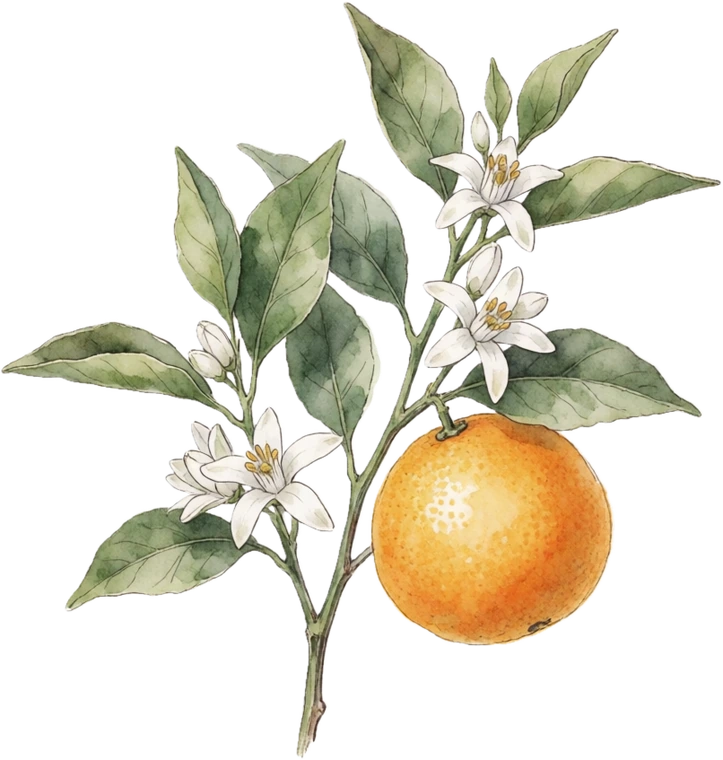
Botanical illustration of Orange
Tree · Citrus × sinensis

In zones 9-11 it's a dooryard tree; everywhere else it's a big pot you drag inside for winter by the brightest window. Oranges ripen sweet only with heat and time — a warm patio summer is what fills them. Never buy citrus into FL/CA/TX from elsewhere: greening quarantine is real.

TreeFull Sun — 8+ hrsModerate waterModerate growthExcellent edibleAttracts beesNone winter chill

Where to buy the plant — 2 nurseries

Orange — a print from the Kitchen & Orchard collection

From the print shop

Growing orange? Hang it.

Our Kitchen & Orchard collection carries orangeCitrus sinensis, print Nº 2, “Orange.”

16 designsfrom $21.99white or black groundmatte poster, unframed

Shop Kitchen & Orchard botanical prints →

I

Overview

Will orange suit your garden, and what goes wrong.

Will it fruit where you are?

Enter your ZIP — we look up your USDA hardiness zone (2023 map) and check it against what orange actually needs.

Life cyclePerennial zones 9–11, annual elsewhere
Winter chillNone
PollinationSelf-fertile

Orange at a glance

Life cyclePerennial zones 9–11, annual elsewhere
Mature size15-30 ft in ground
PollinationSelf-fertile
Chill requirementNone (not chill-dependent)
Bloom seasonSpring (heavenly white blossoms)
Harvest seasonFruit ripens over the winter and HOLDS on the tree for months — pick as you eat
Growth rateModerate

Common orange problems

II

Growing

Light, water, soil, propagation and the season’s jobs.

How to grow orange: light, water & soil

LightFull Sun — 8+ hrs
WaterModerate — deep water, then let the top few inches dry; hates soggy feet
SoilSandy loam, sharp drainage · pH 6.0 - 7.0
FertilizerCitrus fertilizer (high N + micros) Feb through Sep
PruningLate Winter to early Spring — Thin crossing branches; remove suckers below the graft; keep skirts off the ground.
Spacing12-15 ft; container 4-6 ft

How to plant & propagate orange

PropagateGrafted, or from cuttings/layering (seed won't come true)

When to spray orange

Dormant season. Horticultural oil in late winter for scale.

Growing season. Oil for scale; buy certified disease-free stock in citrus states.

The orange growing playbook

Field-tested instructions for every job orange asks of you, compiled from university extension guidance — in the order the season brings them.

Watering

Keep water steady through bloom and fruit set

Do not let the tree run dry from the time the flowers open until the young fruit have sized past marble stage. Water deeply and regularly through this window, especially in any spell where daytime highs reach the 90s. Navel oranges, and early sweet oranges to a lesser degree, shed flowers and small fruit under heat stress at bloom and set. Heat alone will cost you some crop and nothing prevents that entirely, but water stress stacked on top of the heat is what turns normal drop into an unacceptable one - adequate irrigation is the only lever you actually control.

Mulching

Keep mulch a foot back from the trunk

Citrus is one of the few fruit trees where mulch is not recommended up against the tree. If your orange sits in a mulched bed, pull the mulch back so there is at least a foot of clear ground on every side of the trunk. Bare, open soil at the base is also what lets the ground soak up heat by day and radiate it back on a frosty night. Mulch held against citrus bark keeps the trunk damp and invites foot rot, a Phytophthora infection at the soil line that girdles and kills the tree - a real risk that outweighs the moisture the mulch would save.

Feeding

Nitrogen in late winter, just before bloom

Put down the first and largest nitrogen application in late winter, just ahead of bloom, and split the year's total into two or three doses with the next around mid to late spring. Work up from about a tablespoon per tree three times in year one to a quarter pound of actual nitrogen in year two, a half pound in year three, three quarters in year four, and about one pound a year from year five on. Spread it across the root zone, not against the trunk. Bloom and fruit set are the year's biggest draw on the tree's nitrogen reserves, so the supply has to already be in the root zone when the flowers open rather than arriving after the fruit has already dropped.

Make the last nitrogen feeding of the year in early summer

Apply the final nitrogen of the season in early summer and then stop - no nitrogen through the fruit ripening months. If your tree has granulated in past years, finish all fertilizing by about the start of July. Going into fall, if you feed at all, use a blend higher in phosphorus and potassium with reduced nitrogen. Late nitrogen crystallizes the juice sacs before harvest (granulation), roughens the rind, and delays ripening. It also pushes a soft growth flush that will not harden off, and succulent new leaves are the first tissue a frost kills - and the growth citrus leafminer lays into.

Pruning

Prune after frost danger passes, before summer heat

Do the year's structural pruning once freeze risk has passed but well before summer heat arrives. Take out dead, damaged, and crossing wood, thin the canopy until you can see dappled sunlight on the ground at midday, cut water sprouts (gourmands) off at the base, remove any shoot growing below the bud union, and skirt the lowest branches 18 to 24 inches off the ground. Keep winter touch-ups to twigs under a quarter inch. If the tree was frozen, wait until the spring flush shows exactly what is dead before cutting. Pruning early in spring pushes a tender growth flush straight into the last frosts, and cutting in summer exposes thin citrus bark to sunburn. A thinned canopy also dries faster and holds fewer scale and mealybugs, which thrive in still, humid interiors.

Any limb newly exposed to sun must be whitewashed with a 1:1 mix of interior latex paint and water - unprotected citrus bark sunburns, cracks, and cankers. Do not paint or tar the pruning cuts themselves; research shows it traps decay organisms.

What to watch for

Citrus leafminer: look, then leave it alone

Expect silvery serpentine mines and curled, distorted new leaves on the summer and fall growth flushes. On an established backyard tree, do nothing about it. Manage instead by limiting the succulent flush the moth needs: avoid pruning live branches more than once a year, and do not put nitrogen down when leafminer numbers are high in summer and fall. Damage tends to be worst the first year or two after the pest arrives in an area and then eases off. The larva feeds inside the leaf, so most homeowner insecticides simply cannot reach it. Tiny parasitic wasps such as Cirrospilus and Pnigalio species find the larvae in the mines and do the work for free, and mature trees tolerate the leaf damage without meaningful loss - even young trees with heavy populations are unlikely to die.

Do not reach for broad-spectrum insecticides such as malathion, carbaryl, or pyrethroids - they fail on the pest inside the mine and kill the natural enemies that were controlling it, which makes the next flush worse. If a very young or high-value tree truly warrants treatment, azadirachtin or spinosad are the choices that spare natural enemies. Never spray a tree in bloom.

Protection

Cover the tree and mound the bud union before a freeze

Sweet and navel oranges take temperatures down to about 20F without significant damage, but plan protection below that. When frost is forecast, cover small trees with blankets, quilts, or burlap so the cover traps the heat the soil accumulated during the day. Water beforehand: moist soil radiates far more heat overnight than dry soil, and this works best where the ground under the tree is bare. A string of old-style incandescent lights in the canopy adds heat under a cover. If a hard freeze is coming, mound soil up over the bud union so the graft survives even if the top is killed and the tree can be regrown. Most cold events are radiation frosts on calm, clear nights, where the ground gives up its heat to the sky and the tree cools below air temperature. Covering and moist soil work by keeping that radiated heat under the canopy. Windborne arctic freezes are a different animal and protection often fails.

Keep incandescent lights from contacting water or the cover. Take covers off during the day so the tree is not left shaded and overheated. Do not prune in fall to prepare for winter - it only stimulates tender growth that frost will take.

Harvesting

Taste before you pick, then let the tree hold the crop

Do not judge ripeness by rind color - taste a fruit. Oranges color up in response to cool temperatures, not ripeness, so in a warm fall the fruit can be greenish outside and perfectly sweet inside, and a late Valencia can regreen while the flesh stays sweet. Once the fruit is good, the tree is the best storage there is: pick as you eat over the weeks and months of that variety's window. Navels hold into roughly late winter, Valencia far longer. The sugar and acid balance inside the fruit is set by accumulated fall heat - the more heat, the faster the acids fall and the sugars rise - while the peel's green-to-orange change is a separate reaction triggered by cool temperature. The two are driven by different things, which is why the outside and the inside routinely disagree and why tasting is the only reliable test.

Do not hold fruit on the tree indefinitely. Navels and early sweet oranges granulate (the juice sacs crystallize and dry) the longer they hang past maturity, and Marrs turns insipid. Fruit held into a hard frost is damaged - it goes water-soaked inside, often with no exterior sign; juice it quickly if that happens.

III

The year

What orange asks for, month by month.

The orange year, month by month

MonthJanFebMarAprMayJunJulAugSepOctNovDec
Bloom
Prune
Harvest

What each band means

  • Bloomflowers open — pollinators working, frost on blossoms is the danger.
  • Pruneshape it now — cuts heal cleanly and structure is visible.
  • Harvestpicking time — check ripeness every few days.

The orange year as text

  • Jan harvest
  • Feb pruning, harvest
  • Mar bloom, pruning
  • Apr bloom, pruning
  • May bloom
  • Jun quiet month
  • Jul quiet month
  • Aug quiet month
  • Sep quiet month
  • Oct quiet month
  • Nov quiet month
  • Dec harvest

These are the species' typical months — expect them a few weeks earlier in warm zones and later in cold ones. Watch the plant, not just the calendar.

IV

Ecology & uses

What it does for the garden, and what it is grown for.

Orange in the garden system

  • Canopy layer tree
AttractsBees
MoistureFacultative / average
DeerBrowsed — protect young plants
OriginIntroduced

What orange is grown for

✓ Commonly eatenSkin oils mildly irritating to pets

UseFresh eating
UseJuice
UseMarmalade
Edible value4/5

Harvesting & storing orange

Fruit ripens over the winter and HOLDS on the tree for months — pick as you eat.

Edibility, identification, and traditional-use notes here are general reference — not medical or veterinary advice, and not a claim that any plant treats or prevents anything. Medicinal ratings record how strongly a plant features in herbal tradition, nothing more. Never eat or dose a plant you have not positively identified. More on how to use this library.

V

Cultivars

Named varieties of orange, ruled as a catalogue.

Best orange varieties & cultivars

12 on file

Named varieties of orange differ in winter-chill needs, ripening time, hardiness, and whether they set fruit on their own — pick one that fits your climate.

Washington Navel · Washington, Bahia, California Navel

Self-fertile
RipensNov-FebZones9-11Diseasesusceptible to citrus greening (HLB) and cankerSizestandard 15-25 ft; dwarf ~6-8 ft on trifoliate rootstock (container/patio)

classic sweet, seedless, easy-peel; best fresh, not for juicing (juice turns bitter) — The benchmark eating orange for home growers, but navels crop lightly and want a warm coastal/interior climate to size and sweeten well.

Where to buy ‘Washington Navel

Story Thyme Farms may earn a small commission from these links, at no cost to you — it never changes what we recommend.
Cara Cara · Cara Cara Pink Navel, Red Navel

Self-fertile
RipensDec-FebZones9-11Diseasesusceptible to citrus greening (HLB) and cankerSizestandard 15-20 ft; dwarf ~6-8 ft in containers

pink-fleshed, low-acid, berry-like sweetness, seedless; superb fresh eating — A pink-fleshed sport of Washington navel with the same easy self-fertile care, prized for its sweet low-acid flavor and novelty color.

Where to buy ‘Cara Caraverified

Story Thyme Farms may earn a small commission from these links, at no cost to you — it never changes what we recommend.

Valencia · Valencia Late, Common Sweet Orange

Self-fertile
RipensMar-JuneZones9-11Diseasesusceptible to citrus greening (HLB); moderate overall vigorSizestandard 15-25 ft; dwarf ~6-10 ft in containers

rich, juicy, mildly seedy; the premier juicing orange — The classic late-season juice orange that holds on the tree for months, extending your harvest well past the navels.

Where to buy ‘Valenciaverified

Story Thyme Farms may earn a small commission from these links, at no cost to you — it never changes what we recommend.

Hamlin

Self-fertile
RipensNov-JanZones9-11 (marginal 8b with protection)Diseasesusceptible to citrus greening (HLB); relatively cold-hardy woodSizestandard 15-25 ft; dwarf ~6-8 ft in containers

mild, sweet, nearly seedless, thin-skinned; primarily a juice orange — Among the more cold-hardy and early-ripening sweet oranges, making it one of the safer picks for the Gulf Coast and colder citrus zones, but wood is still damaged in the low-to-mid 20s F, so treat zone 8 as marginal.

Where to buy ‘Hamlinverified

Story Thyme Farms may earn a small commission from these links, at no cost to you — it never changes what we recommend.

Moro · Moro Blood Orange

Self-fertile
RipensJan-MarZones9-11Diseasesusceptible to citrus greening (HLB) and cankerSizestandard 12-20 ft; dwarf ~6-8 ft in containers

deep crimson flesh, raspberry-like berry flavor, mostly seedless — The earliest and most deeply red-fleshed blood orange, but it needs cool winter nights to develop full anthocyanin color, so flesh runs orange in mild-winter areas.

Where to buy ‘Moro

Story Thyme Farms may earn a small commission from these links, at no cost to you — it never changes what we recommend.

Tarocco · Tarocco Blood Orange

Self-fertile
RipensFeb-AprZones9-11Diseasesusceptible to citrus greening (HLB) and cankerSizestandard 12-20 ft; dwarf ~6-8 ft in containers

sweetest blood orange, low acid, juicy, few seeds, partial red blush — Widely considered the best-tasting blood orange, milder colored than Moro but sweeter, and it ripens a bit later to stretch the blood-orange season.

Where to buy ‘Tarocco

Story Thyme Farms may earn a small commission from these links, at no cost to you — it never changes what we recommend.

Trovita · sometimes marketed under the 'Arizona Sweets' umbrella (a group name, not a true synonym)

Self-fertile
RipensJan-MarZones9-11Diseasesusceptible to citrus greening (HLB); tolerant of heat and low humiditySizestandard 12-20 ft; dwarf ~6-8 ft in containers

thin-skinned, sweet, some seeds; good fresh and for juice — A sweet orange adapted to hot, dry interior climates where navels struggle, popular for Arizona and inland desert gardens. Note 'Arizona Sweets' is a marketing category covering several oranges (Trovita, Hamlin, Marrs, Diller), not a strict synonym for Trovita.

Where to buy ‘Trovita

Story Thyme Farms may earn a small commission from these links, at no cost to you — it never changes what we recommend.
Parson Brown · Parson, Parson Brown Sweet Orange

Self-fertile
RipensOct-DecZones9-11Diseasesusceptible to citrus greening (HLB); vigorous, productiveSizestandard 15-25 ft; dwarf ~6-8 ft in containers

very early, sweet, seedy juice orange; more seeds than modern types — One of the earliest-ripening sweet oranges, a historic Florida juice variety worth planting to start the citrus season, though the fruit is seedy.

Where to buy ‘Parson Brown

Story Thyme Farms may earn a small commission from these links, at no cost to you — it never changes what we recommend.

Marrs · Marrs Early, Marrs Sweet Orange

Self-fertile
RipensOct-DecZones9-11Diseasesusceptible to citrus greening (HLB) and cankerSizenaturally semi-dwarf, compact 8-12 ft

early, very low-acid, sweet, juicy with some seeds; good fresh and juice — A naturally small, early-bearing Texas favorite that fits home yards and containers and fruits young, with unusually low-acid sweet fruit.

Where to buy ‘Marrs

Story Thyme Farms may earn a small commission from these links, at no cost to you — it never changes what we recommend.

Fukumoto

Self-fertile
RipensLate October to early November onwardZones9-11SizeSmaller tree than Washington, excellent fruit size

Sweet navel, notable red-orange color — Japanese early navel that beats Washington by three to four weeks, which can put the crop in hand before a damaging frost. May not have full orange peel color when it is already ready to eat - taste it. Trees sometimes throw variegated leaves or chimeric fruit.

Where to buy ‘Fukumoto

Story Thyme Farms may earn a small commission from these links, at no cost to you — it never changes what we recommend.

Lane Late

Self-fertile
RipensJanuary through AprilZones9-11SizeTree indistinguishable from Washington

Navel quality, sweet — The first of the late or summer navels, an Australian bud sport of Washington and the most promising late navel in Arizona trials. Extends the navel season months past Washington. Fruit granulation can be a problem, so do not hang the crop longer than you have to.

Where to buy ‘Lane Lateverified

Story Thyme Farms may earn a small commission from these links, at no cost to you — it never changes what we recommend.

Pineapple

Self-fertile
RipensDecember through FebruaryZones9-11SizeMedium to large, very productive tree, medium fruit

Fine, rich flavor with excellent deep color, high juice content — An 1860 Florida seedling named for the fragrance and flavor of the fruit, long the chief mid-season processing orange there. Fifteen to twenty-five seeds per fruit, so it is a juicer rather than a fresh-eating orange. Tends to bear in alternate years and is prone to pre-harvest fruit drop. Ripening mid-season leaves the crop exposed to frost.

Where to buy ‘Pineapple

Story Thyme Farms may earn a small commission from these links, at no cost to you — it never changes what we recommend.

VI

Sources & plant ID

Where the care distinctions come from, and how the plant is filed.

Research basis

Sources behind this profile

No extension citations are attached to orangeyet. The care figures below come from the library's own catalogue rather than a traced primary source.

Plant ID

BinomialCitrus × sinensis
FamilyRutaceae
TypeTree · Tender Perennial
USDA symbolCISI
OriginIntroduced
Invasive riskLow

VII

Where to buy

Third-party nurseries — not Story Thyme Farms.

Third-party nurseries, not Story Thyme Farms. Prices are theirs.

Story Thyme Farms may earn a small commission from these links, at no cost to you — it never changes what we recommend.

VIII

Questions

Orange questions, answered straight.

Do I need two orange plants to get fruit?

No — orange is self-fertile, so a single plant will set a crop. A second one usually improves yields, but it isn't required.

Is orange safe for kids and pets?

Orange is commonly eaten and isn't considered toxic, but "commonly eaten" isn't a guarantee for any particular person or animal — allergies, quantity, and which part you eat all matter. One caveat on this one: Skin oils mildly irritating to pets. Never eat a plant you haven't positively identified, and check with a vet before letting pets or livestock graze anything new.

When do you harvest orange?

Fruit ripens over the winter and HOLDS on the tree for months — pick as you eat.

How do you propagate orange?

Grafted, or from cuttings/layering (seed won't come true).

IX

Elsewhere

Where orange sits in the library.