The illustrated growing guide

Spinach

Spinacia oleracea

Family Amaranthaceae

Grown as an annual

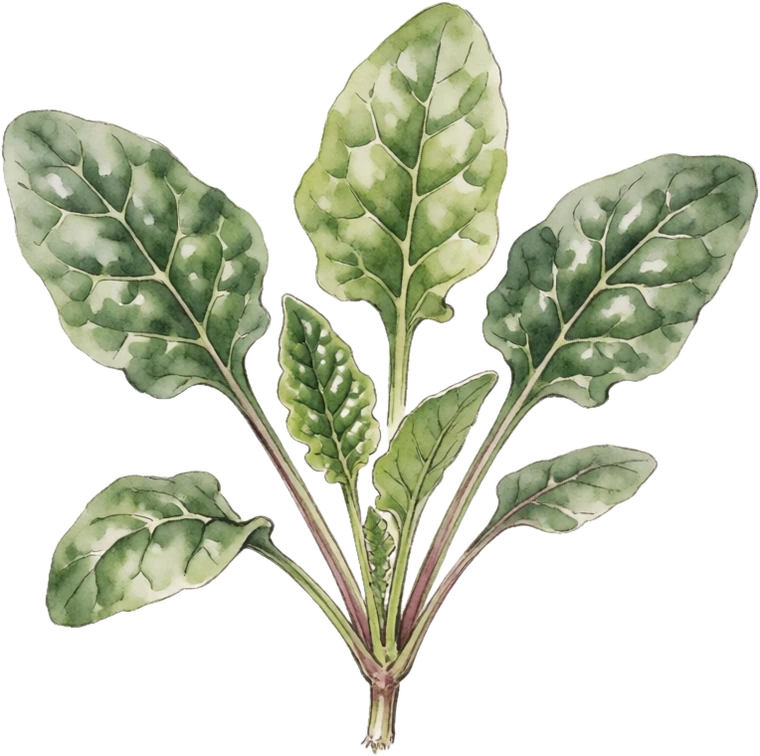
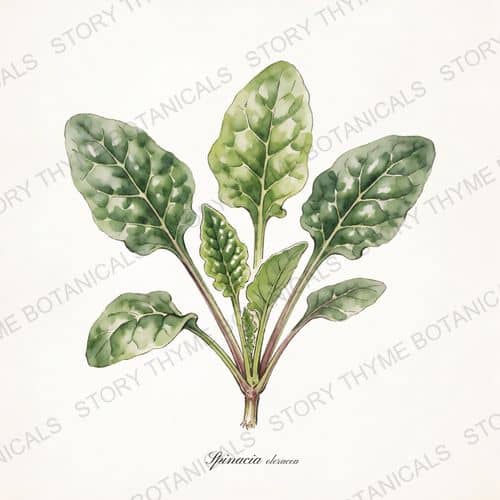
Botanical illustration of Spinach
Annual · Spinacia oleracea

Fall spinach is the play: sow late August, harvest through hard frosts (it sweetens), and overwintered plants explode in March.

AnnualFull SunModerate waterFast growthExcellent edibleNone winter chill

Where to buy the plant — 3 nurseries

I

Overview

Will spinach suit your garden, and what goes wrong.

Will it fruit where you are?

Enter your ZIP — we look up your USDA hardiness zone (2023 map) and check it against what spinach actually needs.

Life cycleAnnual
Winter chillNone

Spinach at a glance

Life cycleAnnual
Mature size8-12 in
PollinationN/A
Chill requirementNone (not chill-dependent)
Bloom seasonBolts on long days + heat
Harvest seasonApril - June; September - December (overwinters under cover to zone 5)
Growth rateFast

Common spinach problems

II

Growing

Light, water, soil, propagation and the season’s jobs.

How to grow spinach: light, water & soil

LightFull Sun (spring/fall); bolts fast in heat
WaterModerate, consistent
SoilRich, nitrogen-fed · pH 6.5 - 7.5
FertilizerNitrogen-forward at sowing and again in 3 weeks
PruningNone — Cut-and-come-again: shear an inch above the crown, repeat 2-3 times.
Spacing4-6 in

How to plant & propagate spinach

Maturity40-50 days
From seedDirect-sow early spring or fall; germinates 40-65°F (heat-inhibited)
PropagateFrom seed

When to spray spinach

Growing season. Row cover for leaf miner; resistant varieties for mildew.

The spinach growing playbook

Field-tested instructions for every job spinach asks of you, compiled from university extension guidance — in the order the season brings them.

Sowing

Sow as soon as the soil reaches 40F

Direct-sow seed half an inch deep and 1 to 3 inches apart, about 2 to 3 weeks before your average last frost, once soil has warmed to 40F. Emergence takes 7 to 10 days. Make sequential sowings about 2 weeks apart to stretch the window. Spinach bolts on lengthening days and heat, so the crop is a race against the solstice and every week of cool weather you capture early is leaf you get to eat. Germination is best at 55-65F and soil above 80F actively suppresses it, so a late sowing fails at both ends.

Sow the fall crop in late summer - this is the better spinach

Sow again about 6 to 8 weeks before your average first frost, around mid-August in much of the country, for harvest from late September onward. For an overwintered stand, finish sowing early enough that plants are well rooted before the ground turns cold. A fall crop matures into cooling weather and shortening days instead of racing them, so it simply never bolts, and spinach is a hardy annual that stands through heavy frost. The same sowing that feeds you in October is the stand that overwinters and explodes in early spring.

Feeding

Sidedress nitrogen about 4 weeks in

Four weeks after transplanting, or at thinning, band about a quarter cup of a nitrogen fertilizer such as 21-0-0 per 10 feet of row along the side of the plants rather than over them, and irrigate it into the soil. Spinach is a heavy feeder harvested for its leaves rather than a fruit, so nitrogen is the yield - it goes straight into leaf size and tenderness. Placing it to the side and watering it in keeps fertilizer salt off the crowns while carrying the nitrogen down to the roots.

Thinning

Thin at 3-4 true leaves, and replant the thinnings

Thin the stand once plants have 3 to 4 true leaves, to roughly 3 inches apart in rows about 12 inches apart. Lift the thinnings with some root still attached and set them into gaps rather than composting them — they transplant successfully if some roots are maintained, and they are also good eating. Repeat after the fall sowing. By 3 to 4 true leaves the seedlings are already competing with each other for the nitrogen and water that make a big tender leaf, and a plant pulled at this size still carries enough root to restart somewhere else instead of being wasted.

What to watch for

Check leaf undersides for egg rows - once it is mined, it is too late

Starting mid-spring, turn leaves over weekly and look for neat rows of small white oblong eggs under 1mm on the undersides. Pick and destroy those leaves, along with any showing tan blotchy mines, and check again 7 to 10 days later. The larva feeds between the two leaf surfaces, so once it is inside, control gets much harder and the practical moment to act is before the eggs hatch. With 3 to 4 generations a season, the eggs you crush in spring are the flies you do not fight in midsummer.

Extension guidance for home gardens is to remove leaves with eggs or mines rather than spray, because contact insecticides do not reach a larva inside the leaf. A few products with translaminar activity are used in commercial production, but they are not the home-garden control here — exclusion with row cover and removing infested leaves are.

Downy mildew: pull it, rotate off the ground, water in the morning

In cool wet spells, watch for dull yellow patches on the upper leaf with purplish-gray fuzzy growth on the underside beneath them. Pull and bag infected plants rather than composting them, and keep spinach off that ground for 2 to 3 years. Irrigate early in the day, or by drip, so foliage dries before nightfall. The pathogen runs hardest at 59-70F with long periods of leaf wetness, and it makes its spores overnight to be carried off on the next day's air currents - so wet leaves at dusk are what it needs. It also leaves oospores that survive a few years in the soil, which is why the ground itself becomes the source of the next infection.

Protection

Row cover goes on before the leafminer flies, not after

Cover the bed with floating row cover or insect netting right after thinning, held up on hoops so the fabric cannot abrade the leaves, and seal the edges to the soil. Do not cover a bed where spinach, chard, or beets grew last season - rotate that planting to new ground instead. Spinach leafminer overwinters as pupae in the soil and the adults emerge around mid-May to lay eggs, so cover works only as an exclusion fence put up before the flies are flying. Over ground that grew a host crop, the same cover traps the emerging flies inside with your spinach.

Blanket the overwintering stand, and vent it on warm days

As hard cold arrives, cover the fall stand with a heavy frost blanket, adding a second layer when lows in the teens are forecast. Lift the cover to inspect or harvest only once the day has climbed into the 40s, and re-cover with enough daylight left for the bed to warm again before the overnight cold. Spinach itself already takes heavy frost, so the blanket is buying root-zone warmth and blocking desiccating wind rather than saving the leaves, and settled snow on top only adds insulation. Growth nearly stops through the darkest weeks, then the surviving crowns restart and crop from February onward.

Harvesting

Cut above the crown and it grows back - stop when the stalk rises

Begin once plants have enough leaf to be worth picking, any time before the flower stalk forms. Either strip the older outer leaves and let the young ones keep growing, or shear the whole plant to within 2 inches of the soil, leaving the growing point undamaged so it regrows for further cuts. Take one final full harvest as soon as a flower stalk appears. The crown keeps pushing new leaves for as long as you do not cut it out, which is what makes spinach a cut-and-come-again crop rather than a single picking. Once the plant bolts the leaves go thin and bitter, so the rising flower stalk is the signal to strip the plant rather than nurse it.

III

The year

What spinach asks for, month by month.

The spinach year, month by month

MonthJanFebMarAprMayJunJulAugSepOctNovDec
Harvest

What each band means

  • Harvestpicking time — check ripeness every few days.

The spinach year as text

  • Jan quiet month
  • Feb quiet month
  • Mar quiet month
  • Apr harvest
  • May harvest
  • Jun harvest
  • Jul quiet month
  • Aug quiet month
  • Sep harvest
  • Oct harvest
  • Nov harvest
  • Dec harvest

These are the species' typical months — expect them a few weeks earlier in warm zones and later in cold ones. Watch the plant, not just the calendar.

IV

Ecology & uses

What it does for the garden, and what it is grown for.

Spinach in the garden system

  • Herbaceous layer annual
MoistureFacultative / average
DeerBrowsed — protect young plants
OriginIntroduced

What spinach is grown for

✓ Commonly eaten

UseSalads
UseCooking
UseFreezing
UseOverwintering
Edible value4/5

Harvesting & storing spinach

April - June; September - December (overwinters under cover to zone 5). About 40-50 days from planting.

Edibility, identification, and traditional-use notes here are general reference — not medical or veterinary advice, and not a claim that any plant treats or prevents anything. Medicinal ratings record how strongly a plant features in herbal tradition, nothing more. Never eat or dose a plant you have not positively identified. More on how to use this library.

V

Cultivars

Named varieties of spinach, ruled as a catalogue.

Best spinach varieties & cultivars

12 on file

Named varieties of spinach differ in days to maturity, disease resistance, flavor, and habit — pick one that fits your season and space.

Tyee

DiseaseDowny mildew races 1 and 3 only - narrow by modern standards

The best spring pick of the classic savoys: very slow to bolt and fast at 39 days. Upright habit means cleaner leaves and less washing. But in a downy mildew area choose Corvair instead - races 1 and 3 is thin cover. UNH found it significantly lower yielding than Regiment and Space for winter production.

Where to buy ‘Tyee

Story Thyme Farms may earn a small commission from these links, at no cost to you — it never changes what we recommend.

Space

DiseaseCladosporium leaf spot; downy mildew races 3,5,6,8,11,12,14,16,19 (Cornell list)

The low-hassle choice: smooth leaves mean far less grit than savoy, and the thick leaf survives washing and spinning for baby leaf. Bolt resistant and suited to LATER sowings, so the spring window stretches further than a standard savoy. Also a proven overwinterer.

Where to buy ‘Space

Story Thyme Farms may earn a small commission from these links, at no cost to you — it never changes what we recommend.

Olympia

DiseaseDowny mildew races 1-3 (Wisconsin); Cornell lists a broader set

The combination to lean on: fast growth plus very slow bolting is what makes an early-SUMMER spinach sowing viable at all. Smooth leaves wash easily. Sources disagree on how many mildew races it covers.

Where to buy ‘Olympia

Story Thyme Farms may earn a small commission from these links, at no cost to you — it never changes what we recommend.

Bloomsdale Long Standing

DiseaseCONFLICTING: Wisconsin says no disease resistance; Cornell lists downy mildew races 1-12,14,15

One of the best tasting — READ THE BOLT CLAIM CAREFULLY: Wisconsin does NOT say this variety is slow to bolt - it says OTHER Bloomsdale types were selected for slow bolting. The reputation is partly its offspring's. Sources also disagree on leaf type (savoy vs semi-savoy). Heavily crinkled leaves trap grit - wash thoroughly.

Where to buy ‘Bloomsdale Long Standing

Story Thyme Farms may earn a small commission from these links, at no cost to you — it never changes what we recommend.

Melody

DiseaseTolerance to downy mildew races 1-2; resistant to cucumber mosaic virus

Superior flavour, tender — Semi-savoy is the middle ground - less grit than full savoy, better texture than flat leaf. AAS winner 1977. Honest gap: no bolt-resistance claim found, so position it for spring OR fall, not for holding through heat. Mildew cover (races 1-2, tolerance only) is narrow.

Where to buy ‘Melody

Story Thyme Farms may earn a small commission from these links, at no cost to you — it never changes what we recommend.

Avon

DiseaseBlight and mildew (Wisconsin); Cornell adds CMV and downy mildew races 1-2

Sow early - extension frames it as an early spring type, not a heat holder. Honest gap: no bolt-resistance claim found, so do not extend its window into late spring; switch to Olympia or Space.

Where to buy ‘Avon

Story Thyme Farms may earn a small commission from these links, at no cost to you — it never changes what we recommend.

Regal

DiseaseDowny mildew races 1-7 - broadest of the classics

Care consequence is spacing: sow THICKLY for baby leaves and cut at 30 days. Do not thin it out and try to grow full-size plants. The fastest here, so the best fit for a very short season or a gap crop.

Where to buy ‘Regal

Story Thyme Farms may earn a small commission from these links, at no cost to you — it never changes what we recommend.

Corvair

DiseaseDowny mildew races 1-11,13,15,16 - notably broader than Tyee or Melody

Sweeter in cold; highest Brix recorded in February — Fall-plant it under cover and it keeps producing through January and February when others stall. UNH found it the only variety to gain leaf mass after winter, so it rebounds for a spring flush. Honest gaps: leaf type and days to maturity were not stated in any extension source.

Where to buy ‘Corvair

Story Thyme Farms may earn a small commission from these links, at no cost to you — it never changes what we recommend.

Regiment

DiseaseDowny mildew races 1-7,11,13,15 (Cornell list)

The yield choice for winter: across two years and six fall transplant dates, Regiment and Space beat Tyee significantly. If fall-planting for winter harvest, use this rather than the popular Tyee - which is an excellent spring variety and a poor winter one. Honest gaps: leaf type and days not found.

Where to buy ‘Regiment

Story Thyme Farms may earn a small commission from these links, at no cost to you — it never changes what we recommend.

Renegade

DiseaseDowny mildew races 1-7 - narrower than Corvair

Like Corvair it yields through the coldest months, so it is a fall-plant-for-winter variety. Its practical edge is handling: a flexible leaf that resists breaking when spun dry. Choose Corvair instead where downy mildew pressure exists.

Where to buy ‘Renegade

Story Thyme Farms may earn a small commission from these links, at no cost to you — it never changes what we recommend.

Chesapeake

IMPORTANT SOURCED NEGATIVE: it bolts rapidly, so it must NOT be spring-sown. This is a fall and overwintering variety - sow late summer to fall, overwinter it, and take the early-spring cut before it runs to seed. The app should actively warn against a spring planting of this one.

Where to buy ‘Chesapeake

Story Thyme Farms may earn a small commission from these links, at no cost to you — it never changes what we recommend.

Skookum

DiseaseDowny mildew

The only sourced downy-mildew-resistant spinach here - the pick for a cool wet spring or a humid fall, where downy mildew ends unprotected spinach. Fastest spinach sourced at 41 days.

Where to buy ‘Skookum

Story Thyme Farms may earn a small commission from these links, at no cost to you — it never changes what we recommend.

VI

Sources & plant ID

Where the care distinctions come from, and how the plant is filed.

Research basis

Sources behind this profile

No extension citations are attached to spinachyet. The care figures below come from the library's own catalogue rather than a traced primary source.

Plant ID

BinomialSpinacia oleracea
FamilyAmaranthaceae
TypeAnnual
USDA symbolSPOL
OriginIntroduced
Invasive riskLow

VII

Where to buy

Third-party nurseries — not Story Thyme Farms.

Third-party nurseries, not Story Thyme Farms. Prices are theirs.

Story Thyme Farms may earn a small commission from these links, at no cost to you — it never changes what we recommend.

VIII

Questions

Spinach questions, answered straight.

Is spinach safe for kids and pets?

Spinach is commonly eaten and isn't considered toxic, but "commonly eaten" isn't a guarantee for any particular person or animal — allergies, quantity, and which part you eat all matter. Never eat a plant you haven't positively identified, and check with a vet before letting pets or livestock graze anything new.

When do you harvest spinach?

April - June; September - December (overwinters under cover to zone 5). From planting, expect about 40-50 days to maturity.

How do you propagate spinach?

From seed.

IX

Elsewhere

Where spinach sits in the library.

Where spinach sits in the library

Grows in the same world