The illustrated growing guide

Watercress

Nasturtium officinale

Family Brassicaceae

Est. zones 3-11

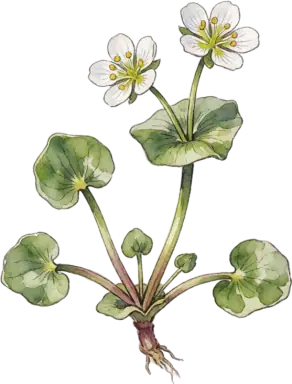
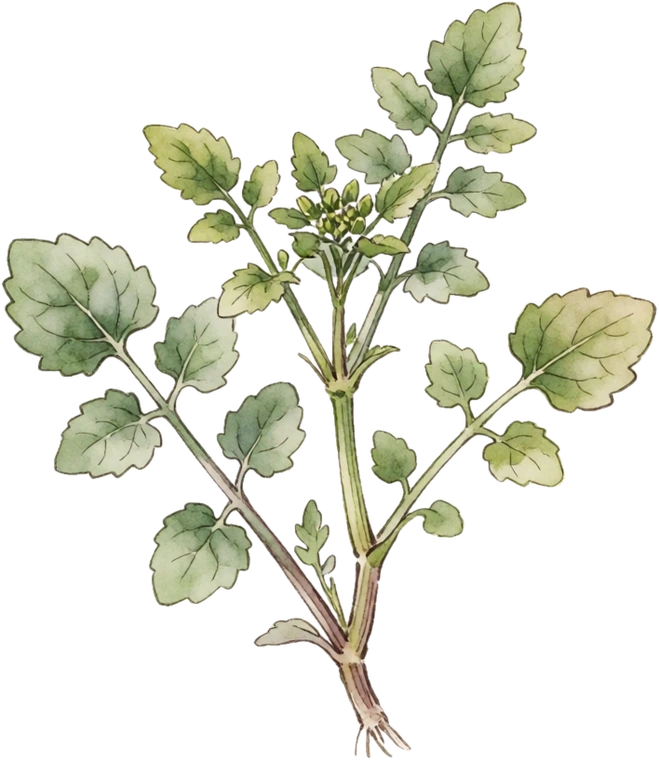
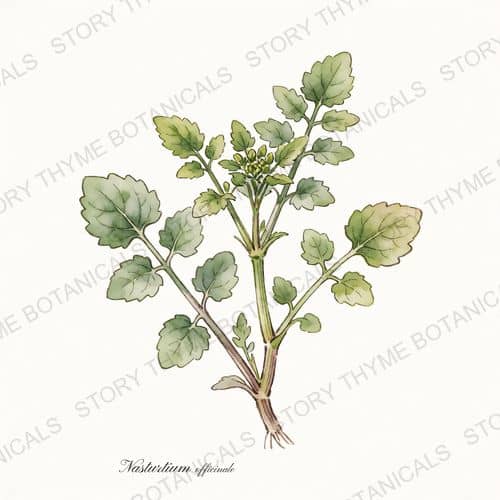
Botanical illustration of Watercress
Perennial · Nasturtium officinale

The peppery, mustard-family salad green that grows in flowing water or constantly wet soil — you can grow it in a pot sitting in a tray of water you refresh, or along a clean stream. Nutrient-dense, cut-and-come-again, and productive nearly year-round in mild areas. Important: only forage wild watercress from clean water (it can carry parasites and pollutants from contaminated sources); growing your own is safest.

PerennialFull Sun to Part ShadeHigh waterFast growthExcellent edibleAttracts bees

Where to buy the plant — 2 nurseries

I

Overview

Will watercress suit your garden, and what goes wrong.

Will it fruit where you are?

Enter your ZIP — we look up your USDA hardiness zone (2023 map) and check it against what watercress actually needs.

Hardy inZones 3-11

Watercress at a glance

HardinessUSDA 3–11
Mature size4-10 in
PollinationBees on the white flowers
Chill requirementNot yet established
Bloom seasonSpring - Fall
Harvest seasonPeppery leaves nearly year-round; cut-and-come-again
Growth rateFast

Common watercress problems

  • Aphids
  • Snails
  • Almost none in clean water

II

Growing

Light, water, soil, propagation and the season’s jobs.

How to grow watercress: light, water & soil

LightFull Sun to Part Shade
WaterAquatic — running water or constantly wet soil
SoilRich, wet, mucky · pH 6.5 - 7.5
FertilizerNone in clean flowing water
SpacingBroadcast in wet ground

How to plant & propagate watercress

PropagateDivision or seed

The watercress growing playbook

Field-tested instructions for every job watercress asks of you, compiled from university extension guidance — in the order the season brings them.

Sowing

Sow into wet mix about three weeks before your frost-free date

Sow seed about a quarter inch deep in a wet, organically rich mix roughly three weeks before your frost-free date, and never let it dry out. Germination wants cool, wet conditions around 50 to 60 F. You can skip seed entirely and start plants from stem cuttings instead. Watercress germinates in the cold and does its best growing in the cool seasons, so seed started at the front edge of spring gets rooted and bulked up before summer heat pushes it toward flowering.

Planting out

Set plants out after last frost, 8 inches apart, standing in water

After the last frost, set plants 8 inches apart in a sunny spot in wet, organically rich soil at a pH of 6.5 to 7.5. Without a stream, stand potted plants in a bucket or saucer holding 2 to 3 inches of water so the mix stays saturated from below. Watercress is a semi-aquatic plant with no drought tolerance at all - its roots need standing water or permanently saturated soil, and a pot sitting in water reproduces a streambed closely enough for a home garden.

Watering

Keep 2 to 3 inches of water under it and change it weekly

Hold 2 to 3 inches of water in the tray, bucket or bed at all times and replace it once or twice a week rather than only topping it up. Never let the soil dry out, even briefly. The plant drinks constantly through summer and a saucer can run dry in a day, and in water that is never circulated the dissolved salts left behind as the crop feeds concentrate over time and check growth. Replacing the water resets both.

Feeding

Replace nutrients right after each cutting

Watercress has low nutrient needs, so feed only after a cut, using a complete soluble fertilizer at the label rate. In a tub or tank, refill the water first and dose based on the gallons you added. A second ratoon crop follows roughly three to four weeks later. The cutting carries off the leaf mass the plant built out of the water's nutrients, and in standing water both the solution level and its nutrient load fall steadily across the growing period, so regrowth stalls unless you put them back.

What to watch for

Check the standing water weekly for mosquito larvae

Look at the surface of the tray, tub or tank each week for wriggling mosquito larvae. Treat with a Bacillus thuringiensis subspecies israelensis (Bti) product, or keep small fish in a larger tank. Cool air and dry, windy conditions suppress mosquitoes on their own. Nutrient water that is never circulated or aerated is prime mosquito habitat, and a watercress bed is standing water by design - CTAHR calls the resulting mosquito populations both a health menace and a nuisance to workers.

Use only Bti or another pesticide that carries watercress on its label - you are treating the water the crop grows in and the leaves are eaten raw. Bti is a bacterial larvicide and is not an insecticide sprayed on the flowers, so it does not put the bees working the bloom at risk.

Harvesting

Cut back to 4 inches before it flowers, then let it regrow

Cut the plant back to about 4 inches tall with scissors rather than pulling it, and let it re-grow for the next cut. Harvest before the flowers open, and expect the best quality in the cool stretches of spring and fall. Cut stems keep in the refrigerator about a week. Watercress regrows from the stubble you leave behind, so cutting turns a single planting into a whole season of harvests, and leaves taken before bloom are the mild ones - once the plant commits to flowering it is putting its growth into seed rather than leaf.

Do not gather watercress from the wild. Pollutants in wild water have been reported to cause illness, so harvest only from water you know is clean.

III

The year

What watercress asks for, month by month.

The watercress year, month by month

MonthJanFebMarAprMayJunJulAugSepOctNovDec
Bloom
Harvest

What each band means

  • Bloomflowers open — pollinators working, frost on blossoms is the danger.
  • Harvestpicking time — check ripeness every few days.

The watercress year as text

  • Jan harvest
  • Feb harvest
  • Mar bloom, harvest
  • Apr bloom, harvest
  • May bloom, harvest
  • Jun harvest
  • Jul harvest
  • Aug harvest
  • Sep bloom, harvest
  • Oct bloom, harvest
  • Nov bloom, harvest
  • Dec harvest

These are the species' typical months — expect them a few weeks earlier in warm zones and later in cold ones. Watch the plant, not just the calendar.

IV

Ecology & uses

What it does for the garden, and what it is grown for.

Watercress in the garden system

  • Groundcover layer perennial
AttractsBees
MoistureWetland / wet-tolerant
DeerBrowsed — protect young plants
OriginIntroduced

What watercress is grown for

✓ Commonly eatenSafe from clean sources; WILD watercress from questionable water can carry parasites/pollution — grow your own or buy

UsePeppery salads
UseWet spots
UseCut-and-come-again
Edible value4/5

Harvesting & storing watercress

Peppery leaves nearly year-round; cut-and-come-again.

Edibility, identification, and traditional-use notes here are general reference — not medical or veterinary advice, and not a claim that any plant treats or prevents anything. Medicinal ratings record how strongly a plant features in herbal tradition, nothing more. Never eat or dose a plant you have not positively identified. More on how to use this library.

V

Cultivars

Named varieties of watercress, ruled as a catalogue.

Best watercress varieties & cultivars

Species; 'Improved Broad Leaf'

VI

Sources & plant ID

Where the care distinctions come from, and how the plant is filed.

Research basis

Sources behind this profile

No extension citations are attached to watercressyet. The care figures below come from the library's own catalogue rather than a traced primary source.

Plant ID

BinomialNasturtium officinale
FamilyBrassicaceae
TypePerennial
USDA symbolNAOF
OriginIntroduced
Invasive riskLow

VII

Where to buy

Third-party nurseries — not Story Thyme Farms.

Third-party nurseries, not Story Thyme Farms. Prices are theirs.

Story Thyme Farms may earn a small commission from these links, at no cost to you — it never changes what we recommend.

VIII

Questions

Watercress questions, answered straight.

Is watercress safe for kids and pets?

Watercress is commonly eaten and isn't considered toxic, but "commonly eaten" isn't a guarantee for any particular person or animal — allergies, quantity, and which part you eat all matter. One caveat on this one: Safe from clean sources; WILD watercress from questionable water can carry parasites/pollution — grow your own or buy. Never eat a plant you haven't positively identified, and check with a vet before letting pets or livestock graze anything new.

When do you harvest watercress?

Peppery leaves nearly year-round; cut-and-come-again.

How do you propagate watercress?

Division or seed.

IX

Elsewhere

Where watercress sits in the library.